1:03:39 PM | 8/25/2026

Build Better HCMC 2026 was successfully held in Ho Chi Minh City (HCMC), bringing together more than 450 attendees and 30 exhibition booths featuring brands providing materials, technologies and solutions for the construction industry.
Through the theme “Biophilic Design & Human Well-being,” Build Better 2026 takes a broader approach to the way we think about the spaces we create: how can buildings perform better technically and operationally, while also creating healthier environments for people and a more harmonious relationship with nature?
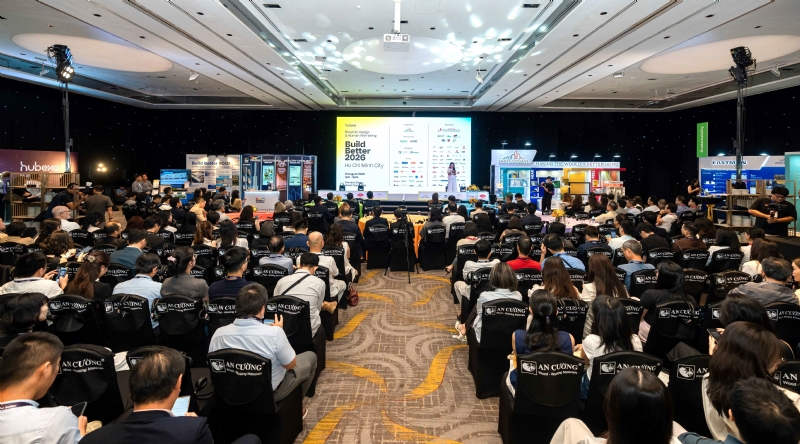
The event marked the Ho Chi Minh City chapter of Build Better 2026 in Vietnam, organised by Hubexo across the two major cities of Ho Chi Minh City and Hanoi, under the overarching theme “Biophilic Design & Human Well-being”
Build Better represents the next chapter in the evolution of an event series that has supported the architecture, design and construction communities across the Asia-Pacific region for many years. In Vietnam, the event was previously known as BCI Equinox, followed by Archify Live, before entering a new chapter under the Build Better brand.
Speaking at the event, Sally Kheng, Head of Strategic Partnership and Events, Asia at Hubexo, highlighted the simple idea behind Build Better: bringing the right people together, creating meaningful conversations and opening up new opportunities.
The event brought together architects, designers, construction professionals, property developers, material and technology providers, and many other businesses and industry stakeholders, contributing directly to the development of Vietnam’s built environment.
Rather than focusing solely on product showcases, Build Better aims to create a space where the industry can meet, learn from one another and explore new ways forward. Five key pillars – Materials, Sustainability, Technology, Leaders and Community – form the foundation of the programme, reflecting the factors that are increasingly shaping the future of the built environment.
At Build Better HCMC 2026, the exhibition area featured 30 booths from brands across the construction materials, technology and solutions sectors, including An Cuong, Saint-Gobain Vietnam, Schneider Electric Vietnam, AkzoNobel, Alucosun, Blum, BWT, Hoang Chuong, igloo, Rheem Vietnam, ROCKWOOL Vietnam, SFA Pumps, Uuviet Solutions and many others.
With “Biophilic Design & Human Well-being” as its central theme, Build Better 2026 brought the conversation to a subject that is both highly relevant to the industry and increasingly important for the future: how the process of shaping the built environment can create better places for people while fostering a more harmonious relationship with nature.
Biophilic Design is often associated with bringing plants, natural light and other elements of nature into buildings. However, the discussions at Build Better HCMC 2026 demonstrated that the concept extends far beyond these familiar applications.
Through “Biophilic Design & Human Well-being,” speakers explored the relationship between design, the built environment and human health, comfort and quality of life across a range of contexts – from interior spaces and industrial projects to architectural exteriors and the ways people experience and interact with their surroundings.
The panel discussion “Biophilic Interior Design & Human Well-being” examined how interior design can contribute to healthier, more comfortable and more human-centred environments, highlighting the connection between design decisions and human well-being.
From another perspective, “Applying Biophilic Design to Industrial Projects” raised a practical question: how can principles traditionally associated with living and working spaces be applied to industrial projects, where functionality and operational efficiency remain fundamental requirements?
The conversation was further expanded through “More Than Plants: A Broader Approach to Biophilic Design,” reinforcing the idea that Biophilic Design is not simply about introducing greenery into buildings. It represents a broader approach to creating meaningful connections between people, nature and the built environment.
Meanwhile, “Biophilic Architectural Exteriors Design” took the conversation beyond the building itself, exploring how exterior design can help establish a more harmonious relationship between architecture, nature and its surrounding environment.
These discussions were not merely academic. They reflected practical challenges facing the construction industry as demand continues to grow for spaces that are higher quality, more sustainable and more responsive to the needs of the people who use them.
One of the strengths of Build Better HCMC 2026 was its ability to take the conversation around Biophilic Design beyond architecture alone.
At “Biophilic Design Aligned with Green Certifications,” experts explored the relationship between Biophilic Design, green building certifications and broader approaches to sustainable development.
Alongside the panel discussions, the Leader Hub sessions – showcasing new materials, technologies and practical solutions – brought additional perspectives from different areas of the industry.
From “Build Better by Bsquare” to “Building Better Vietnam: Leading Sustainable Construction Innovation with ROCKWOOL Multi-Performance Solutions,” innovative materials and construction solutions were presented within a broader conversation about improving building quality, performance and sustainability.
Technology was also a key part of the programme through “Innovative Technology Solutions for Construction Drainage Design,” demonstrating how highly practical considerations such as drainage systems can play an important role in improving the efficiency and performance of the built environment.
Other Leader Hub presentations further expanded the conversation, including “Saint-Gobain: A Journey to Sustainable Buildings Centered on Human Well-being,” “Advancing Energy Tech for a Sustainable Human Living,” “Nature’s Shield – Designing Sustainable Cities with Nature’s Help,” and “Healthy Water, Healthy Living.”
Together, these topics created a multidimensional perspective on what it means to Build Better – through better materials, more effective technologies, more responsible design and decisions that place people at the heart of the built environment.
By Vietnam Business Forum