

2:31:55 PM | 1/19/2026

The Cai Mep-Thi Vai (CM-TV) port cluster is widely recognized as Vietnam’s key deep-water port area, playing a critical role in the national gateway and international transshipment port network. With natural advantages in channel depth, the ability to accommodate large mother vessels, and direct shipping connections to Europe, the United States, South America, Africa, and the Middle East, CM-TV has been steadily consolidating its position as an emerging international cargo transshipment hub in Southeast Asia.
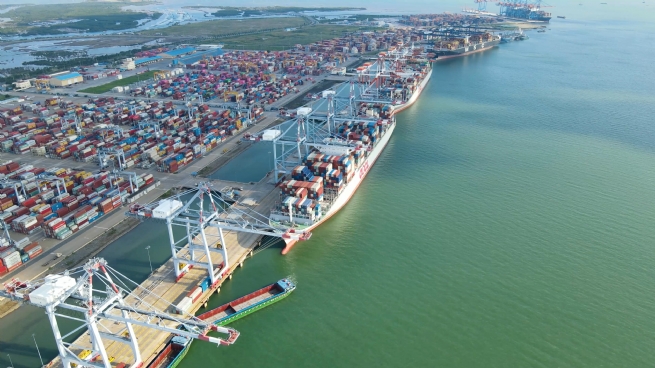
In the context of the integration and expansion of development space, CM-TV is entering a pivotal phase, increasingly becoming a key connective pillar within the new maritime logistics landscape of the expanded Ho Chi Minh City. This orientation is aligned with the city’s marine economic development strategy, which identifies three core pillars: maritime economy and logistics; oil, gas, energy and renewable energy; and marine tourism and coastal urban development.
Alongside new national and government planning orientations for the development of seaports, logistics systems, and hinterland transport infrastructure, CM-TV is presented with significant opportunities for breakthrough growth. According to Resolution No. 24-NQ/TW of the Politburo on socio-economic development and national defense and security in the Southeast Region, CM-TV is designated as a special-class international gateway, serving as a central driving force for regional development and progressively expanding its international transshipment function, attracting cargo flows from neighboring countries such as Cambodia, Thailand, and the Philippines.
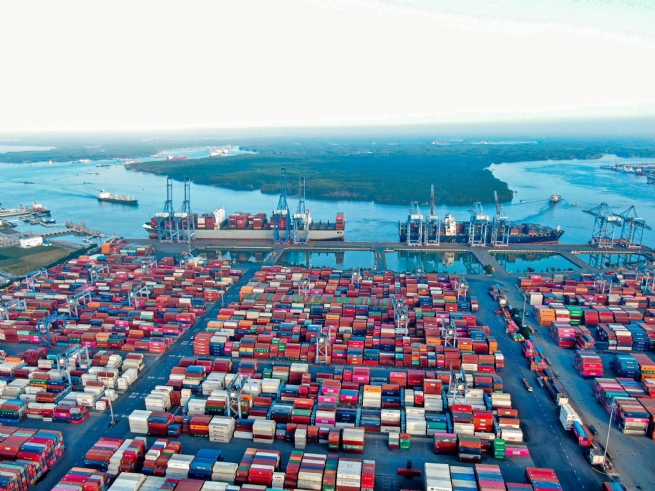
The Cai Mep-Thi Vai port cluster plays a critical role in the national gateway and international transshipment port network
Shifting logistics supply chains toward Cai Mep-Thi Vai port cluster
Recent operational realities indicate that shipping lines and import-export enterprises are increasingly seeking optimized logistics solutions to reduce costs, shorten transit times, and enhance supply chain stability. In this context, strengthening direct cargo delivery and pickup at CM-TV ports is viewed as a key solution to easing pressure on inner-city areas while improving the overall efficiency of Southern Vietnam’s logistics operations.
| In the Cai Mep-Thi Vai area, Saigon Newport Corporation is currently developing an integrated port and logistics ecosystem anchored by three key terminals: Tan Cang-Cai Mep International Terminal (TCIT), Tan Cang-Cai Mep Thi Vai Terminal (TCTT), and Tan Cang-Cai Mep Terminal (TCCT). This ecosystem plays a vital role in enhancing capacity for large vessel operations, optimizing logistics service chains, and meeting the increasingly diverse needs of domestic and international shipping lines and customers. |
This trend is further reinforced by the strong potential for the development of industrial zones and new trade areas surrounding the CM-TV region. In particular, the planned Cai Mep Ha Free Trade Zone (FTZ), with a projected area of approximately 3,800 ha and closely linked to the deep-water port cluster, is expected to create a more flexible institutional framework for logistics, industrial production, and international trade. This provides a foundation for developing integrated industrial–service–logistics models in line with international standards, encouraging enterprises to increase the proportion of direct port delivery and fully leverage the region’s locational, infrastructural, and policy advantages.
At the same time, the synchronized development of transport and logistics infrastructure around CM-TV has become a decisive driver of this shift. Strategic projects such as the Bien Hoa-Vung Tau Expressway, Ho Chi Minh City’s Ring Roads 3 and 4, together with a growing network of ICDs, logistics centers, and satellite warehouses, are gradually being completed, significantly reducing transportation time and costs from factories to ports. The formation of a large hinterland logistics space directly connecting key industrial zones in the Southeast region with CM-TV creates favorable conditions for import-export enterprises to increase direct port delivery, optimize supply chain efficiency, and reduce reliance on traditional intermediary stages.
By Van Luong, Vietnam Business Forum


 Vietnamese





