7:21:02 PM | 6/10/2026

Enhancing global competitiveness and building resilient agricultural export value chains.
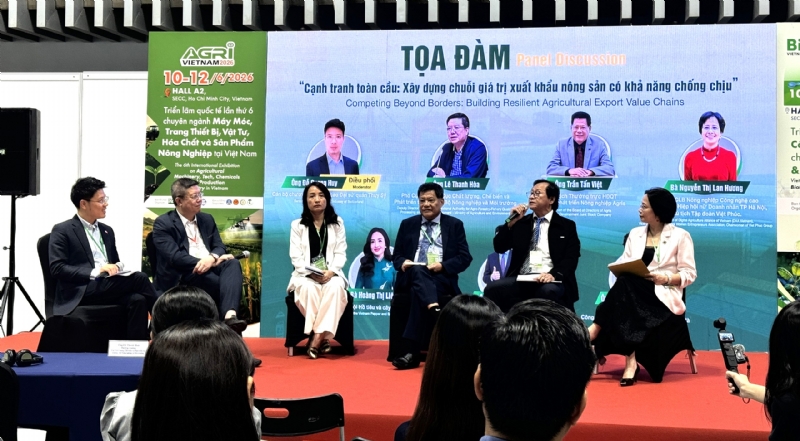
On the morning of June 10, 2026, the United Nations Industrial Development Organization (UNIDO), the Vietnam Institute of Agricultural Engineering and Post-Harvest Technology (VIAEP), and Minh Vi Exhibition & Advertsement Services Co., Ltd. (VEAS) jointly organized the Export Forum 2026 under the theme: “Strengthening Competitive and Market-Oriented Agricultural Export Systems.”
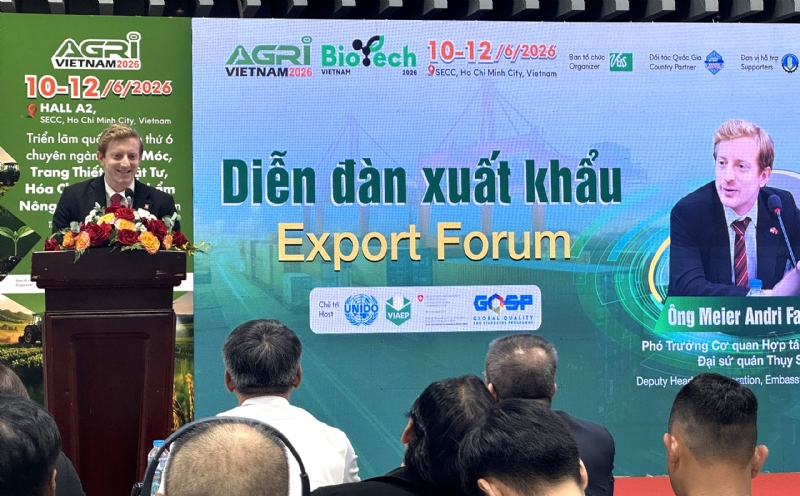
The forum was held within the framework of the 6th International Exhibition on Machinery Equipment, Suppliers, Chemicals and Agricultural Products in Vietnam, bringing together more than 200 enterprises from 15 countries and territories.
The forum gathered stakeholders from across the entire agricultural export ecosystem to discuss practical and scalable solutions for strengthening competitive and market-oriented agricultural export systems.
In her opening remarks, Ms. Hoang Mai Van Anh, National Coordinator of UNIDO in Vietnam, stated that export success today is no longer determined by an individual product but by the capability of the entire value chain to create value, ensure quality, improve efficiency, and meet market requirements. She also reaffirmed UNIDO’s commitment to providing technical assistance through the Global Quality and Standards Programme (GQSP) to help build a more competitive, innovative, and market-oriented agricultural export system in the future.
Meanwhile, Mr. Meier Andri Fabian, Deputy Head of Development Cooperation at the Embassy of Switzerland, emphasized that product quality is no longer merely a competitive advantage but a prerequisite for accessing and maintaining a position in international markets. Therefore, strengthening post-harvest management, cold-chain systems, traceability, and compliance with international standards is essential to improving the competitiveness, sustainability, and long-term growth of Vietnam’s agricultural exports.
In his presentation, Dr. Rajendra Adhikari, Senior Lecturer in Agribusiness at the University of Queensland, offered several recommendations for businesses when selecting export markets, including: Conducting thorough market assessments; Utilizing secondary information sources, which are readily available and cost-effective but often lack depth and market-specific insights; Undertaking primary research tailored to specific products and target markets; Analyzing competitors; Understanding customers and consumers.
According to Dr. Adhikari, businesses commonly make several mistakes when selecting export markets, such as relying on rumors and hearsay, spending excessive time collecting and analyzing secondary data, conducting insufficient preliminary research and analysis, overrelying on macroeconomic indicators such as GDP per capita and population statistics, and failing to develop adequate export knowledge and expertise.
Mr. Tang Khoa, Senior Lead Auditor at SGS Vietnam Co., Ltd., highlighted the importance of meeting compliance and traceability requirements imposed by export markets.
He recommended that businesses: Comply with legal and regulatory requirements of importing countries; Meet Global Food Safety Initiative (GFSI)-benchmarked standards; Strengthen food safety and quality culture within organizations; Select competent and accredited testing laboratories; Establish quality management systems certified under GFSI-recognized schemes.
In his presentation on building export systems, Mr. Peter Johnson, International Expert on Agricultural Value Chains at UNIDO, noted that businesses should develop fully integrated supply chains and understand risks in order to mitigate them effectively. Key areas include pre- and post-harvest diseases, cold-chain management, transportation and storage methods, post-delivery handling, market-driven growth strategies, product accountability, partnership development, communication, and capacity-building training.
He also stressed the importance of investing in infrastructure to improve supply-chain efficiency and maximize economic returns. To enhance competitiveness, he proposed several solutions, including: Obtaining international certifications such as GlobalG.A.P. and Organic Certification; Focusing on value-added products and premium fruit varieties; Strengthening product traceability and quality assurance; Building direct relationships with overseas buyers and retailers; Promoting sustainable and climate-friendly production practices.
During the discussion session, speakers repeatedly highlighted the lack of connectivity across the agricultural ecosystem. Quality and transparency were identified as key factors in building brand identity and credibility. The panelists called for coordinated efforts throughout the entire system—from seed selection, climate adaptation, harvesting, storage, cold-chain logistics, transportation, and distribution.
Furthermore, to respond effectively to changing market demands and enhance quality, reliability, innovation, and creativity, Vietnam must continue strengthening its national quality infrastructure. Regulatory agencies, enterprises, and other stakeholders need to work together to improve supply chains and further enhance the competitiveness of Vietnam’s agricultural exports.
By Vietnam Business Forum