10:19:08 AM | 10/2/2026

The boom of the sharing economy is creating a vast workforce that sits outside traditional social security frameworks. Rather than waiting for the legal framework to be completed, PVI Insurance has proactively stepped into this "gap" with practical, hands-on models. Its on-the-ground execution capability and sharp business acumen have made the company an important source of real-world data, selected by the World Bank for dialogue and consultation as it advises on national social insurance policy in Vietnam.
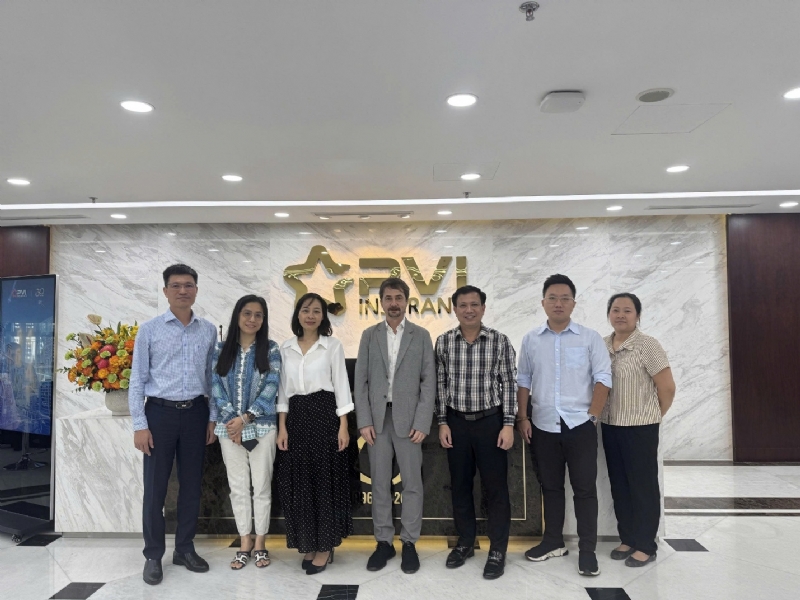
The working delegation included representatives of the World Bank, Vietnam Social Security and PVI Insurance
A New Context: The Social Protection Gap Facing "Third-Category" Workers
In line with global trends, Vietnam’s labor market is shifting strongly toward non-traditional work, driven by the rise of ride-hailing, tech-enabled delivery and e-commerce platforms. This development has given rise to a distinct group of workers – people who fall in between two traditional definitions.
They are not salaried employees with formal labor contracts who are eligible for compulsory social insurance. Nor are they fully independent self-employed workers (such as street vendors, shoe shiners or traditional motorbike taxi drivers) who fall under voluntary insurance. Their work and income are directly governed and regulated by platform algorithms.
This "third category" of workers faces significant social protection risks. They share revenue with platforms, yet lack a genuine social security "shield" when they fall ill, have an accident or are no longer able to work. The question facing policymakers, not only in Vietnam but around the world, is: Should this group be classified under compulsory or voluntary social insurance, and how can they be brought into the social safety net in a sustainable way?
Identifying Barriers from Market Realities
To answer this question of national significance, the World Bank – which is advising the Government of Vietnam on social insurance policy – sought out voices from the field. Among more than 500 service organizations nationwide that support Vietnam Social Security in expanding participation, the World Bank chose to work exclusively with PVI Insurance. This choice was no coincidence: PVI Insurance is one of the few organizations working directly with this distinctive customer segment and holding real-world data on it.
Through its direct delivery of voluntary social insurance and health insurance collection services for "third-category" workers, PVI Insurance has identified the biggest obstacle preventing platform workers from staying within the safety net: income instability.
In practice, the demand for protection among ride-hailing drivers and online sellers is very real, as evidenced by high levels of interest and high renewal rates within PVI Insurance’s system. However, the nature of their work means their income fluctuates sharply from month to month – for example, a worker may earn VND 10 million in one month, but only VND 5 million in months with harsh weather or fewer jobs.
Meanwhile, current social insurance regulations require voluntary participants to register a contribution method when they first enroll. As a result, workers are inevitably pushed to choose the lowest contribution level (for example, based on an income of VND 3 million) or the shortest contribution period (monthly) to stay financially safe. They must therefore accept lower accumulated benefits than they could realistically afford. At the same time, they are more likely to suspend or stop contributing (compared with contributing over longer periods of 3, 6 or 12 months). This lack of flexibility inadvertently diminishes the true value of social protection policies.
PVI Insurance’s Execution Capability and Moves Ahead of the Market
What sets PVI Insurance apart is not only its ability to identify problems, but its capacity to turn those insights into concrete action.
While macro-level policy is still under study, PVI Insurance has established a pioneering operating model. Recognizing the initial financial barrier facing self-employed workers, the company has proactively allocated its own financial resources to create a "nudge" in awareness. Specifically, during certain periods, PVI Insurance directly subsidizes part of the cost for workers enrolling in social insurance and health insurance for the first time.
The program is not only deeply humane but also reflects the sharp strategic thinking of a leading financial institution. Subsidizing the initial cost helps break psychological inertia and brings workers into the system. Once they see the value and form the habit, the rate at which workers voluntarily continue contributing (renewing) in subsequent cycles is high, creating a sustainable customer base for the company.
This approach has been highly regarded by World Bank experts. According to the international organization, the model PVI Insurance is implementing on its own initiative is fully aligned with progressive global trends and perspectives on bringing platform workers into the social safety net.
From Business Data to Macro Policy Advice
The in-depth exchange and dialogue between PVI Insurance and the World Bank could open up new prospects for the market. Drawing on PVI Insurance’s empirical data and analysis, the World Bank now has a stronger basis for developing policy recommendations to the Government of Vietnam.
Two key solutions were discussed. First, a flexible contribution mechanism should be developed, allowing platform workers to adjust their contribution levels and periods in line with actual monthly income fluctuations. Second, during periods when workers’ income declines, State financial support policies are needed to help them maintain stable contributions, thereby securing their long-term retirement and health benefits.
Internationally, this challenge is being addressed in two ways: either requiring technology platforms to co-pay insurance contributions with workers, or maintaining a voluntary scheme with Government subsidies. Whichever path is taken, real-world data from organizations with strong execution capability such as PVI Insurance will be an important benchmark for keeping policy grounded in practice.
The World Bank’s selection of PVI Insurance as its sole partner for sharing experience and consulting on the practice of social insurance and health insurance collection in Vietnam is more than an external relations activity – it is clear evidence of the company’s capability, credibility and vision. Moving beyond the role of a pure service provider, PVI Insurance is demonstrating a strong shift: becoming a comprehensive risk partner that proactively builds business models aimed at narrowing the social protection gap. By staying ahead of the complex trends of the sharing economy, PVI Insurance is not only strengthening its leadership in the domestic market but also affirming its capacity for deep integration with global sustainable development standards.
By Vietnam Business Forum