4:28:22 PM | 10/30/2026

Declining output from major oil fields, mounting pressure to ensure energy security and the requirements of the green transition are driving Vietnam’s oil and gas industry to transform its development model. The focus is on optimising resources, strengthening industrial capabilities and expanding into new energy sectors.
At the forum entitled “Developing Vietnam’s Oil and Gas Industry: Ensuring Sustainable Growth”, recently held in Hanoi by the Vietnam Economic Times, Dao Quang Binh, Secretary General of the Vietnam Economic Science Association and Editor-in-Chief of Vietnam Economic Magazine, said the oil and gas industry needed to comprehensively restructure its value chain to adapt to a rapidly changing energy market.
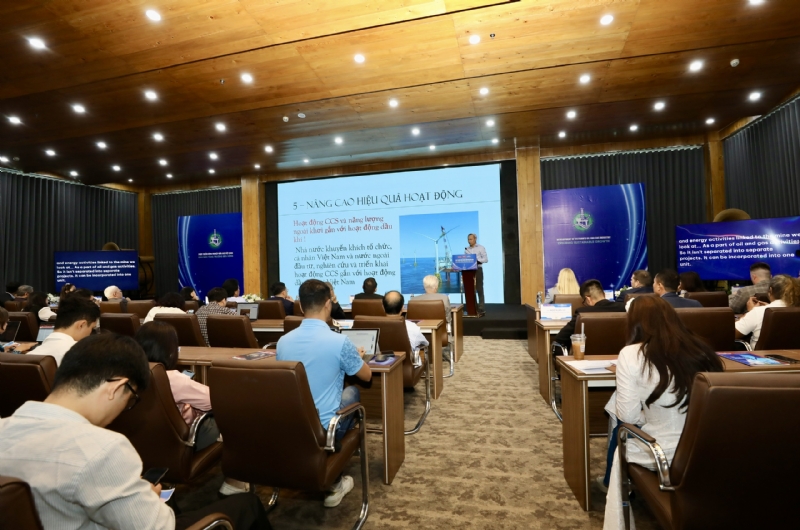
Overview of the Forum: “Developing Vietnam's Oil and Gas Industry: Ensuring Sustainable Growth”
Institutional reforms pave the way for a new investment cycle
The Law on Petroleum No. 10/2026/QH16, passed by the National Assembly on August 23, 2026, and scheduled to take effect on March 1, 2027, is expected to address institutional bottlenecks, give enterprises greater autonomy and improve conditions for attracting investment. According to Mr Phan Duc Hieu, a member of the National Assembly’s Economic and Financial Committee, the new law focuses on five key areas: strengthening decentralisation and delegation of authority; simplifying administrative procedures; enhancing investment attraction; developing oil and gas services; and improving operational efficiency.
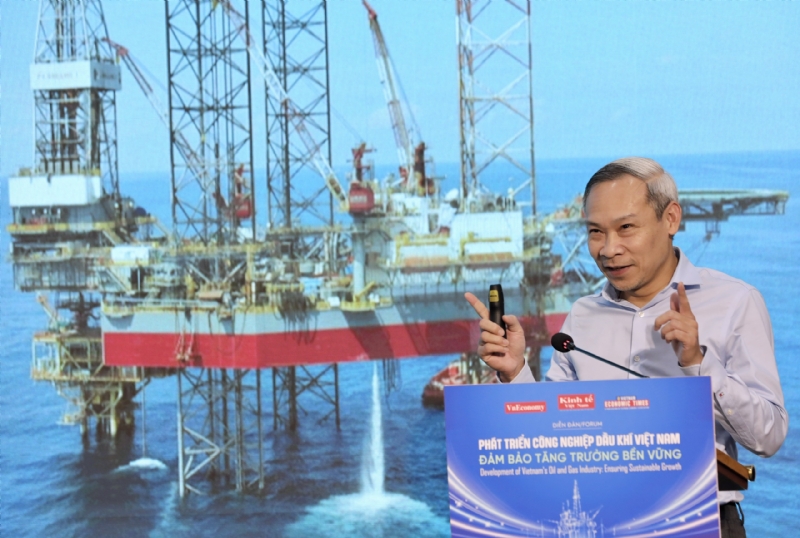
Mr Phan Duc Hieu, a member of the National Assembly’s Economic and Financial Committee.
The law more clearly delineates the respective responsibilities and authority of the Prime Minister, the Ministry of Industry and Trade, and the Vietnam National Energy Corporation (Petrovietnam). The Prime Minister retains authority over matters relating to national security and defence, while the Ministry of Industry and Trade carries out its state management functions. Petrovietnam is granted greater authority over technical matters commensurate with its capabilities.
Another key provision concerns preferential mechanisms for small and marginal fields, as well as areas where extraction conditions are particularly challenging. According to the proposals presented at the forum, incentives for marginal fields include a corporate income tax rate of 25%, an export tax rate of 5%, and provisions allowing for full cost recovery, subject to applicable conditions.
These policies are intended to improve the economic viability of projects that have traditionally struggled to attract investors due to high extraction costs or limited resource reserves. More efficient exploitation of remaining resources is also linked to the need to increase reserves, improve recovery rates and extend the productive life of oil and gas fields.
However, the effectiveness of these policies will depend on the implementing regulations and how they are put into practice. Eligibility criteria, conditions for accessing incentives and monitoring mechanisms need to be clearly defined, giving enterprises a reliable basis for developing investment plans while ensuring effective resource management.
From oil and gas extraction to an integrated energy industrial ecosystem
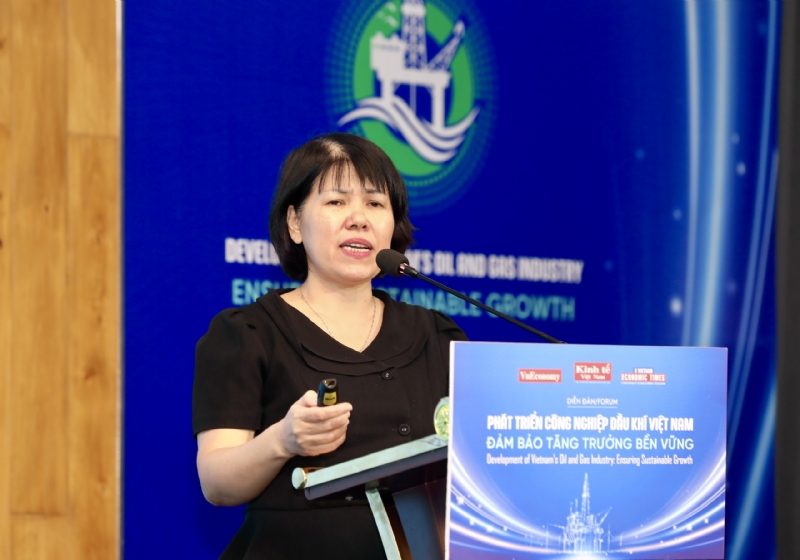
Dr. Dang Thi Thu Hoai, Head of the Department of Sectoral and Local Economics, Institute for Policy and Strategy Research, Central Policy and Strategy Committee
According to Dr Dang Thi Thu Hoai, Head of the Department of Sectoral and Local Economics, Institute for Policy and Strategy Research, Central Policy and Strategy Committee, Petrovietnam needs to accelerate its restructuring to optimise remaining resources, develop high-tech, low-emission energy, build an integrated energy industrial ecosystem and promote the marine economy.
Alongside the development of new fields, the oil and gas industry needs to advance large-scale gas projects and synchronised liquefied natural gas (LNG) infrastructure to meet demand from power generation and industrial production. Deep processing in refining, petrochemicals and chemicals is also necessary to increase the added value generated from natural resources.
Strengthening domestic capabilities in mechanical engineering, fabrication, construction and offshore technical services represents another development pathway. Research, development, testing, application and technology transfer in oil and gas technical services are expected to create further opportunities for domestic enterprises to enhance manufacturing capacity, replace certain imported products and participate in international markets.
Digital technologies are also becoming increasingly important in improving operational efficiency. According to Dr Dang Thi Thu Hoai, automation, predictive maintenance technologies and generative artificial intelligence can help prevent operational risks and optimise asset lifecycles. The application of digital data is also intended to improve oil and gas recovery rates, strengthen safety management and reduce methane emissions.
In the longer term, the industry's experience in offshore construction and marine infrastructure could be leveraged to develop offshore wind power and explore green hydrogen, green ammonia, sustainable aviation fuel (SAF) and carbon capture and storage (CCUS) technologies during the 2026–2030 period.
These development pathways require enterprises to carefully balance resources, select appropriate technologies and assess investment returns against market conditions. For Petrovietnam, its strategic direction built on three pillars: energy, industry and high-quality technical services call for renewed corporate governance, more effective capital allocation and stronger cooperation with capable partners.
Restructuring therefore needs to encompass the entire value chain, from exploration, production and processing to the development of technical services and new energy. The effectiveness of this transformation will depend on the ability to bring together policy frameworks, technological capabilities, financial resources and the participation of domestic enterprises. This will provide a foundation for the oil and gas industry to increase added value, use resources more efficiently and sustain its contribution to national energy security.
By Giang Tu, Vietnam Business Forum