10:48:30 AM | 11/5/2026

In its new phase of development, Bac Ninh faces the challenge of not only expanding urban areas and upgrading infrastructure, but also improving quality of life, enhancing its cultural standing, and developing its distinctive appeal.
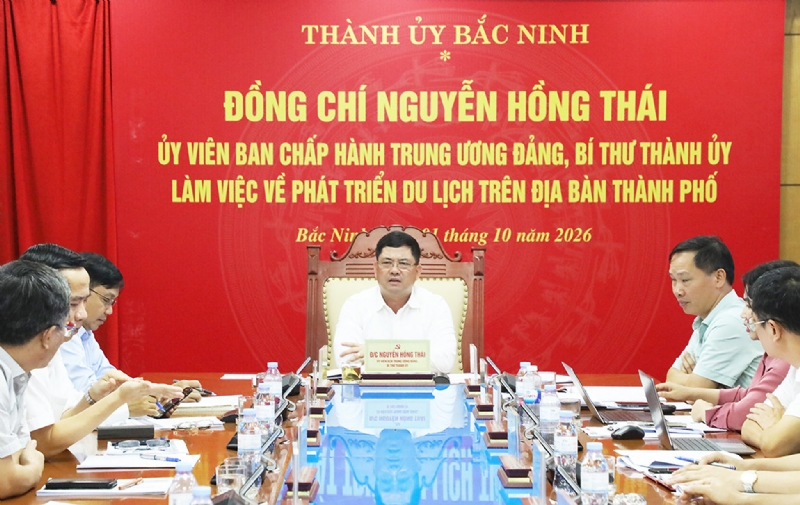
Bac Ninh City Party Committee Secretary Nguyen Hong Thai meets with the Department of Culture, Sports and Tourism and relevant agencies to discuss tourism development (Photo: Bac Ninh Online)
To achieve this, culture must become an internal source of strength, sports must provide a foundation for human development, and tourism must connect heritage with economic value. In particular, Quan ho folk singing should be at the heart of efforts to establish Bac Ninh’s destination brand on the domestic and international tourism map.
Strong Potential, Untapped Value
Bac Ninh enjoys rare advantages, combining the rich cultural traditions of Kinh Bac, abundant heritage, a strong industrial base, and convenient connections to the capital and major economic centers in northern Vietnam. The city is home to eight cultural heritage items recognized or inscribed by the United Nations Educational, Scientific and Cultural Organization (UNESCO), 28 intangible cultural heritage items included in the national inventory of intangible cultural heritage, 25 national treasures, 1,319 festivals, 3,154 ranked and inventoried historical and cultural sites, and 39 recognized tourist areas and destinations. In 2009, Bac Ninh Quan ho folk singing was recognized by UNESCO as an Intangible Cultural Heritage of Humanity.
Notably, Quan ho is reaching wider audiences both offline and online. Quan ho is performed at local cultural events, while digital platforms are also used to connect enthusiasts across different localities and countries. The melodies and lyrics of Kinh Bac can cross geographical boundaries and reach international audiences. For visitors, if they had to choose one defining feature that represents Bac Ninh, it would be Quan ho.
With its rich cultural resources, Bac Ninh has considerable potential to expand tourism. In 2025, the city welcomed approximately 6.3 million visitors, including more than 350,000 international visitors, generating total revenue of around VND5.5 trillion (US$211.54 million). In the first nine months of 2026 alone, visitor numbers reached 5.8 million, with estimated revenue of VND5.236 trillion (US$201.38 million). However, the key challenge is how to turn this potential into value by converting visitor flows into spending, longer stays, and sustainable revenue. The city still lacks distinctive products that can establish a strong destination brand. Links among destinations, tour operators, accommodation providers, and service companies remain weak, while entertainment, shopping, and the night-time economy have yet to develop sufficiently to extend visitor itineraries and increase spending. Many heritage sites are still promoted mainly during festival seasons and special events rather than developed into regular, in-depth cultural experiences.
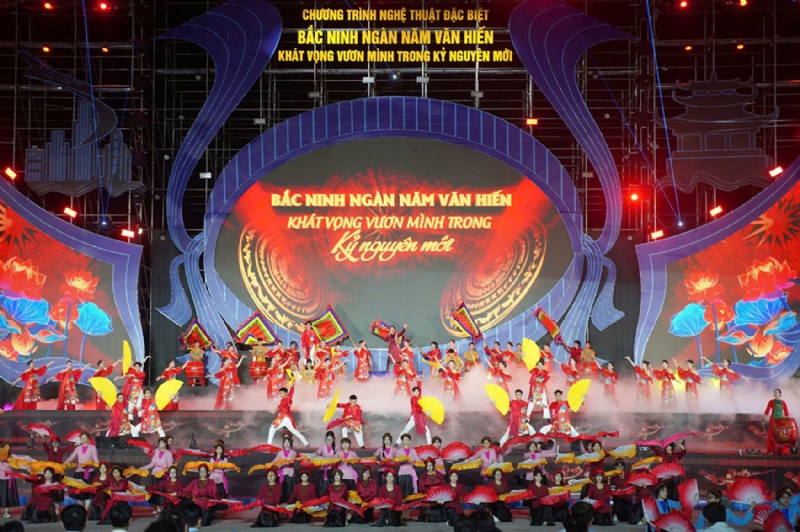
Artistic performance themed “Bac Ninh: A Thousand Years of Culture, Aspiring to Rise in a New Era” (Photo: Bac Ninh Online)
Unlocking Heritage Resources, Developing Distinctive Tourism Products
According to Bui Thi Thu Thuy, Director of the Bac Ninh City Department of Culture, Sports and Tourism, the key challenge is how to bring these values to life and turn them into products, brands, markets, and livelihoods for local residents. Conservation, therefore, must go beyond preserving heritage in its existing state. It must be linked to creativity, the promotion of heritage values, and the integration of living heritage into contemporary life.
In this regard, Quan ho should be viewed as a cultural ecosystem. Visitors might begin by listening to Quan ho, then explore Quan ho villages, experience traditional costumes, sample local cuisine, join a community gathering, purchase souvenirs, and continue engaging with Quan ho through digital platforms after leaving Bac Ninh. In this way, the value of the heritage extends beyond a single performance and continues throughout the visitor’s entire experience.
Similarly, for Dong Ho folk paintings, Phu Lang pottery, and Dong Ky woodcraft, the focus needs to shift from introducing traditional craft village products to developing cultural product value chains. Artisans should be connected with designers, architects, companies, and technology. Their products can expand beyond gifts, fine art, and decorative items to include e-commerce, tourism experiences, and digital content.
At a tourism development meeting on October 1, 2026, Nguyen Hong Thai, Secretary of the Bac Ninh City Party Committee, stressed the need for a decisive shift “from exploiting resources to developing the tourism economy; from promoting destinations to developing and selling products; and from the State directly creating products to the State enabling the environment, businesses developing and operating products, and the market determining what is offered.”
Plan 84-KH/TU, dated September 24, 2026, issued by the Standing Committee of the City Party Committee to implement Politburo Resolution 26-NQ/TW, dated August 22, 2026, on tourism development, sets a target of welcoming more than 10 million visitors annually by 2030, including more than 1 million international visitors, and developing two to three distinctive tourism products under the Bac Ninh brand. To achieve these goals, the city needs to focus on developing product chains around “Bac Ninh - Land of Quan ho,” Kinh Bac heritage routes, craft village tourism, ecotourism and community-based tourism, and MICE tourism.
Quan ho should serve as the anchor of Bac Ninh’s destination brand. The city has the potential to develop an integrated urban, cultural, and tourism environment where Quan ho is part of everyday life. Visitors to Quan ho villages should not only listen to the singing but also learn about local customs, experience traditional costumes, and sample local cuisine. In Dong Ho, they should not only view paintings but also experience the production process and purchase products with clear stories and origins. The night-time economy, cultural and performance complexes, resorts, and entertainment facilities must be incorporated into comprehensive planning that addresses infrastructure, land availability, and mechanisms for attracting capable investors.
Turning Cultural Identity into Competitive Advantage
Alongside promoting the value of heritage, Bac Ninh needs to invest in integrated, multifunctional, and accessible cultural and sports facilities for local residents. The city should review its entire network of cultural centers, libraries, museums, theaters, stadiums, indoor sports arenas, and other facilities to identify those needing upgrades, gaps in provision, and investment priorities. The aim is to develop versatile facilities that are used regularly, serve local residents, and can host major events.
To achieve a breakthrough, Bac Ninh must shift decisively from management to enabling development, from organizing one-off events to building regular offerings, and from generic promotion to market-specific outreach measured by tangible results. The government should be responsible for planning, improving mechanisms, investing in essential infrastructure, and protecting heritage. Businesses should lead investment, develop and operate tourism products, and expand markets. Artisans, artists, and local communities should remain the custodians, creators, and beneficiaries of cultural value. These efforts should be supported by heritage digitization, cross-platform promotion, workforce development, service standardization, and stronger regional linkages.
The stature of a centrally governed city is defined not only by the size of its economy or the quality of its modern infrastructure, but also by the depth of its culture, the well-being of its communities, and its ability to turn cultural identity into a competitive advantage. By connecting Quan ho, Dong Ho, Phu Lang, and its broader heritage network with creativity, sports, and tourism, Bac Ninh can turn resources into products, products into livelihoods, cultural identity into a brand, and culture into a driving force for sustainable development.
By Ha Thanh - Trinh Long, Vietnam Business Forum