2015 is a banner year for Vietnam to mobilise the maximum internal forces of the nation. Vietnam cannot be a permanent subcontractor; it must seek its own brand. Vietnam Business Forum interviewed Dr Le Dang Doanh on this issue. Anh Phuong reports.
Do you think Vietnam is confident enough when it sets its GDP growth goal of 6.2 percent in 2015?
In principle, the GDP growth objective of 6.2 percent in 2015 was approved by the National Assembly. The question is whether Vietnam can achieve it in the current context. In my opinion, this target is achievable given GDP growth rates in recent year like 5.25 percent in 2012 and 5.42 percent in 2013. This has greater significance as tensions in the East Sea escalated when China illegally put its Haiyang 981 oil rig into Vietnam’s waters just a few months ago. This development was believed to have negative impacts on bilateral trade and investment ties, thus affecting growth.
According to the General Statistics Office (GSO), Vietnam’s inflation was just 1.84 percent in 2014, the lowest since 2001. This was really a very commendable progress of the country’s entire political, social and economic system. But, tasks set for 2015 remain challenging. Recently, the sharp decline of crude oil prices in the world resulted in a proposal for a 30 percent cut in oil output. Major economies in the world like China, Japan and Russia have also shown signs of slowing down.
Barriers to the target force us to improve growth quality, sustain development, control corruption and narrow the income gap. The investment climate needs to be bettered because this is an extremely important capital channel. Particularly, Vietnam needs to recharge for measures to stabilise the macro economy, curb inflation and respond quickly to potential bad situations.
In 2014, for the first time, the National Assembly and the Government ratified many important laws in the spirit of innovation and with the aim of pursuing sustainable economic development. What is your perspective on these actions?
It is true that in 2014, executive and legislative bodies unanimously adopted many important laws with enormous impacts on the political and economic life of the country, like the Law on Enterprises and the Law on Investment (amended). For instance, the Law on Investment permits whatever is not prohibited from what is written in the law. This has shown the wisdom of policymakers. The amended Law on Enterprises facilitates all economic sectors in the society to make investment to do business. Upsetting and troublesome contents are gradually eliminated, partially or completely. For the first time, the legal status of a new type of enterprise - social enterprise - is named in the law. This will enable social enterprises to make greater contributions to the national economy. Regulations on corporate seals are provided more rationally to eradicate unnecessary troubles in the process of doing administrative procedures and shorten the time required of enterprises to complete such procedures. Another important provision is only a State-owned enterprise is a company with 100 percent of State stake.
Major changes of the above laws in macroeconomic management show that Vietnam provided the most favourable conditions and incentives for all forms of business to develop, on the one hand, and also show the determination for institutional reform with the focus on main economic actors like businesses, entrepreneurs and investors.
You have mentioned institutional reform but it is said that if we do not exercise corporate governance well enough, it is difficult to reform. What do you think about this?
Businesses are always of top concern, both private and State-owned, not only in Vietnam but also in developed countries because they simply generate wealth and added value for the whole society and the economy of each country. However, for a long time in Vietnam, State enterprises have been granted more privilege than the private sector. This has been acknowledged by leaders and translated into laws, with more empowerments for the private sector. But, this change will face a lot of difficulties and challenges because this reality has been deep-rooted. Worse still, corporate governance, particularly in State enterprises, remains inadequate. For example, it is said that 40 percent in air traffic controllers at Vietnam Airlines Corporation have average and low qualifications, while 30 percent are well below English proficiency. Unclear definitions of tasks and missions also result in weaknesses. For example, six ministries and agencies cannot inspect the records of Mr Tran Van Truyen, former chief inspector of the government. These examples show the weaknesses in governance level and management apparatus. With enormous difficulties in home affairs, how can we play a leading role in any game, let alone a competitive game?
2015 is considered a year of international trade agreements and integration such as TPP, PPP and AEC. Do you expect they will boost Vietnam's economic development?
The economic recovery and growth of Vietnam in the coming year will be a strong support for the successful enforcement of important trade agreements like FTAs with South Korea, the Customs Union of Russia - Belarus - Kazakhstan, the EU, and the ASEAN Economic Community (AEC). Vietnam is expected to soon conclude negotiations of the Trans-Pacific Partnership (TPP) Agreement and Public-Private Partnership (PPP) Agreement.
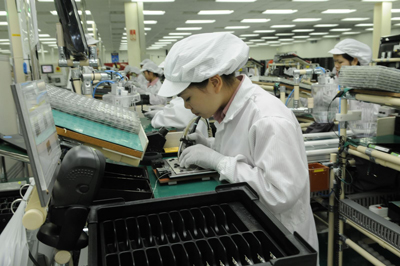
But in my opinion, Vietnam should not rely too much on external resources, but on internal resources. Vietnam needs to have its own brand. The country needs to make products on its own like high-tech products. It may learn national branding from Samsung Group (South Korea).
Specially, it must have more comprehensive incentive policies to support nationalist businesses to be competitive with foreign giants. Vietnam should also avoid the painful lesson of losing or selling national brands, like the cases of Kinh Do and Phu Thai.




 Vietnamese





