

10:28:43 AM | 2/24/2020

Exports to CPTPP member countries have increased significantly but investment flows from these countries have not come up to expectations, even reduced sharply. The Ministry of Industry and Trade recently released a report on the implementation of the Comprehensive and Progressive Agreement for Trans-Pacific Partnership (CPTPP) in 2019.
New signal
In 2019, the trade value between Vietnam and CPTPP countries reached US$77.4 billion, 3.9% higher than that in 2018. Vietnam's exports to CPTPP countries valued US$39.5 billion, up 7.2% year on year.
“Thus, in 2019, Vietnam had a trade surplus of US$1.6 billion with CPTPP countries while it ran a deficit of US$900 million in 2018,” said the ministry.
Vietnam's export shipments to CPTPP countries grew from a year earlier (except for shipments to Australia, which fell 11.4% on a sharp drop of crude oil export).
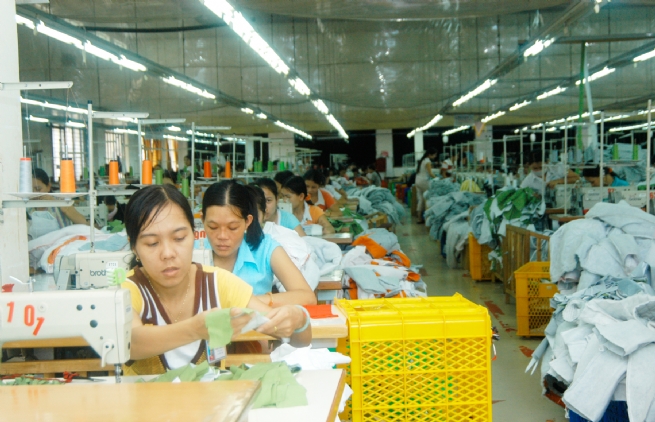
Key exports included telephones, machines, equipment, seafood and apparel. Some markets, which do not have bilateral free trade agreements (FTA) with Vietnam like Canada and Mexico, recorded strong growth right after the CPTPP came into effect. Specifically, exports to Canada and Mexico increased 29.9% and 27.6%, respectively.
In the opposite direction, Vietnam’s imports from CPTPP countries dipped or increased slightly. Therefore, Vietnam took a trade surplus of US$3.9 billion in 2019, up 135% year on year.
“If the trade value with Canada and Mexico, which do not have FTAs with Vietnam, was taken into account, Vietnam enjoyed a trade surplus of more than US$5 billion in 2019, accounting for more than 50% of Vietnam's total trade surplus,” said the ministry.
Up to 27 out of 63 provinces and cities had trade ties with CPTPP countries, led by Ho Chi Minh City, followed by Hanoi, Ba Ria - Vung Tau, Bac Ninh and Khanh Hoa. Their exports were various, ranging from agricultural products, aquatic products and handicrafts to textiles, machinery, equipment and electronic components.
In some localities, the share of exports to CPTPP countries was quite high, such as Hanoi (20.8%) and Da Nang (nearly 40%).
Sharp drop in FDI value
In spite of forecasts, investment from CPTPP countries in Vietnam sank steeply in 2019.
Specifically, Vietnam attracted nearly US$5.9 billion of investment capital from CPTPP countries in the year, down 38.8% over 2018. Of the sum, US$4.1 billion was invested in green-field projects, down 52%, and over US$1 billion was added to existing projects, down 69%.
Japan’s investment fell most, from nearly US$9 billion in 2018 to more than US$4 billion in 2019, or down 53%.
Investment flows from Australia and Malaysia reduced 62% and 51% in the year, respectively.
However, investment flows from Canada and Mexico increased sharply. Specifically, Canada’s investment in Vietnam rose over 95% to more than US$178 million, while the fund from Mexico soared nearly 1,100% to US$120,000. In fact, their investment value was modest.
The Ministry of Industry and Trade said Vietnam’s exports to CPTPP countries can be increased substantially if some existing shortcomings are addressed.
Specifically, only about 40% of Vietnamese localities had trade ties with CPTPP countries. In addition, many of them reported a modest number of companies exporting their products to CPTPP countries. Vietnam’s key exports like garments, agricultural products and seafood are not exported much to Canada and Mexico.
A survey released by the Vietnam Chamber of Commerce and Industry (VCCI) showed that about 86% of businesses already knew or learnt about the CPTPP. However, only 1.86% studied the pact carefully. This very modest figure reveals the difficulty in realizing CPTPP opportunities.
TTT






 Vietnamese





