9:55:01 AM | 6/1/2020

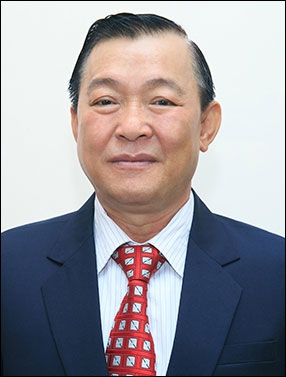
Binh Duong Water - Environment Joint Stock Company (BIWASE) has made important contributions to environmental protection and created many useful products by adopting circular production approaches. It has played a significant part in making Binh Duong a bright, green, clean, beautiful and civilized province. Vietnam Business Forum has an interview with Mr. Nguyen Van Thien, Chairman of the Board of Directors of BIWASE, to learn more about its business operations. Van Luong reports.
 In more than 40 years of development, BIWASE has gradually affirmed its position in the market as a leading company in the water industry and waste treatment. Could you please tell us your success story?
Our success partly comes from a very enthusiastic support and assistance of the Binh Duong provincial government, central and local authorities such as capital and land. BIWASE leaders also always uphold the spirit of innovation and dynamism in the market mechanism. We are always fully aware of the goals and tasks assigned by the Provincial People’s Committee: Supplying water for all consumers in the assigned scope; completely treating waste in cities, towns and districts and ensuring environmental safety; connecting and collecting municipal wastewater to a maximum to reduce water pollution in rivers, canals and streams so that farmers can have clean, safe water sources for agricultural production. We always invest to expand the capacity of water supply plants and pipeline networks, widen customer access to water sources, including the expansion of water supply to residents in rural areas.
Defining that personnel is a precious capital, in the past years, we have always placed top priority on building and training capable, professional and responsible employees who are paid good, fair salaries and bonuses to encourage them to devote themselves to company development.
Our starting point is very low, the lowest among seven Southeastern provinces and cities. With a limited capital source, we have to ensure effective operations; pay attention to the interests of the company and the employees first; rationalize immediate and long-term benefits, all costs are reasonably calculated. Therefore, in recent years, although the market was quite volatile, our operations were still stably growing to ensure good jobs for its employees and become an important contributor of the provincial budget.
Over the past time, due to impacts of serious climate change, drought and saltwater intrusion, stretching from the northern region to the Mekong Delta through the central region and the Central Highlands, what solutions have you taken to ensure water supply for production of enterprises and livelihoods of people?
Fortunately, Binh Duong province has rarely encountered water supply incidents in the past years although the Saigon River has seen higher salinity over the years. Understanding thoroughly the salinity cycle on the Saigon River every year, we have taken active measures to take water from the Dong Nai River. Any source of salt is suspended.
Obviously, saline water causes fast pipe corrosion or causes deposits if pipes are made from cast iron or steel. Therefore, to ensure water safety for consumers, we have considered plans to interconnect our major plants to support each other in case of necessity. Regarding plant capacity, the company ensures sufficient supply at all times even in case the demand unexpectedly increases by 15-20%, including input water.
To help people in drought-stricken areas, we have recently supported Ben Tre province with over 10,000 cubic meters of clean water for people’s daily needs.
In the past years, Japan has many programs to support and transfer water technologies for localities in Vietnam. So, how have you approached these technologies?
Over the past years, Vietnam-Japan cooperation relationship has particularly developed in the environmental field through technical cooperation and technology transfer. With top-class environmental technology in Asia, Japan certainly has a lot of optimal solutions and environmentally friendly, economically effective technologies in this field. Therefore, we have always paid special attention to acquiring experience and approaching technology from Japan. The knowledge and experience gained from Japanese experts is very useful for BIWASE and we have applied it very well to business operations which boost the company development and Binh Duong province in general.
Our Thu Dau Mot Wastewater Treatment Plant and Di An Wastewater Treatment Plant, which have a combined investment capital of more than US$300 million, are powered by modern technology and production equipment. The facilities cause very little odor, ensure environmental factors, and promote local sustainable development. This is a very clear evidence that obtaining experience and technology from Japan and other advanced countries in the world has helped us take further steps in its business operation.
On May 14, 2020, BIWASE started operating a plant that sorts and treats waste to produce an organic fertilizer called compost, with a daily capacity of 840 tons. Could you tell us more about this important event?
The plant is a key project that Binh Duong province has for many years researched and invested in a bid to “turn waste into resources”. The facility was completed in April 2020; however, due to the impact of Covid-19 pandemic, it has just started official operation in Chanh Phu Hoa ward, Ben Cat town, Binh Duong province. This is also the third bioorganic fertilizer plant in Chanh Phu Hoa Branch, bringing the total daily capacity of three facilities to 1,680 tons and ensuring the recycling rate of over 70%. The third plant with a daily capacity of 840 tons was considered by experts to be the largest in Vietnam and Southeast Asia at the present time.
At present, Binh Duong is leading the country in waste treatment technology at reasonable prices. Officially invested in 2016, the province was funded nearly €7 million by the Government of Finland to produce bio organic compost fertilizers from domestic waste. The facility, with a daily capacity of 420 tons, is being operated by BIWASE.
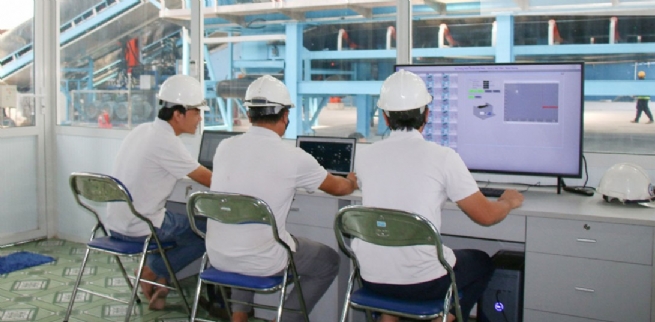
When it was installed and operated, the company's leaders employed engineers to operate production lines and researched production methods to replace broken equipment to reduce investment costs and quickly restore its operations in case of breakdown. The success of designing, manufacturing, installing and operating a complete waste-to-fertilizer plant has helped the progress of Vietnam's environmental industry and affirmed the maturity of our engineers and workers.
Fulfilling the business principle “Working, learning, improving and perfecting ourselves”, we have completely mastered the technology, manufactured, installed and operated the plants on our own like manufacturing multipurpose robots for composting and sorting waste. The Government of Finland, ADB and WB greatly appreciated the efficient capital use by BIWASE.
Not only being successful in waste collection and treatment and environmental protection and creating various useful products with circular methods, BIWASE also manufactures the bioorganic fertilizer branded Con Voi Binh Duong, certified for national circulation by the Ministry of Agriculture and Rural Development. Farmers in major production areas across the country have trusted Con Voi Binh Duong organic fertilizers for environment-friendly organic farming. This is a great encouragement for us to research and introduce many high-quality fertilizer products to support farmers throughout the country to achieve bumper harvest seasons.
Source: Vietnam Business Forum