

10:15:37 AM | 6/10/2025

“Business cooperation is a bright spot in Vietnam-Myanmar bilateral relations,” said Ms. Ha Thi Thanh Binh, General Secretary of the Association of Vietnamese Investors in Myanmar (AVIM), in an interview with Vietnam Business Forum on the occasion of the 50th anniversary of Vietnam-Myanmar diplomatic relations (May 28, 1975 - May 28, 2025).
Vietnamese Ambassador to Myanmar Ly Quoc Tuan visits the booth of Vietnamese businesses at a trade fair in Myanmar
Could you tell us about Vietnam’s current position in Myanmar? What are the main sectors that Vietnamese companies are investing in Myanmar?
On April 2, 2010, the Prime Minister of Vietnam and the President of Myanmar issued a joint declaration on Vietnam-Myanmar cooperation in which highlighted the cooperation in 12 priority economic sectors: agriculture, industry, fisheries, banking-finance, aviation, telecom, oil and gas, minerals, electrical equipment manufacturing, automobile assembly, construction, and trade-investment. This opened a new chapter in bilateral economic ties. Many joint venture agreements and memoranda of understanding (MOUs) were signed and seriously implemented by businesses. Vietnam rose from the 22nd largest investor in Myanmar in 2009 to the 7th largest by 2015. To date, Vietnam has 106 investment projects in Myanmar. Notably, in March 2016, the Joint Stock Commercial Bank for Investment and Development of Vietnam (BIDV) became the first Vietnamese bank licensed to open a branch in Myanmar and was among the first 10 foreign banks to receive such approval. Viettel entered a joint venture agreement with Myanmar's National Holding Public Limited and Star High Public Company on August 8, 2016. Its brand, Mytel, has since become the market leader in terms of customer base and revenue in Myanmar’s telecommunications sector. Other high-profile projects include the HAGL Center Complex in Yangon, direct flights between Vietnam and Myanmar operated by Vietnam Airlines and VietJet, and a joint venture project by VNPT Group providing broadband and telecommunications services.
What role has AVIM played in supporting Vietnamese businesses in doing business in Myanmar, and what are the plans for the future?
AVIM was established to bring together Vietnamese businesses, support member cooperation, and provide mutual assistance in investment activities in Myanmar. We provide a platform for information sharing, identify cooperation needs, and assist our members to deal with challenges to boost Vietnamese trade and investment in Myanmar.
Since inception, we have offered practical and strong support for its members. Our representative office in Myanmar was assigned to receive and support Vietnamese business delegations to register to work with relevant authorities in Myanmar, conduct site visits, and explore investment policies and expectations in Myanmar. AVIM provides information on investment regulations, market developments and priority sectors. AVIM remains a core partner for businesses pursuing investments in alignment with prioritized fields announced by the two governments in their joint declaration. It organizes economic cooperation events tied to high-level visits and connects Vietnamese businesses with Myanmar local partners through Union of Myanmar Federation of Chambers of Commerce and Industry (UMFCCI). We collaborate with the Vietnamese Embassy and Trade Office to support business matchmaking events in both Vietnam and Myanmar. Our consulting and information services are highly regarded as a reliable support for Vietnamese investors and businesses in Myanmar.
Vietnam’s investment in Myanmar, with the positive support of AVIM, has gradually helped elevate economic cooperation ties between the two countries. Vietnam's investment outcomes in Myanmar have laid an initial foundation for sustainable bilateral economic cooperation.
Amid the complex political developments in Myanmar, we have closely monitored the situation of Vietnamese businesses, promptly submitted reports and proposals to Vietnamese and Myanmar governments, and recommended mechanisms to support affected businesses. We have also advised Vietnamese companies investing in Myanmar to actively develop contingency plans in response to potential disruptions and supported them in implementing such plans to ensure the safety of their investment assets and the lives of Vietnamese citizens working and living in Myanmar.
Given the current situation, what are the main challenges for Vietnamese businesses in Myanmar, and how can they be addressed?
Political instability poses major risks for trade and investment. The legal system in Myanmar remains incomplete, inconsistent, and subject to frequent changes. Besides, legal information is not readily accessible. Vietnamese companies also face policy challenges such as incomplete and contradictory incentive policies, slow and complicated licensing procedures, underdeveloped infrastructure, higher land and utility costs than the regional average, and a shortage of skilled and expert workers across sectors.
Despite those difficulties and challenges, Myanmar offers promising investment opportunities. Its strategic location, abundant natural resources (minerals, gems, electric energy and solar energy), big market, large population, broad territory, low labor costs, and rich supply of agricultural and industrial materials are attractive to foreign investors, including Vietnam. Myanmar’s consumer preferences are similar to those of Vietnam and Vietnamese goods are well received, making Myanmar a potential market for Vietnamese goods and exports. Many of Vietnam’s key export products also enjoy tariff incentives in Myanmar. As the country transitions from a centrally planned economy to a market-oriented one, it is encouraging private sector to engage in importing and exporting activities. Particularly, the Myanmar government has also introduced tax incentives for Vietnamese exports such as agricultural machinery, pesticides, pharmaceuticals, and raw materials for production.
Vietnam and Myanmar have a long-standing, friendly relationship. Bilateral diplomatic ties have evolved into a strategic, comprehensive partnership with strong economic and trade cooperation. Vietnamese and Myanmar governments issued joint declarations to guide investments in sectors where Vietnam has strengths. The two governments have paid close attention to activities of Vietnamese and Myanmar businesses and frequently worked together to resolve difficulties faced by enterprises.
What recommendations do you have to promote economic cooperation between Vietnam and Myanmar?
Both governments and their relevant ministries should regularly coordinate to develop long-term economic cooperation strategies regarding investment, trade, and tourism. They should clearly identify priority sectors in line with the joint declarations and bilateral agreements so Vietnamese businesses can formulate workable strategic investment plans aligned with Myanmar’s calls for investment and Vietnam’s strengths.
The two governments should continue annual meetings of the Joint Committee to review outcomes, identify bottlenecks to be addressed to boost the two-way economic cooperation, and figure out directions for the years to come. Issues and difficulties raised by businesses should be discussed at these meetings for timely resolution.
The two governments should support, facilitate and introduce trustworthy Myanmar partners to Vietnamese companies investing in Myanmar through cooperation programs initiated by friendship associations, professional groups, chambers of commerce, competent agencies of Vietnam and Myanmar and Myanmar's local authorities. Vietnamese and Myanmar ministries and branches should regularly exchange information and collaborate in inspections to support Vietnamese companies in investment and trade cooperation and promptly resolve emerging investment issues in Myanmar.
Diplomatic missions in both nations should guide Vietnamese businesses in building contingency plans in response to political, social, climate or weather-related developments, assist them to carry out the plans, ensure the safety of investment assets and lives of Vietnamese citizens working and living in Myanmar. There is a need for citizen protection measures, including emergency evacuation plans if necessary.
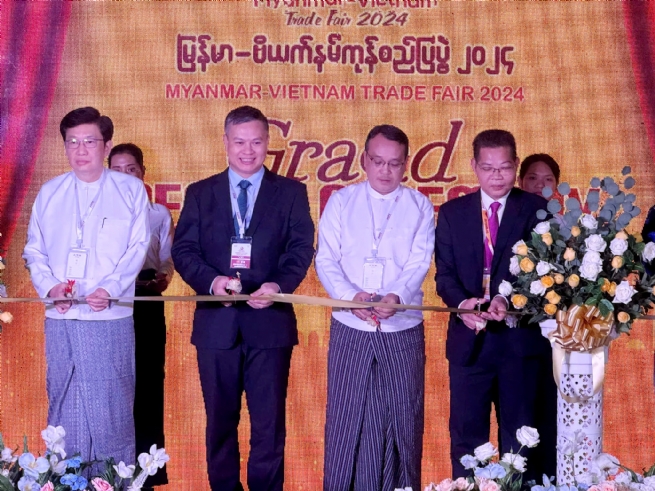
The Joint Trade Subcommittee should continue holding regular meetings and promoting business exchange missions between the two countries to enhance mutual understanding, share experiences, and seek investment cooperation opportunities. They should also exchange and adjust merchandise export and import regulations to diminish trade barriers by streamlining import-export procedures, reducing the time of quarantine and customs clearance procedures for goods of each country, and adjusting logistics fees to be more competitive. It should regularly organize conferences, seminars and talks on trade promotion cooperation, exhibition programs and trade fairs to introduce goods between Vietnam and Myanmar.
Finally, more cultural exchange, tourism promotion, and joint travel initiatives should be organized to enhance connectivity between the two countries and with the wider world. Vietnam and Myanmar should also launch cooperation programs linking their natural and cultural heritage sites.
Thank you very much!
Source: Vietnam Business Forum
 April 24–25, 2026
 Kinh Bac Cultural Center, Bac Ninh Province


 Vietnamese





