

11:28:57 AM | 7/27/2025

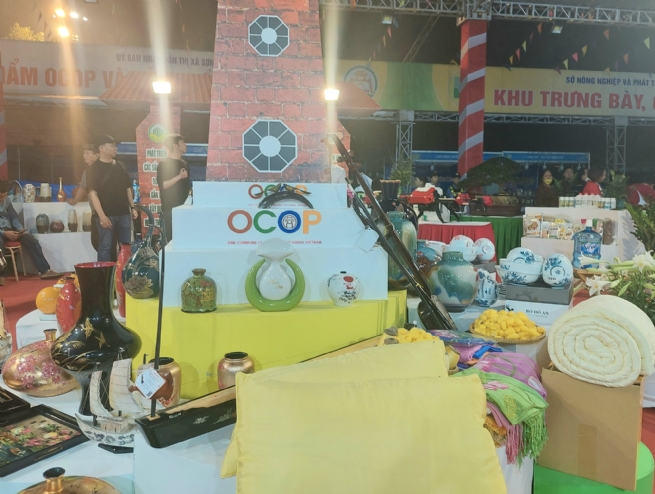
Many cooperatives in Hanoi have taken active roles in the “One Commune One Product” (OCOP) Program in recent years, improved product quality, sharpened competitiveness, expanded markets and created momentum for their development.

In particular, developing OCOP products from specialized farming areas by cooperatives has become an essential approach that opens up opportunities for value chain-based production, value-added enhancement, and job creation for rural residents
Effective models
According to the Hanoi Coordination Office of the New Rural Development Program, since its launch, the OCOP Program has attracted the participation of a lot of cooperatives across the city. Many products of cooperatives have been certified 3-star or higher according to the OCOP standards. These high-quality products are linked to value chains that align with market demands, create jobs, increase incomes for people, and effectively contribute to the National Target Program on New Rural Development.
Hanoi currently has over 1,330 active agricultural cooperatives and more than 3,300 certified OCOP products, most of which are food items derived from local agricultural products. Additionally, the city has developed many large-scale specialized farming zones, including 40,000 ha of rice, 5,000 ha of safe vegetables, 7,220 ha of aquaculture, and concentrated livestock production in 76 communes. These provide a solid foundation for cooperatives to build closed production chains from raw material zones to processing and consumption - a sustainable path to improve efficiency and ensure output market stability. To date, all communes in the city have established production models linked to key product consumption, with standardized processes and quality maintained across all stages in the chain.
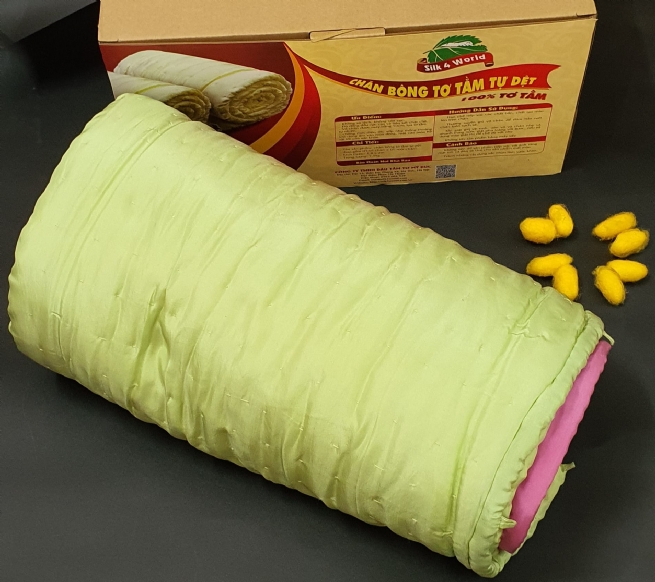
Van Duc vegetable production-consumption chain (Kim Duc commune), which supplies safe vegetables to supermarkets and collective kitchens; the silk production chain of My Duc Mulberry Silk Company, with a model where silkworms weave quilts, towels and pillows on their own; and the high-quality J02 rice production chain, with 4,000 ha under production-consumption linkage all illustrate that many cooperatives in the city have actively invested in building specialized crop and livestock farming areas and leveraged strengths of traditional craft villages to develop OCOP products. These models not only create high-quality products but also improve production management capacity, enhance competitiveness, and contribute to job creation and income growth for cooperative members.
However, urbanization and industrialization are shrinking specialized farming areas. Unstable planning of raw material areas also affects long-term investment plans of cooperatives and partnering businesses. Currently, few agricultural processors in Hanoi are supplied with enough locally sourced raw materials, often having to import from other provinces and cities, which increases costs and quality-related risks.
Promoting sustainable value chain linkages
Mr. Nguyen Manh Quyen, Vice Chairman of the Hanoi People’s Committee, Standing Vice Chairman of the Steering Committee for Program 04-Ctr/TU of the Hanoi Party Committee, and Chairman of the Hanoi OCOP Product Evaluation and Rating Council, said: “Hanoi’s OCOP products must truly represent the unique cultural identity and local advantages of each region while increasing added value and ensuring sustainable development. Therefore, when evaluating and rating OCOP products, we must take into account the planning of specialized farming areas and appropriate technology selection. Priority should be given to organic products, value chain-based products and environmentally friendly products that are connected to tourism and services.” To accelerate this process, Hanoi has issued various policies to encourage close cooperation of businesses, cooperatives and farmers from production to processing and consumption. Currently, the Hanoi Department of Agriculture and Environment is strengthening interregional connectivity in supplying raw materials by signing cooperation agreements between Hanoi and agriculturally advantaged provinces to ensure stable, quality and traceable supply sources.
Nevertheless, the number of truly sustainable chains remains limited while raw material zones for such chains are still fragmented and unsynchronized. To sustainably develop OCOP products from specialized farming areas, Hanoi needs to adopt comprehensive solutions like re-planning raw material zones to suit local conditions, prioritizing mulberry cultivation areas for sericulture, and material crop plants for handicrafts (like rattan, bamboo, and reeds). At the same time, there is a need to accelerate scientific and technological application to improve crop varieties and enhance productivity and quality.
Hanoi also needs to invest in preservation, transportation and quality inspection infrastructure at specialized farming areas and craft villages. Establishing centralized material trading centers will help reduce intermediary costs and ensure transparent input quality. In addition, supporting cooperatives to improve management capacity, expand production and strengthen effective links with businesses along the value chain is essential. Support policies must be flexible and tailored to each sector's characteristics, thus creating motivation for businesses to invest in raw material areas.
Developing OCOP products from the specialized farming areas of cooperatives is not only consistent with Party and State policies on sustainable agricultural development but also fundamental to increase income and improve living standards for rural residents in Hanoi. To fully tap this potential, long-term strong and coordinated engagement from authorities, businesses, cooperatives and citizens is required. Once the ‘roots’- the raw material zones - are firmly established, the ‘fruition’ of the OCOP Program will undoubtedly spread further in both domestic and international markets.
By Dinh Bao, Vietnam Business Forum
| This special section is supported by Hanoi Coordination Office of the New Rural Development Program |
 April 24–25, 2026
 Kinh Bac Cultural Center, Bac Ninh Province


 Vietnamese





