

3:07:50 PM | 11/12/2025

With a population of over 4 million and a workforce of nearly 1.9 million, Phu Tho is prioritizing the development of high-quality human resources as a pillar to drive breakthroughs, attract major corporations, and adapt to emerging industrial trends.
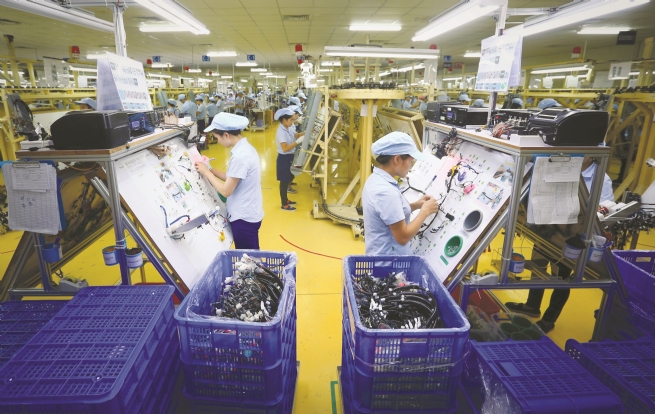
Phu Tho focuses on training workers to meet enterprises’ demand for a skilled workforce
Abundant workforce but limited high-level skills
Following the administrative merger, Phu Tho now covers more than 9,361 square kilometers with a population exceeding 4 million, ranking 11th nationwide. This scale provides a competitive advantage in human resources within the midland and northern mountainous regions. The province’s workforce currently totals nearly 1.9 million, accounting for 47% of the population, forming the foundation for industrial, service, and digital transformation sectors in the coming period.
Currently, the employment rate for people aged 15 and older in Phu Tho exceeds 50%, corresponding to 574,703 workers employed across 23,258 enterprises. Among them, the foreign-invested and private enterprise sectors dominate with over 559,000 workers, while the public sector accounts for only about 9,000 employees.
The proportion of trained workers reaches 73.3%, yet only 34.6% hold formal degrees or certificates. This indicates that workforce quality has not yet met market demands, particularly as the province aims to develop high-tech industries. Average labor productivity reaches VND212.2 million per worker per year, increasing 5.8% annually, reflecting progress but leaving substantial room for improvement.
The workforce structure has shifted positively, with agriculture, forestry, and fisheries now accounting for only 13.2%, industry 53%, and services 33.8%. However, in practice, enterprises in the province require approximately 40,000 workers annually, of whom 30,400 lack formal training. The shortage of skilled and intermediate-level workers forces many FDI companies to hire unskilled labor for simple production tasks, particularly in textiles, footwear, electronics, and construction materials.
Notably, emerging sectors such as semiconductors, artificial intelligence, logistics, and green energy, which are central to Phu Tho’s investment strategy, still do not have dedicated training programs. Incentives for enterprises to engage in vocational education remain limited, causing a mismatch between labor supply and demand and putting pressure on the local labor market.
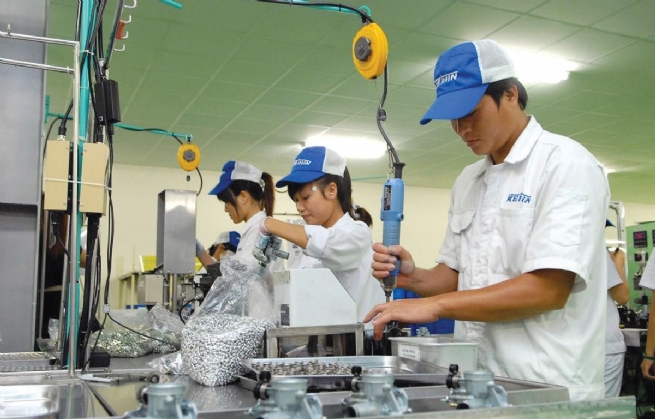
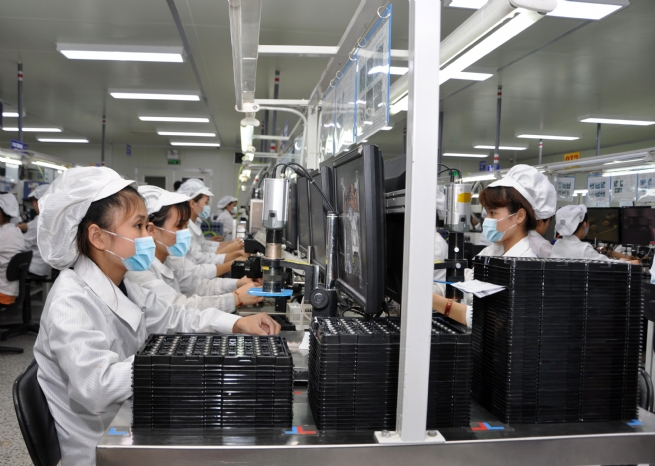
The province closely coordinates with businesses to enforce labor regulations and ensure harmonious working environments
High-quality human resource development strategy
In response to these challenges, the Executive Committee of the Phu Tho Party Committee has issued a specialized resolution on developing high-quality human resources for 2025-2030 with a vision toward 2045, identifying it as a “strategic lever” to make Phu Tho a modern industrial and service hub in the region.
Under the resolution, by 2030, at least 70% of vocational and university programs will be standardized according to national and international criteria, and 50,000 high-quality workers will be trained in key sectors such as processing and manufacturing, digital technology, healthcare, tourism, and green energy.
The province also aims to train and upskill 5,000 engineers and technicians in artificial intelligence, equip 80% of the workforce with basic digital skills, and ensure that 50% of university graduates meet international language standards. By 2030, 75% of the workforce will hold formal degrees or certificates, urban unemployment will fall below 2.5%, and approximately 250,000 new jobs will be created, more than half of which will require specialized skills.
To achieve these goals, Phu Tho is improving its human resource data infrastructure and developing a digital job exchange platform using artificial intelligence, projected to handle over 100,000 transactions per year. Starting in 2026, periodic labor supply and demand forecasts will be conducted to guide policy planning and align training programs with enterprise needs.
The province is also investing comprehensively in higher education and vocational training. Phu Tho currently has five universities (two provincial, three under central ministries) and 43 vocational training institutions, including 20 colleges, 12 intermediate-level schools, and 11 vocational education centers. Annually, these institutions train about 100,000 students and trainees, including 77,000 new vocational students and over 12,000 university students in 2024 alone.
Phu Tho encourages the expansion of dual-training models that link educational institutions with businesses, combining study and work to ensure students gain practical skills and immediate employment opportunities after graduation. This approach is seen as a foundational solution to rapidly improve workforce quality while gradually building a sustainable human resource ecosystem.
Enterprises and government acting together
Alongside its strategic direction, Phu Tho province is implementing concrete measures to connect businesses with the labor market, particularly foreign-invested enterprises, which are a key driver of growth.
At the labor supply cooperation conference with the Korea Chamber of Commerce & Industry (KORCHAM) held on August 28, 2025, provincial leaders reported that year-end recruitment demand is expected to exceed 40,000 workers. Among them, 26 Korean companies operating in Phu Tho require 4,930 workers, primarily in traditional manufacturing sectors.
However, many companies reported challenges with workforce stability and high turnover, as compensation policies and workplace conditions vary across businesses. Employment service centers and labor supply units remain fragmented and lack coordination in sourcing and recruitment.
In response, Vice Chairman of the Provincial People’s Committee Nguyen Khac Hieu affirmed that the province will strengthen government-business connections and establish long-term, sustainable cooperation mechanisms with foreign investor associations. The Department of Home Affairs has been tasked with advising on human resource strategies and supporting recruitment, while the Industrial Parks Management Board and the Investment Promotion Center will closely coordinate with businesses to enforce labor regulations and ensure harmonious working environments.
This approach is seen as a crucial step for Phu Tho to proactively meet investors’ labor needs, address immediate challenges, and build trust for long-term business commitment to the province. As Vietnam enters a phase of growth driven by innovation and technology, Phu Tho’s strategy of placing people at the center of development is considered a forward-looking approach. It also sends a clear message to investors: Phu Tho offers not only strategic location and ready infrastructure but also a commitment to providing high-quality human resources, a decisive factor for long-term success.
By Le Hien, Vietnam Business Forum
 April 24–25, 2026
 Kinh Bac Cultural Center, Bac Ninh Province


 Vietnamese





