

11:15:37 AM | 11/17/2025

Pfizer Vietnam, in collaboration with the Department of Pediatrics (University of Medicine and Pharmacy Ho Chi Minh City) and the Centre for Health Professionals Training (University of Medicine and Pharmacy Ho Chi Minh City), successfully organized a series of specialized scientific symposia on pneumococcus with the theme “Serotype Dynamics in the Pediatric Pneumococcal Disease” in Ho Chi Minh City on November 11th and in Hanoi on November 13th.
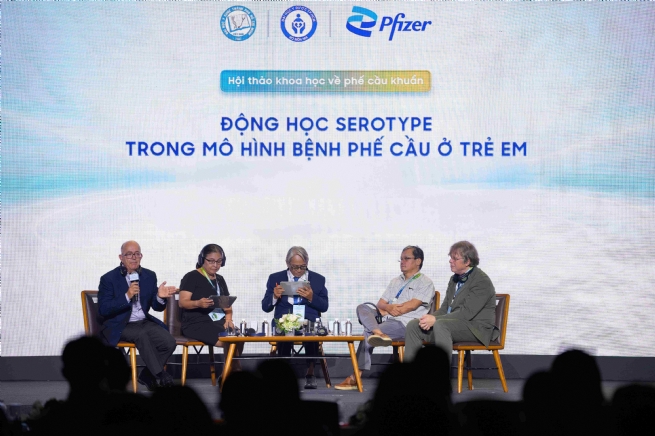
Local and international healthcare experts shared scientific insights at the symposia
Young Children as The Highest-risk Group for Highly Virulent Pneumococcal Serotypes
According to the World Health Organization (WHO), approximately 1,6 million people die each year from diseases caused by pneumococcus, and about 1 million of these deaths occur in children under the age of five. Pneumococcus is responsible for serious illnesses such as pneumonia, otitis media and especially invasive diseases that enter the bloodstream or cerebrospinal fluid such as meningitis and bacteremia. Vietnam is one of the 15 countries with the highest prevalence of childhood pneumonia, which is a leading disease in terms of morbidity and mortality among children under five.
Studies also indicate that young children are at high risk of infection by highly virulent pneumococcal serotypes. Invasive diseases such as meningitis and bacteremia can lead to severe neurological, cardiac, and renal sequelae, with approximately 25 to 50 percent of survivors facing long-term neurological complications.
Speaking at the symposia, Dr. Truong Huu Khanh, former Head of the Department of Infection and Neurology of Children’s Hospital 1 in Ho Chi Minh City and Vice President of the Infectious Diseases Association, emphasized: “Young children are the most vulnerable group to pneumococcus, particularly when infected with highly virulent serotypes. The invasiveness and virulence vary across pneumococcal serotypes, necessitating the need for prevention strategies that broadly cover high-risk serotypes.”

Dr. Truong Huu Khanh, former Head of the Department of Infection and Neurology of Children’s Hospital 1 in Ho Chi Minh City and Vice President of the Infectious Diseases Association, shared about the disease burden of pneumococcal infections in children
He also warned that pneumococcus is currently one of the leading pathogens associated with antimicrobial resistance (AMR) - related deaths across all age groups. A 2019 study published in The Lancet estimated that approximately 600,000 deaths are related to antibiotic-resistant pneumococcus, with around 125,000 directly caused by this factor. This bacterium is among the four most dangerous pathogens contributing to global AMR mortality.
Experts note that more than 100 pneumococcal serotypes have been identified, and 23 of them account for approximately 80 to 90 percent of invasive pneumococcal disease cases in children. These include high-risk serotypes such as 1, 3, 5, 6A, 7F, 8, 11A, 12F, 15A, 19A, 19F and 31. The continuous circulation and evolution of these serotypes highlight the urgent need to update prevention strategies based on current epidemiology.
Given the complex evolution of pneumococcus and the growing threat of antibiotic resistance, experts at the symposia stressed that proactive prevention is the most critical strategy. This aligns with Resolution 72-NQ/TW, which emphasizes shifting focus from treatment to prevention.
In concluding remarks, experts recommended that prevention strategies must be comprehensive, coordinated, and sustainable. These include enhancing personal and environmental hygiene, raising community awareness about pneumococcal disease and its early warning signs and early proactive prevention.
According to WHO, vaccination is considered one of the most effective measures to reduce the burden of infectious diseases, especially in the context of global antibiotic resistance. Vaccination not only protects individuals but also reduces bacterial carriage at the community level creating an “immunity shield” that protects even those who are not vaccinated.
“The continuous circulation and evolution of pneumococcal serotypes create an urgent need for close monitoring to better control the disease. The application of advanced preventive solutions with broad high-risk serotype coverage is essential to close current immunity gaps. This scientific approach is very important for minimizing the risk of morbidity and mortality from invasive pneumococcal disease, while also contributing to the proactive and sustainable protection of child health” - stated Professor Javier Díez Domingo from the Vaccine Research Department, FISABIO Public Health Foundation, Cataluña Avenue, Valencia, Spain.
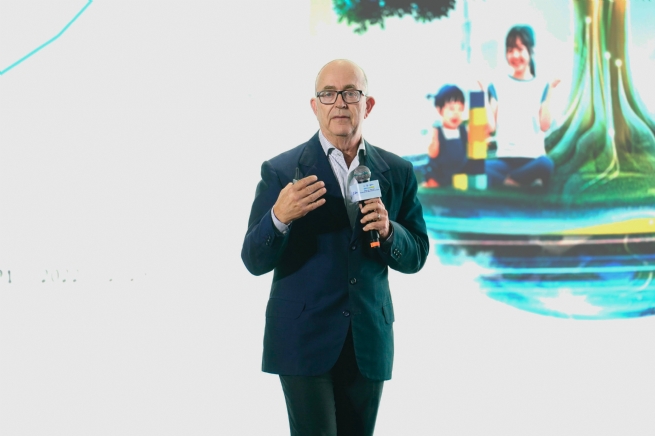
Professor Javier Díez Domingo from the Vaccine Research Department, FISABIO Public Health Foundation, Cataluña Avenue, Valencia, Spain, delivered reports on invasive pneumococcal disease at the symposia
The Legacy of Conjugate Vaccines as a Solid Foundation for the Future
To date, the Ministry of Health has licensed five pneumococcal vaccines. Each vaccine differs in development technology, serotype coverage, clinical research pathways and post-introduction data. Four of these vaccines are produced using conjugate technology, which enables the development of immune memory and reduces pneumococcal carriage in the nasopharynx, contributing to long-lasting protection and stronger herd immunity.
Speaking at the symposia, Dr. Mark Fletcher, Senior Director, Pfizer Vaccines Research and Development, Medical Affairs, noted: “The legacy of pneumococcal conjugate vaccines represents a global medical achievement, having been widely implemented in more than 160 countries and demonstrating a significant impact in reducing disease burden and mortality among children. We believe this provides a solid foundation to further expand protective coverage, enhance preventive effectiveness, and address complex future health challenges such as antimicrobial resistance.”

Dr. Mark Fletcher, Senior Director, Pfizer Vaccines Research and Development, Medical Affairs, spoke at the symposia
The symposia are a part of Pfizer Vietnam continuous efforts in supporting the healthcare sector through awareness-raising initiatives and sharing of international best practices, contributing to the protection of public health and especially safeguarding children, who represent the future of the nation.
Source: Vietnam Business Forum


 Vietnamese





