2:16:10 PM | 11/12/2025

Established in 1967, CECO has nearly 60 years of experience in investment and construction consulting, environmental impact assessment, engineering design, and Engineering, Procurement, and Construction (EPC), Engineering, Procurement, and Construction management (EPCm), and Project Management Consultancy (PMC) contracting. The company operates across a wide range of industries, including chemicals, industrial gases, fertilizers, petrochemicals, petroleum, power and utilities, environmental management and waste treatment, food processing, pharmaceuticals, consumer industries, mineral extraction and processing, renewable energy, and rubber products, among others. |
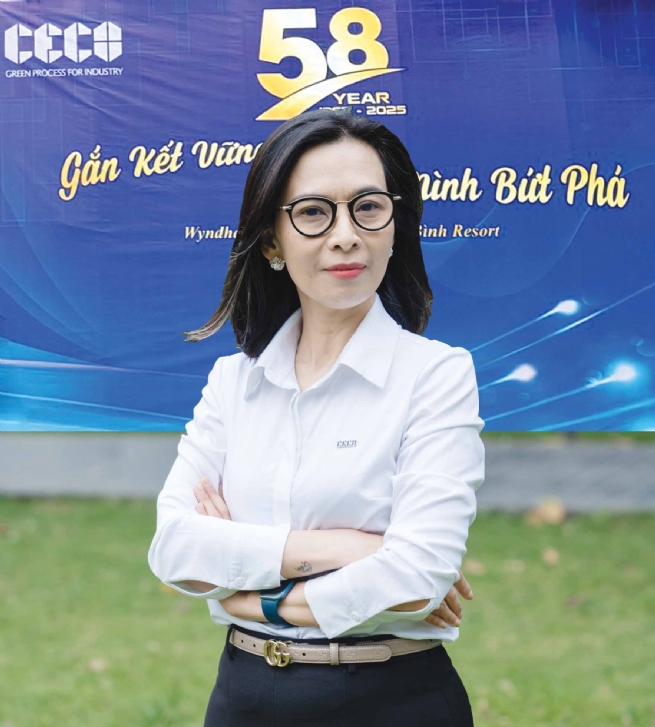
The Chemical Industry Engineering Joint Stock Company (CECO) is one of the few Vietnamese firms capable of providing consulting and implementation services for chemical industry projects powered by renewable energy, along with related areas such as hydrogen (H2) and energy storage within the chemical industry value chain. Vietnam Business Forum interviewed Mrs. Nguyen Thi Van Anh, CEO of CECO, about the company’s strategic direction and new initiatives in its green transformation journey and integration into the global energy value chain.
As a designer and general contractor for caustic soda and chlorine projects, where H2 is a by-product, what solutions has CECO applied to recover and utilize hydrogen while minimizing production risks?
Caustic soda (sodium hydroxide, NaOH) is a basic chemical essential for many industries. It is widely used in paper production, textiles, detergents, water treatment, food processing, leather, silicate manufacturing, and bauxite processing.
As a consultant, engineering design, or EPC general contractor, CECO has supported investors in basic chemical projects, contributing to over 80% of Vietnam’s total caustic soda output supplied to the domestic market.
Selecting the appropriate process technology is one of a key determinant of project success. The right technology not only ensures product quality but also delivers significant advantages—such as energy efficiency, optimized Operating Expenditure (OPEX), reduced operational risks, and compliance with safety and environmental standards.
To maintain balance between caustic soda and chlorine production, CECO evaluates various technology options, conducts material balance analyses, selects the most efficient solutions, and diversifies the product portfolio according to project scale, design capacity, and total investment. The diversified products include hydrochloric acid (HCl), chlorine gas (Cl2), sodium hypochlorite (NaClO), polyaluminum chloride (PAC), ferric chloride (FeCl3), chloramine B, trichloroisocyanuric acid (TCCA), sulfuric acid (H2SO4), and phosphoric acid (H3PO4). These solutions enhance operational efficiency and strengthen investors’ competitiveness in the chemical market.
In the NH3-Urea production chain, what contributions has CECO made in design, excess hydrogen treatment, CO2 integration, and energy-saving solutions?
In the context of global sustainable development, Vietnam’s chemical industry is actively implementing comprehensive restructuring strategies. The main objectives are to expand product chains toward higher value and environmentally friendly goods. The sector is also applying technology to recover and refine industrial emissions, reduce energy losses, and optimize resource efficiency. These solutions not only lower production costs but also play a key role in sustainable economic growth. Technical improvements and restructuring represent a practical contribution by the chemical industry to Vietnam’s Net Zero 2050 commitment.
A major strategy involves balancing excess hydrogen from ammonia production plants to create high-value products such as hydrogen peroxide (H2O2). H2O2 is an essential bleaching and disinfecting chemical widely used in paper, textiles, water treatment, and medical applications. However, domestic supply remains insufficient. Currently, Hung Phat Ha Bac Chemical Joint Stock Company operates an H2O2 production line with a capacity of 10,000 tons per year, using hydrogen from Ha Bac Fertilizer Plant. As a result, domestic H2O2 supply relies heavily on imports from Thailand, South Korea, Indonesia, Bangladesh, Taiwan, and China. Integrating H2O2 production lines into other fertilizer plants would provide stable supply, reduce imports, and enhance domestic self-sufficiency while meeting market demand.
Carbon dioxide (CO2), one of the greenhouse gases with large emission volumes in Vietnam's industrial structure. Technical solutions are being implemented to recover CO2 from emissions of urea, ethanol, sugar, and beer production, as well as natural gas extraction and fuel oil combustion. Urea plants account for more than 50% of total recovered CO2. The technical process for CO2 recovery and purification involves separating gas mixtures to obtain pure CO2, drying it, and compressing it to required pressures for storage. Applying these technologies systematically is crucial to reducing emissions and improving resource efficiency in Vietnam.
CECO emphasizes that investment efficiency in integrated systems for high-value products such as H2O2 production and CO2 recovery depends on careful technical and economic analysis. Factors include existing infrastructure, planned production capacity, recovery technologies, and equipment selection.
To ensure stable production in line with technical specifications and maximize investor returns, CECO optimizes equipment design by classifying critical components that must be sourced from licensed technology suppliers, while auxiliary items such as columns, vessels, and tanks are locally fabricated. This strategy not only reduces overall investment costs but also strengthens Vietnam’s supply chain and mechanical engineering industry.
Leveraging extensive experience in designing fertilizer plants, CECO has an advantage in material and energy balance calculations, allowing efficient integration of raw materials, intermediates, excess heat, and emissions. This approach saves energy, reduces emissions, and supports a circular economy model for the entire project.
With more than 1,600 chemical and fertilizer projects completed, CECO is committed to providing high-quality investment consulting services, helping investors realize business strategies and maximize profits through sustainable solutions.
CECO has participated in international training programs on green hydrogen (GH2) and Power-to-X organized by GIZ and the PTX Hub to stay updated with the latest global standards. What advantages does this bring to CECO in implementing GH2 projects?
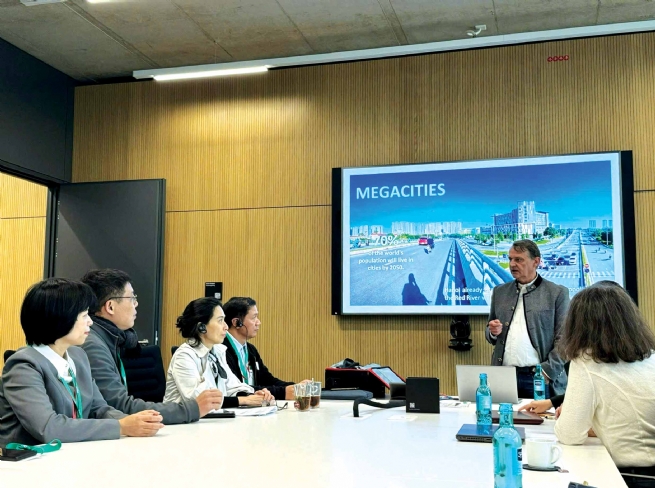
In recent years, CECO has worked closely with GIZ and the PTX Hub through international training programs and seminars on policy and legal frameworks for energy transition. These programs have provided CECO with advanced knowledge of electrolysis technologies, helping the company select the most efficient technologies, equipment, and production process designs to ensure high performance, low operating costs, and safety for GH2 projects.
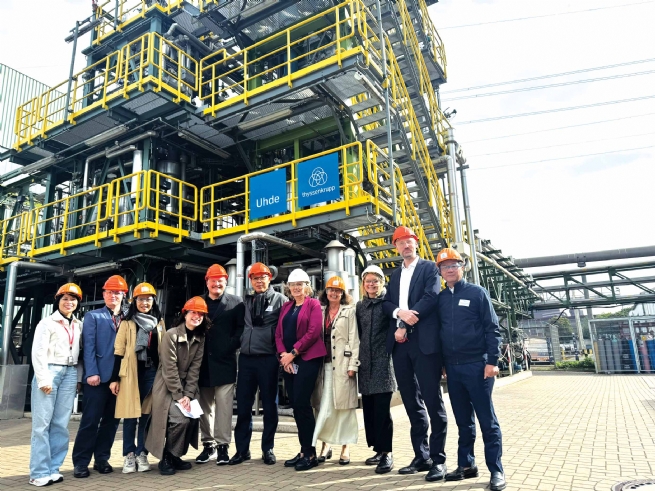
Through GIZ and PTX Hub initiatives, CECO has also visited facilities and worked directly with technology suppliers and applied research centers in Germany, such as Archigas (developer of advanced hydrogen analysis and monitoring systems ensuring safe and efficient operations); Carbon2Chem - Thyssenkrupp (which converts steel mill emissions into chemical feedstocks); the Julich Research Center (developer of integrated hydrogen technologies covering production, storage, transport, and application); and AWG Wuppertal (operator of a waste-to-energy plant that integrates renewable-powered electrolysis for hydrogen production and utilization).
Direct exposure to these advanced models in Germany has enabled CECO and other Vietnamese enterprises to narrow the technological gap, gain practical insights, and develop a comprehensive understanding of the market. This experience supports their progress toward realizing Vietnam’s green transition goals for 2025-2030 and its vision for 2050.
Based on practical experience, what recommendations does CECO have for the Government, regulatory agencies, and the business community regarding support mechanisms, investment incentives, and standards and certification for GH2?
Based on practical experience in the hydrogen industry and current challenges in Vietnam, CECO has made several recommendations to the Government, regulatory agencies, and the business community regarding support mechanisms, investment incentives, standards, and certification for GH2. These proposals aim to reduce initial investment costs, enhance competitiveness, encourage GH2 technology investment, and minimize regulatory overlaps and legal gaps:
1. Establish a Green Development Investment Fund mobilizing capital from state, private, and international sources to finance pilot GH2 projects, with flexible, rapid, and risk-tolerant funding mechanisms.
2. Develop a price support mechanisms for early-stage GH2 projects to offset high production costs and reduce investor risk.
3. Include green hydrogen (GH2) projects — covering production, storage, transportation, and utilization — in the category of specially incentivized investments, eligible for corporate income tax reductions, import duty exemptions on equipment, and access to preferential credit financing.
4. Develop specific regulations for international trading of greenhouse gas reduction outcomes and carbon credits generated by GH2 projects.
5. Issue national technical regulations (QCVN) and standards (TCVN) on quality and safety for GH2 production, storage, transport, and use as soon as possible.
6. Incorporate explicit provisions on GH2 into legal frameworks such as the Law on Investment, Law on Construction, Law on Chemicals, and Law on Renewable Energy to ensure long-term legal stability and transparency for investors.
7. Promote international trade connections to lay the foundation for Vietnam’s GH2 and related product exports, forming a new global value chain.
8. Intensify research and development (R&D) to localize critical equipment and core technologies in the green hydrogen (GH2) value chain. This approach not only drives GH2 growth but also strengthens Vietnam’s technological independence.
What message does CECO wish to convey at COP30, and how does the company hope to be recognized through VCCI’s communication channels?
At COP30, CECO aims to deliver the message: “Vietnam - A Trusted Partner and Potential Destination for Green Hydrogen Investment.”
This message highlights Vietnam’s strong commitment to its Net Zero target and its potential to participate in the global clean energy supply chain through the active role of domestic enterprises. CECO is one of the Vietnamese companies committed to investing resources and accompanying the nation’s green transition.
CECO hopes to be recognized as one of Vietnam’s pioneering consulting enterprises, leading in international cooperation, technology adoption, and the application of global standards in the design and implementation of GH2 projects, as well as in the broader chemical industry.
Thank you very much!
Source: Vietnam Business Forum


 Vietnamese