

2:05:59 PM | 12/2/2025

At the Fourth Partnering for Green Growth and the Global Goals 2030 (P4G) Summit, Vietnam 2025, General Secretary of the Communist Party of Vietnam To Lam stressed that, amid rapid global change, Vietnam is striving to enter a new era of national strength and prosperity. The country aims to stand alongside major world powers and build a successful socialist society marked by wealth, strong governance, democracy, fairness, civilization, and happiness. By 2030, Vietnam targets becoming a developing nation with modern industry and high middle income, and by 2045, a developed socialist country with high income.
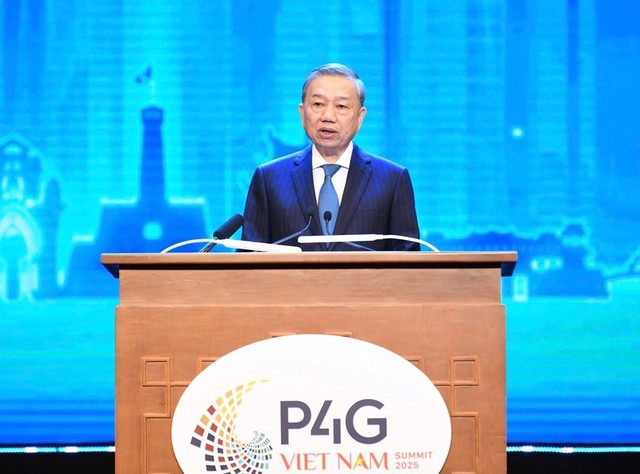
Party General Secretary To Lam delivers keynote speech at P4G Summit, Hanoi, April 2025
With 40 years of experience in renovation, Vietnam has affirmed that achieving these objectives must follow the principles of “sustainability, inclusiveness, and harmony,” including:
(i) Rapid development must go together with sustainability and quality, ensuring balance among economic growth, culture, society, environmental protection, and climate adaptation;
(ii) National development must align with international responsibility, contributing more to regional and global peace, stability, and progress, for the well-being of humanity and global civilization, with cooperation based on the “win-win” principle;
(iii) The development process must place people at the center, making them the goal and driving force of all policies and strategies; citizens must be the beneficiaries of development outcomes.According to General Secretary To Lam, Vietnam is prioritizing strategic solutions for national development, including:
First, advancing institutional reform as the central breakthrough. This means promoting reform, opening the economy, removing obstacles, and mobilizing all resources for development, especially socio-economic development; creating conditions for all economic sectors to grow, with particular focus on the private sector; and enabling deeper international integration.
Second, promoting the development of science, technology, innovation, and national digital transformation as the leading breakthrough. This is the key driver for rapidly developing a modern productive force, improving production relations, and renewing national governance. Data is considered a new resource, the “air and light” of the new era, and a new means of production. Digital transformation helps modernize production and business methods and strengthen the productive force. Innovation is viewed as the “magic wand” for achieving sustainable prosperity.
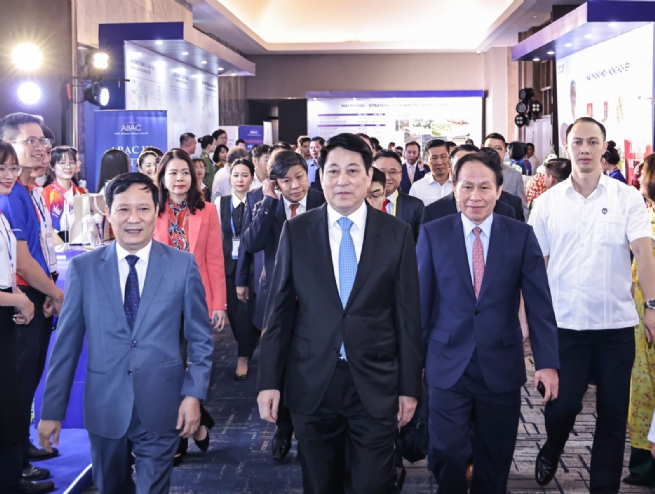
President Luong Cuong and delegates at APEC Business Advisory Council ABAC III, Hai Phong, July 2025
Regarding the green transition, thanks to a timely and well-aligned approach integrating the Green Growth Strategy with the 10-year socio-economic development strategy, Vietnam, despite being a developing country with a transitioning economy and limited resources, has achieved several important initial results:
(i) Leading ASEAN in renewable energy supply, with wind and solar power making up two-thirds of the region’s total capacity;
(ii) Becoming a model for sustainable green agriculture, with the 1-million-hectare low-emission, high-quality rice project serving as a pioneering initiative that has drawn strong interest from international partners and organizations;
(iii) Acting as an active and responsible member of major multilateral mechanisms and initiatives on green growth and energy transition, including the Paris Agreement on climate change, the Just Energy Transition Partnership (JETP), and P4G.
In terms of institutions, Vietnam has essentially built the mechanisms and frameworks needed for green growth, including national planning, comprehensive energy planning, sectoral strategies and development plans, lists of priority projects, and decrees to address challenges in energy and green growth. However, as a developing country with a transforming economy, Vietnam still faces major difficulties in finance, technology, and human resources, as well as climate resilience and global geopolitical uncertainties.
“Looking ahead, Vietnam is accelerating strategic breakthroughs to prepare as effectively as possible for development that is rapid, green, inclusive, and sustainable. We will firmly turn political commitments into practical actions, creating momentum for businesses and society to engage in green economic development, where green institutions form the decisive foundation, green technology drives breakthroughs, and green human resources play a central role,” General Secretary To Lam emphasized.
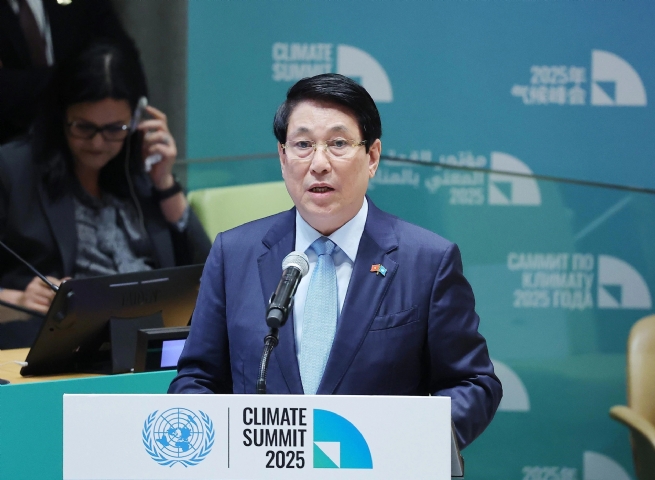
President Luong Cuong delivers remarks at the Climate Summit 2025 in New York, U.S., September, 2025
Speaking at Climate Summit at the United Nations headquarters in September 2025, President of Vietnam Luong Cuong stressed that, as one of the countries most affected by climate change, Vietnam fully recognizes its responsibilities and remains firmly committed to sustainable development. This commitment includes balancing economic growth with environmental protection and climate adaptation, continuously improving institutions and policies, and establishing a comprehensive legal framework to support green and just transitions. Vietnam is determined to implement its commitments, strengthen capacity, and enhance resilience for vulnerable regions and communities.
To overcome the challenges of climate change together, President Luong Cuong said countries must fulfill climate finance commitments fully and promptly, especially resources for a just transition that ensure social welfare, create jobs, and support workers and vulnerable communities.
To help developing countries close the gap, he called on the international community to accelerate the transfer of advanced, clean, and efficient technologies that support green and circular economic development.
President Luong Cuong highlighted the need for the United Nations to continue playing a central role in promoting solidarity, cooperation, trust, fairness, and justice, ensuring that the objectives of the United Nations Framework Convention on Climate Change and the Paris Agreement are realized under the principle of common but differentiated responsibilities. Developed countries should take the lead by making strong commitments on emission reduction, providing finance and technology, initiating and promoting new initiatives and solutions, and fostering dialogue and collaboration among nations, businesses, civil society organizations, and people worldwide to take collective climate action.
Speaking at Climate Summit at the United Nations headquarters in September 2025, President of Vietnam Luong Cuong stressed that, as one of the countries most affected by climate change, Vietnam fully recognizes its responsibilities and remains firmly committed to sustainable development. This commitment includes balancing economic growth with environmental protection and climate adaptation, continuously improving institutions and policies, and establishing a comprehensive legal framework to support green and just transitions. Vietnam is determined to implement its commitments, strengthen capacity, and enhance resilience for vulnerable regions and communities.
To overcome the challenges of climate change together, President Luong Cuong said countries must fulfill climate finance commitments fully and promptly, especially resources for a just transition that ensure social welfare, create jobs, and support workers and vulnerable communities.
To help developing countries close the gap, he called on the international community to accelerate the transfer of advanced, clean, and efficient technologies that support green and circular economic development.
President Luong Cuong highlighted the need for the United Nations to continue playing a central role in promoting solidarity, cooperation, trust, fairness, and justice, ensuring that the objectives of the United Nations Framework Convention on Climate Change and the Paris Agreement are realized under the principle of common but differentiated responsibilities. Developed countries should take the lead by making strong commitments on emission reduction, providing finance and technology, initiating and promoting new initiatives and solutions, and fostering dialogue and collaboration among nations, businesses, civil society organizations, and people worldwide to take collective climate action.
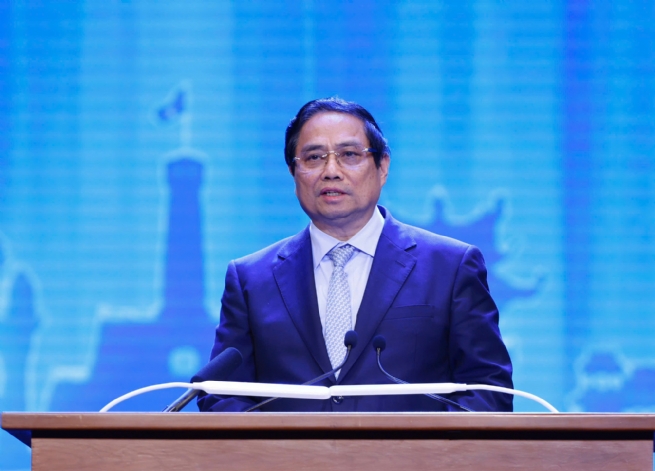
Prime Minister Pham Minh Chinh emphasizes green transition as a strategic priority for nations worldwide at P4G Summit, Hanoi, April 2025
Green transition has provided valuable lessons and guidance for a new development phase that is greener, more inclusive, and more sustainable. It requires a comprehensive, inclusive, and global approach that leaves no one behind. This was the affirmation of Vietnam’s Prime Minister Pham Minh Chinh in his remarks at the Fourth Partnering for Green Growth and the Global Goals 2030 (P4G) Summit, Vietnam 2025.
As the host country of the fourth P4G Summit, Prime Minister Pham Minh Chinh outlined three key proposals.
First, promote a green mindset by emphasizing the development of science, technology, innovation, and digital transformation linked to green growth. Green resources come from a green mindset, the driver of green growth comes from green transition, and green strength stems from the awareness of citizens and businesses at national, regional, and global levels.
Second, build a responsible green community. The government provides guidance, encouragement, and stable institutions to support green growth. The private sector leads in technology investment and the dissemination of green standards. The scientific community pioneers green technology development and trains green human resources. Citizens continuously enhance their green awareness and actively benefit from the results of the green transition.
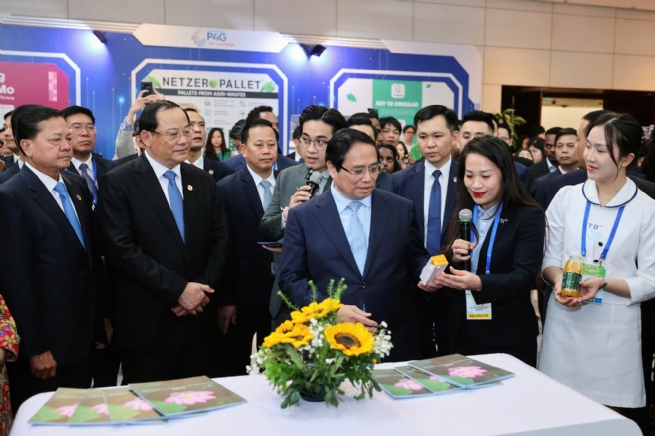
Prime Minister Pham Minh Chinh and leaders from ministries and international organizations attend Green Growth Exhibition at P4G Summit
Third, strengthen international cooperation and expand multi-stakeholder green partnerships, including public-private partnerships, South-South and North-South cooperation, and multilateral frameworks. These efforts aim to remove institutional barriers, improve access, and accelerate the flow of green capital, green technology, and green governance.
Prime Minister Pham Minh Chinh stressed that developed countries should take the lead in providing financial, technological, and institutional reform support, while developing countries should effectively leverage domestic capacity in combination with external resources.
Speaking at a high-level segment of the general debate of the 150th Assembly of the Inter-Parliamentary Union (IPU-150) in Uzbekistan on April 6, 2025, Chairman of Vietnam’s National Assembly Tran Thanh Man emphasized that sustainable development must go hand in hand with social equity. Development cannot be considered successful if a significant portion of the population is left behind. Parliamentary leaders must ensure that all policies aim to reduce income inequality and guarantee that every citizen, regardless of gender, religion, ethnicity, or social background, benefits from development outcomes.
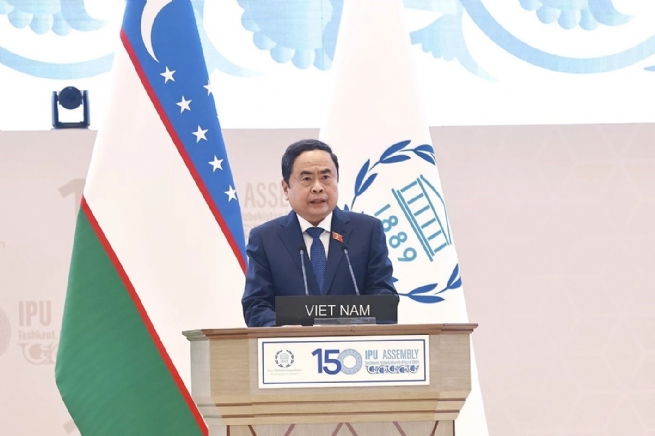
National Assembly Chairman Tran Thanh Man addresses high-level segment of general debate of the 150th Assembly of the Inter-Parliamentary Union, Uzbekistan, April 2025
Sharing Vietnam’s efforts to achieve this goal, National Assembly Chairman Tran Thanh Man said that the National Assembly has worked to establish a fair legal and policy framework while promoting citizen participation in policymaking and implementation. Highlighting Vietnam’s path toward a new era of strength and prosperity, he emphasized that the National Assembly is actively improving the legal framework, addressing institutional shortcomings, mobilizing resources, and applying science, technology, innovation, digital transformation, green economic growth, and energy transition to achieve rapid, strong, and sustainable development with social equity.
He affirmed that the Vietnam’s National Assembly is committed to collaborating with parliaments worldwide to realize ambitious objectives for a peaceful, fair, and sustainable world.
Reflecting on the rapidly changing global environment, he said that today’s challenges will become even more complex in the future. He proposed several directions for parliaments to strengthen international cooperation, share experiences, and support one another in developing policies that respond promptly and effectively to current challenges.
According to National Assembly Chairman Tran Thanh Man, parliaments must prioritize a development-oriented approach as the core of their mission, focusing on strengthening the legal system, monitoring implementation, and creating conditions for effective, inclusive, and breakthrough development policies.
He also stressed the importance of placing citizens at the center of policymaking, ensuring that social equity and progress remain the highest measures of development. Enhanced coordination and international cooperation among member parliaments, particularly in peacekeeping and dispute resolution under international law, are essential. The IPU forum can serve as a stronger and more effective support network among member parliaments.
National Assembly Chairman Tran Thanh Man concluded that no country or society can achieve sustainable development without placing citizens at the center of all policies, and he called on all legislators and nations to act decisively to build a fair, prosperous, and sustainable world for all.
Source: Vietnam Business Forum





 Vietnamese





