

2:03:57 PM | 12/18/2025

Amid rapid industrial and urban growth, Bac Ninh has maintained a captivating cultural core: a millennia-old heritage, the gentle melodies of Quan Ho folk songs along the Cau River, traditional festivals, craft villages, and customs refined over generations.
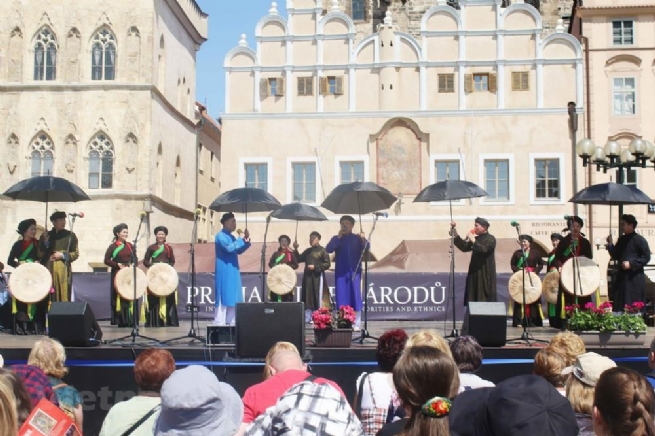
Vietnamese community members in the Czech Republic perform Quan Ho folk singing at Prague Square
In the early days of industrialization, Bac Ninh was seen as a new growth center for the capital region. Today, the province projects a more balanced image, opening to the world while staying rooted in its cultural traditions. The soft power of Kinh Bac, shaped by its heritage, people, and lifestyle, helps Bac Ninh create a distinctive presence on the global investment map.
Deep soft power
Bac Ninh’s lasting appeal goes beyond location, infrastructure, or industry; it lies in the unique Kinh Bac essence woven into everyday life. Its vast heritage, Quan Ho cultural spaces, Dong Ho paintings, and enduring craft villages serve both as memory and strategic assets.
Through organized cultural promotion such as international art exchanges, events, and immersive tours, heritage goes beyond museums and becomes a way for Bac Ninh to connect with the world. Today, Bac Ninh blends contrasting elements naturally. Along the Cau River, moss-covered communal halls sit alongside lit-up industrial parks, expanded transport networks, and residential complexes for foreign experts. This mix shows rapid growth while keeping the province’s cultural essence.
A memorable moment was Bill Gates’ visit to Dong Ho in 2006. Amid a packed global schedule, he paused by folk paintings, held a bright red betel leaf, and listened to the story of preserving craft. The image of a technology leader in a rural Vietnamese village sent a powerful message: Bac Ninh’s heritage is soft enough to touch the hearts of people at the frontier of the future.
Sensitive to the experience economy, Bac Ninh is integrating culture into urban planning. Pedestrian streets, open craft villages, Quan Ho spaces, and Kinh Bac cuisine are creating “soft motifs” within a modern urban symphony. Nighttime economy, street food, street music, and Quan Ho performances are shaping a lively rhythm suited to a high-quality workforce.
In rural areas, OCOP (One Commune One Product) programs linked to craft villages such as Dong Ky, Phu Lang, and Dai Bai are creating new value chains by preserving traditions, boosting income, and promoting tourism. A holistic ecosystem is emerging where culture, people, businesses, and visitors all connect in meaningful ways.
Stepping onto the world stage with its own identity
Cultural diplomacy is helping Bac Ninh strengthen its presence on the international stage. Quan Ho melodies resonate at cultural exchanges in Japan and South Korea, Dong Ho paintings are showcased in European exhibitions, and Kinh Bac-inspired art programs introduce the province to the world through a universal language: identity.
Today, Bac Ninh is not only a center of local culture but also a hub for global cultural exchange. Investors bring capital, technology, and operational models, along with the culture of their home countries. Japanese discipline, Korean creativity, and European standards blend with Kinh Bac’s traditions to create an open cultural ecosystem, where local heritage provides the foundation and international influences add breadth, innovation, and modern vision. This fusion allows Bac Ninh to engage globally while retaining its authentic Kinh Bac essence. It also fosters multinational expert communities living in harmony with local residents, similar to how Singapore and Fukuoka in Japan attract talent to their creative hubs.
Amid this dynamic, Bac Ninh has developed new creative symbols, such as the “Bac Bling” trend - a modern style inspired by Kinh Bac. Traditional colors, folk motifs from Dong Ho paintings, and architectural lines from communal halls are reinterpreted in fashion, design, and social media. Bac Bling shows that Bac Ninh’s culture is not limited to museums but can flourish in contemporary life, similar to Seoul’s modern Hanbok or Thailand’s global adaptation of Lanna motifs. This trend opens opportunities for a potential “Kinh Bac aesthetics industry.”
Building on its rich creative culture, Bac Ninh is boldly entering cultural industries such as performing arts, design and creative industries, high-end handicrafts, cultural souvenirs, digital content, and technology-enhanced traditional experiences. These products not only generate revenue and high-quality jobs but also promote Bac Ninh’s cultural identity globally in a sophisticated, modern way, much like Kyoto has turned traditional culture into a multi-billion-dollar economic sector.
Bac Ninh’s experience demonstrates that sustainable development relies not only on broad transport networks or large industrial zones but also on cultural depth. This enduring cultural strength continues to fuel Bac Ninh’s distinctive appeal as it steps confidently onto the world stage.
By Ngo Khuyen, Vietnam Business Forum


 Vietnamese





