

3:32:55 PM | 12/23/2025

Nestled peacefully beside the scenic Son La Hydropower Reservoir, Muong Lay ward (Dien Bien province) is often called a “Halong Bay on land” in the highlands of Northwest Vietnam. Once a “sleeping beauty,” the area is now awakening with potential in river tourism, culture, and unique festivals, creating opportunities to become a new highlight on the national tourism map and to boost broader socioeconomic development.
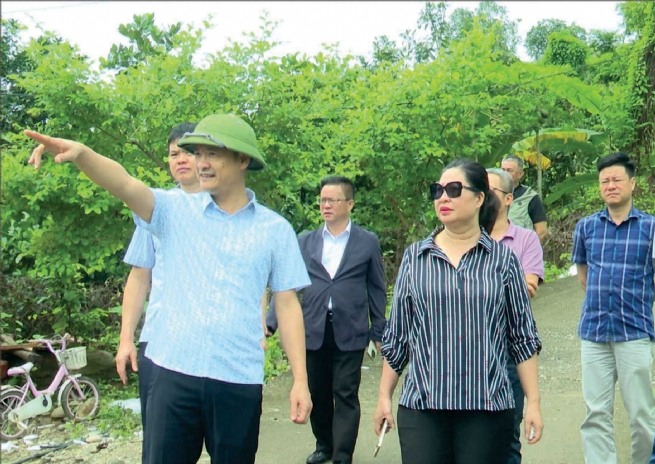
Nguyen Dat Long, Chairman of the People’s Committee of Muong Lay Ward, inspecting the site for a pumped-storage hydropower plant with investors
Harnessing tourism potential
Muong Lay enjoys a unique geographic location in the northern part of Dien Bien province, where three major rivers converge: the Da River, Nam Na River, and Nam Lay Stream. Its complex mountainous terrain combined with the Son La hydropower reservoir creates a stunning natural landscape of mountains and water, making it an attractive destination for visitors.
The ward is home to numerous historical sites, including Lai Chau Prison, Pu Vap Historical Site, and Ban Bac Cave in Lay Nua commune. Notably, Muong Lay features two intangible cultural heritage elements recognized by UNESCO as Representative of the World’s Cultural Heritage: Then practice of the Tay, Nung, and Thai ethnic groups (recognized in 2019) and the Thai Xoe Dance (recognized in 2021). The area still preserves hundreds of traditional stilt houses of the White Thai community.
A highlight of Muong Lay’s tourism offerings is river-based experiences. Visitors can take boat trips on the reservoir, admire the towering mountains, and explore riverside villages. Traditional stilt houses, the lively Xoe Thai dance around a hearth, local specialties such as Can wine and grilled fish from the reservoir, the Kin Pang Then festival of the White Thai, paragliding, and jet boarding leave lasting impressions. In addition, experiential tourism products such as “a day living in a stilt house,” “wearing Thai traditional attire,” and “learning traditional cooking” are gradually being developed to enhance visitor experiences and extend stays.
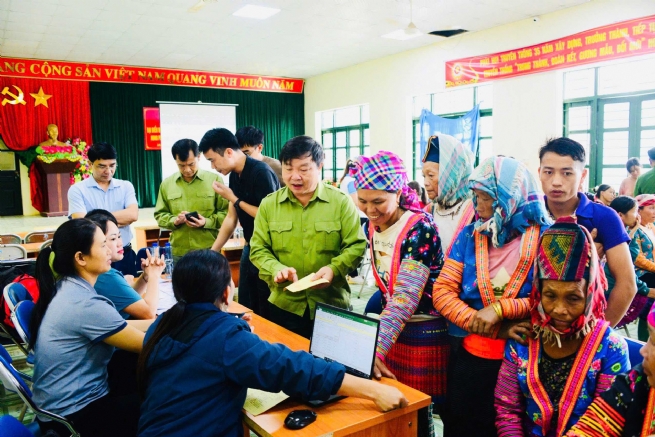
Local authorities inspect administrative procedure sites with the working delegation after adopting the two-level government system
Leveraging these advantages, local authorities in recent years have focused on investing in comprehensive infrastructure development. Restaurants, hotels, guesthouses, and homestays have been expanded. Urban roads have been asphalted, lighting systems installed, and landscaping with diverse and well-maintained greenery has gradually transformed the area’s appearance. Today, Muong Lay is among the locations with the most attractive urban infrastructure in the Northwest and a popular destination for domestic and international tourists.
From 2020 to 2025, Muong Lay welcomed 165,803 visitors, with an average of 32,780 domestic tourists per year, exceeding 82.1% of the target set in the Resolution, and 381 international visitors per year, exceeding the target by 0.3%.
Bui Hai Binh, Secretary of the Party Committee and Chairman of the People’s Council of Muong Lay Ward, shared: “The awakening of the ‘sleeping beauty’ of Muong Lay is not just about a change in appearance; it reflects the aspiration of a border town where nature, culture, and people come together, striving for a stable and sustainable future.”
Breakthrough development toward a sustainable future
July 1, 2025, marked a significant milestone for Muong Lay when Song Da ward, Na Lay ward, Lay Nua commune, and Sa Tong commune were officially merged to form the new Muong Lay ward. This change not only adjusted administrative boundaries but also ushered in a new phase in the area’s development.
For the 2025-2030 period, the local government aims to continue building a clean and strong Party Committee and political system, proactively leveraging potentials and advantages to develop the economy, and focusing on attracting investment in commerce, services, and tourism.
The target is to achieve an average annual increase of 25% in total state budget revenue in the area, equivalent to an estimated VND26 billion by 2030. The average annual growth rate of total local product value is expected to reach 11.51%. By 2030, the economic structure by sector is projected as follows: agriculture, forestry, and fisheries approximately 11%; services and commerce about 61.27%; industry and construction around 27.73%.
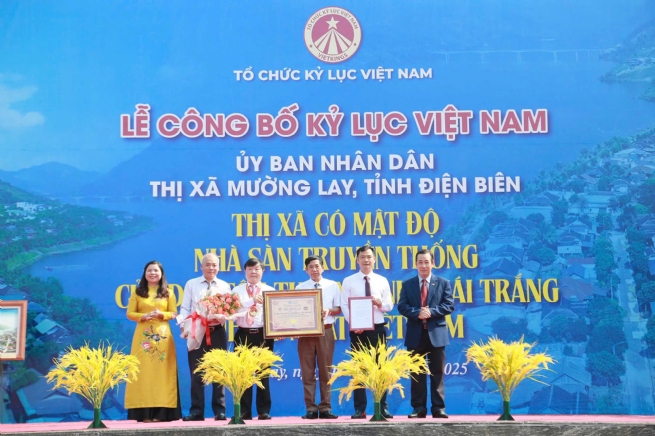
To achieve these goals, Nguyen Dat Long, Chairman of the People’s Committee of Muong Lay, said that for the 2025-2030 term, the Party Committee has set five development principles, 18 specific targets, three breakthrough tasks, four important plans and projects, five key missions, and four main solution groups.
This includes breakthroughs in administrative reform and investment attraction; focusing on developing tourism, services, and commerce; promoting digital transformation, advertising, and mobilizing resources; and collaborating with neighboring localities to create river tour circuits and explore the Da River reservoir to generate unique and sustainable tourism products tied to local cultural identity. Economic restructuring will focus on promoting sustainable agriculture and forestry, increasing the application of advanced science and technology, including green and circular technologies and digital transformation, in planting, livestock, processing, and product consumption.
Key projects include the Tourism and Services Development Plan for 2025-2030, the Cultural Preservation Plan for local ethnic groups, and the Urban Beautification and Green Tree Development Plan. Investment proposals include building a traffic bridge connecting Doi Cao area with Le Loi commune in Lai Chau province, constructing a pumped-storage hydropower plant, restoring the Pu Vap provincial historical site and cultural-spiritual area, and planting medicinal trees under forest canopies to boost trade, attract investment, and promote socioeconomic development.
“Muong Lay is aiming for sustainable development, balancing exploitation with the preservation of cultural heritage. With the spirit of ‘Unity - Democracy - Discipline - Breakthrough - Development,’ the Party Committee, authorities, and people of all ethnic groups in Muong Lay Ward will continue to uphold the tradition of solidarity, proactively overcome difficulties and challenges, work together, and achieve the set goals to build a modern and civilized Muong Lay rich in ethnic identity,” affirmed Bui Hai Binh, Secretary of the Party Committee and Chairman of the People’s Council of Muong Lay Ward.
By Ha Thanh - Le Nam, Vietnam Business Forum


 Vietnamese





