11:06:21 AM | 5/11/2026

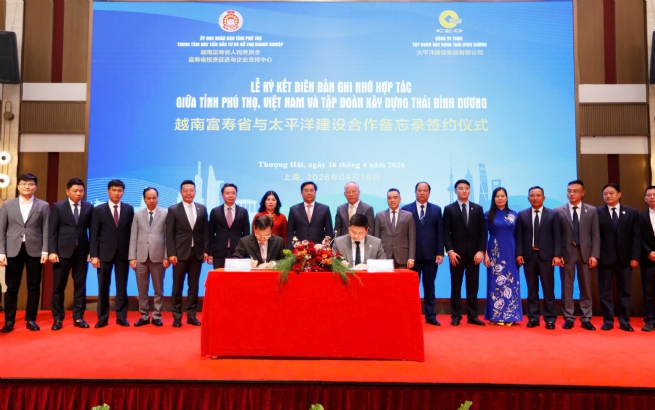
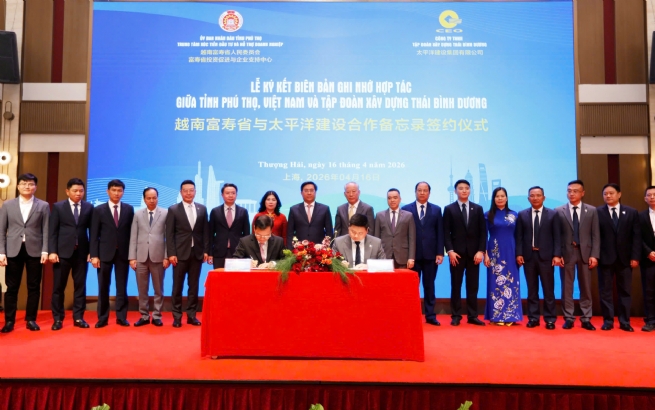
The Phu Tho Investment Promotion Conference held in Shanghai, China in April came as the province reached a GRDP of US$16 billion, with growth of 10.52% in 2025. With 715 FDI projects valued at US$13.9 billion, including nearly US$3.5 billion from China across 179 projects, the event is expected to drive a new wave of investment in high technology, logistics, and strategic infrastructure.
From a potential destination to a regional capital hub
Choosing Shanghai as the venue for the investment promotion conference reflects the province’s more proactive approach to attracting foreign capital. More than a promotional event, it aims to directly engage Chinese businesses, which account for a significant share of the province’s FDI.
Phu Tho entered the conference with a strong profile. After the merger of three provinces, its scale expanded significantly, creating a domestic market of more than 4 million people and a development area of over 9,361 square kilometers. This provides a solid foundation for attracting large scale projects, particularly in industry and services.
The province’s economic indicators show clear growth momentum. In 2025, GRDP reached US$16 billion, ranking sixth nationwide, with growth of 10.52%, among the highest in the country. These figures reflect not only scale but also the ability to absorb capital and implement investment projects.
From a strategic location perspective, Phu Tho serves as a transit point between the capital region and the northern midland and mountainous areas. Its proximity to Hanoi and convenient connections to international border gates and seaports give the province a strong advantage in organizing supply chains.
Transport infrastructure provides the foundation. With about 31,000 kilometers of roads, nearly 680 kilometers of inland waterways, and more than 113 kilometers of national railway, along with fast connections to Noi Bai Airport, Hai Phong Port, and major economic corridors, Phu Tho is positioning itself as a key logistics link in the North.
Based on this foundation, the province is building a development structure around three economic axes. The eastern axis is an industrial, logistics, and urban corridor; the western axis focuses on clean agriculture, medicinal plants, and community tourism; while the Red River and Lo River corridor is oriented toward trade, services, and waterway transport.
This approach marks a shift from broad based development to a more focused model, improving resource efficiency and the ability to attract investment by sector clusters.
Priority investment for high technology, logistics, and production ecosystems
A key message at the conference is selective investment attraction. Instead of expanding in scale alone, Phu Tho is focusing on sectors with higher added value that align with sustainable development and digital transformation trends.
The first priority is high technology manufacturing and processing industries. Sectors such as semiconductors, electronic components, computer production, data centers, artificial intelligence (AI), and precision engineering are identified as new growth drivers. These are also areas where Chinese companies have strengths and are expanding investment overseas.
The automotive, electric vehicle, and supporting industries are expected to form a complete production ecosystem, contributing to higher localization rates and added value.
In logistics, the province aims to develop logistics centers, warehouses, inland container depots, and multimodal transport services. With transport infrastructure largely in place, smart logistics development is the next step to reduce costs and improve business competitiveness.
The province is also expanding investment attraction in tourism and high-quality services. With diverse resources, from cultural and spiritual tourism linked to Hung Temple to resort destinations such as Tam Dao, Dai Lai, and Thanh Thuy hot springs, Phu Tho has the potential to develop large scale resort projects that meet growing demand for healthcare tourism.
In addition, high technology agriculture, renewable energy, biotechnology, and smart urban infrastructure are included in the priority list. These sectors offer long term growth potential and align with sustainable development goals.
Recent investment results show positive signals. In 2025, total FDI reached US$1.51 billion, while domestic investment was about US$10 billion. In total, the province has 715 FDI projects with registered capital of US$13.9 billion from 27 countries and territories.
China has emerged as a key partner, with 179 projects totaling nearly US$3.5 billion. These investments are mainly concentrated in manufacturing and processing industries, a core sector in the province’s development strategy. The presence of major companies such as BYD, Compal, and Vinatop brings not only capital but also technology, management expertise, and supply chain networks.
However, turning potential into real growth depends on the investment environment. Chairman of the Phu Tho Provincial People’s Committee Tran Duy Dong said the province maintains regular business dialogue while advancing administrative reform and proactively addressing investor concerns. These factors are becoming increasingly decisive in competition for capital.
The conference in Shanghai is not only a starting point for new cooperation commitments but also a test of the province’s ability to turn opportunities into actual investment. If these connections lead to concrete projects, Phu Tho could enter a new growth cycle, where capital inflows increase not only in volume but also in quality, helping shape the province’s role in regional production value chains.
Le Hien (Vietnam Business Forum)





 Vietnamese