2:52:56 PM | 11/4/2026

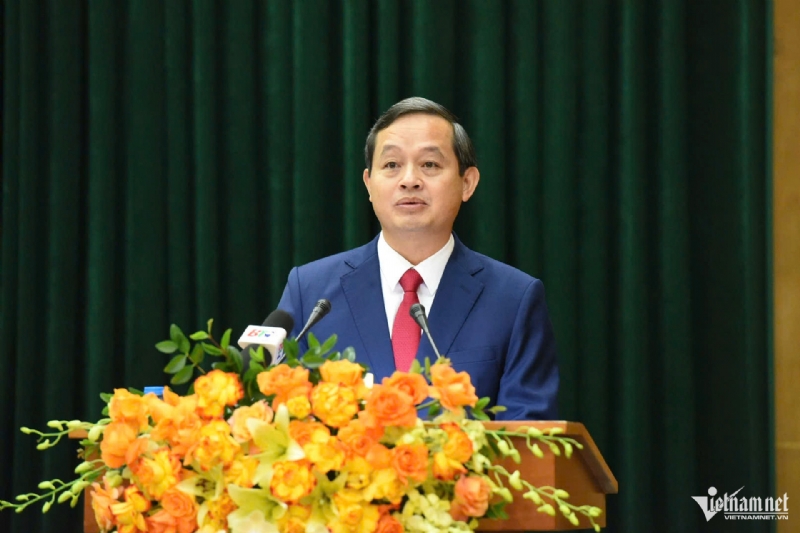
Bac Ninh City faces an unprecedented need to accelerate development: resources must be allocated quickly to the right priorities and converted into production capacity, competitiveness and sustainable growth. Regarding this challenge, Nguyen Dinh Hieu, Director of the Department of Finance of Bac Ninh City, stressed the need to improve resource mobilization and capital efficiency while supporting business growth.
 |
As Bac Ninh becomes a centrally governed city and sets a high growth target, what resources will it need, and how can they be mobilized and used effectively?
The new position opens up greater development space while also requiring more resources. But the key is not simply having more resources, but mobilizing them faster, allocating them more appropriately and using them more efficiently. Accordingly, the finance sector is focusing on five priorities.
First is mobilizing sufficient and diverse resources. Bac Ninh needs coordinated investment in transport, urban areas, industry, logistics, energy and digital infrastructure. Resources must be mobilized comprehensively by combining central funding, local budgets, credit, private capital, foreign direct investment (FDI), public-private partnerships (PPPs) and social resources, with the government budget serving as “seed capital” focused on core infrastructure.
Financial capacity continues to be strengthened. In the first nine months of 2026, budget revenue exceeded VND70.440 trillion (US$2.709 billion), while attracted investment capital exceeded US$18.7 billion. The city will continue to combat revenue losses, develop revenue sources, leverage land resources and prioritize high-tech, semiconductor, AI, logistics and digital economy projects with high added value.
Capital must be allocated to the right priorities and at the right time. The 2026-2030 medium-term public investment plan exceeds VND104.744 trillion (US$4.029 billion), prioritizing key and interconnected projects with spillover effects that can quickly generate growth capacity.
Capital efficiency is a consistent requirement. In 2026, the total public investment plan and national target programs exceed VND24.126 trillion (US$928 million); as of September 30, disbursement was estimated at more than VND15.6 trillion (US$600 million), or more than 102% of the plan assigned by the Prime Minister. The Department of Finance will reallocate capital from slow-disbursing projects to projects with stronger implementation performance, following the principle of “not letting capital wait for projects and not letting projects capable of completion wait for capital.”
To build a stronger economy, how will the Department of Finance help unlock resources and improve the competitiveness of the private sector?
For Bac Ninh, private-sector development is not only about increasing the number of companies, but also about strengthening the capacity, scale and competitiveness of local companies.
To date, Bac Ninh has 55,750 registered companies with total registered capital exceeding VND871.620 trillion (US$33.524 billion), along with more than 80,000 operating household businesses. In the first nine months of 2026, Bac Ninh had 6,500 newly established companies, with registered capital of VND107 trillion (US$4.115 billion).
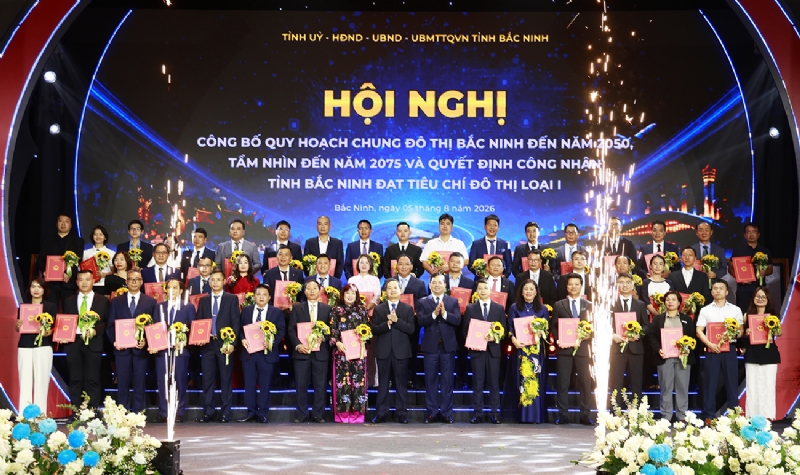
Bac Ninh City’s leaders present investment approvals and registration certificates for 48 projects, August 5, 2026
However, most companies remain small and medium-sized, while their financial, management, technological and innovation capabilities remain limited. Access to land, premises, capital, human resources and market information remains a bottleneck. Bac Ninh aims to have 85,000 operating companies by 2030, with the private sector growing at an average rate of 13-14% annually and contributing 55-58% of GRDP.
To realize this target, we are focusing on the following groups of solutions:
Renew the approach to serving companies by proactively addressing difficulties and reducing compliance costs and time.
Significantly improve the investment and business environment, from reviewing, streamlining and digitalizing procedures to increasing connectivity and transparency; clearly defining focal points, responsibilities, deadlines and results, especially for key projects.
Companies must also have better access to resources. Bac Ninh is reviewing land funds and premises in industrial zones, industrial clusters and underused public assets; expanding appropriate credit channels and encouraging lending based on supply chains, cash flows, orders and business plans. Along with this, the city will promote technology, innovation, digital transformation and green transformation.
Another priority is to bring private companies more deeply into value chains. The FDI ecosystem in electronics, high technology, and processing and manufacturing will be leveraged to develop domestic companies in supporting industries, precision engineering, components, logistics, technical services, automation, software and data. Connections with FDI companies, large companies, research institutes, universities and industry associations will be strengthened.
High-quality human resources must be developed in parallel, with training aligned with companies’ needs. In particular, Bac Ninh is also building a culture of integrity and responsibility in business.
How can allocated resources and approved investment projects be quickly converted into completed facilities, production capacity and growth?
Before allocating resources, planning, land, investment procedures, design, site clearance and implementation capacity must be reviewed, and capital must not be allocated in a spread-out manner.
Progress is monitored for each project, with clear targets for workloads, outputs, deadlines and responsibilities of each agency and unit. For public investment, the seven working groups of the Chairman of the City People’s Committee will continue to be strengthened, with disbursement performance assessed under Decision 1129/QD-TTg and disbursement results linked to assessments of heads of agencies and units.
Bottlenecks must be addressed immediately, focusing on site clearance, land, construction materials, planning adjustments and inter-agency coordination, following the principle that “where there is a bottleneck, there is a head of the responsible agency or unit.”
Resources must also be reallocated promptly. Public investment capital must be shifted from projects with slow disbursement to projects with more completed work and stronger capacity for completion. For private investment, commitments must be reviewed regularly; capable investors will be supported, while projects that are slow to implement, use land wastefully or are no longer feasible will be recovered, terminated or replaced.
Ultimately, effectiveness must be measured by completed facilities, additional production capacity, jobs, revenue and added value, not only by disbursed capital. The target of 100% disbursement must go hand in hand with construction quality and investment efficiency.
The Department of Finance will monitor each project, proactively advise on solutions to mechanism, funding and disbursement issues, and coordinate with departments, sectors and localities to accelerate the process of putting resources to use.
What changes will the Department of Finance propose to make Bac Ninh’s business environment more transparent, efficient and responsive to new development needs?
To meet new development requirements, we are focusing on four major directions.
Public investment will shift from spread-out allocation to focused investment in key projects with spillover effects, prioritizing strategic infrastructure such as Ring Road 4 - Hanoi Capital Region (Hanoi and surrounding provinces), inter-regional routes, digital infrastructure and logistics. Capital will be promptly reduced or reallocated from slow-moving projects to those with stronger implementation capacity, while the budget will serve as “seed capital” to attract additional private and FDI resources through PPP and appropriate forms.
Financial management will be strengthened through a digital platform. Project appraisal, capital allocation, settlement and support procedures for companies will be digitalized and interconnected; data on planning, budgets, public assets and support policies will be made public so investors can access information quickly, transparently and on an equal basis.
Resources will be directed toward green growth and improving the competitiveness of domestic companies. The goal is to help Bac Ninh companies integrate more deeply into the city’s FDI ecosystem.
The efficiency of public asset and public financial management must also be improved. Land funds after planning, headquarters and surplus public assets following the reorganization of administrative units will be reviewed and effectively utilized to create resources for reinvestment. Forecasting capacity will be strengthened, medium- and long-term fiscal and budget scenarios will be developed, public debt safety will be maintained, and stable, transparent and predictable public finances will be ensured. The core shift is from managing resources to governing them and creating value from them.
Thank you very much!
Song Uyen, Vietnam Business Forum