3:00:01 PM | 11/4/2026

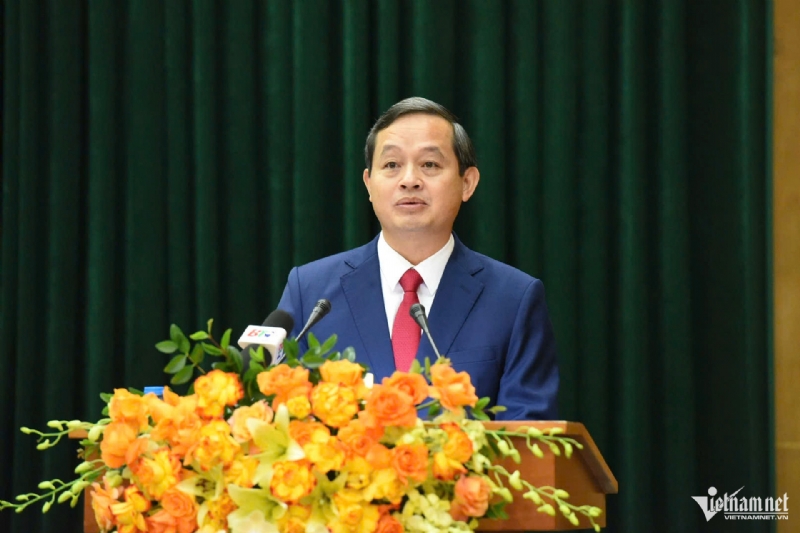
According to Nguyen Van Phuc, Director of the Bac Ninh City Industrial Zones Authority, the new requirement is not simply to develop more industrial zones but to raise standards for infrastructure, projects and governance. This will create high-value industrial spaces linked to research and development (R&D), supporting industries, logistics, training and urban development, laying the foundation for a business environment that matches Bac Ninh’s new position.
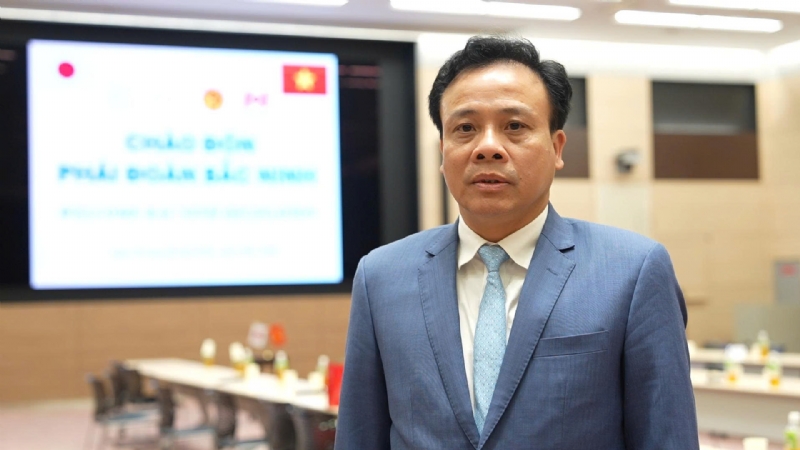
Building on its electronics foundation, Bac Ninh is moving up the value chain in semiconductors, integrated circuits, AI, R&D and other high-tech industries. How should its industrial zone (IZ) system adapt in terms of space, infrastructure and developer capacity?
Bac Ninh has a strong foundation in electronics. The next stage of development is to move up the value chain, selectively attract foreign direct investment (FDI), expand R&D, promote technology transfer and develop domestic companies. Therefore, the IZ system must raise its standards in three areas.
First, IZ space must integrate R&D, design, high-tech manufacturing, supporting industries, logistics, workforce training, urban and service facilities, and green infrastructure. Each IZ needs a network of surrounding companies and services, organized according to industry and technology level and linked to the value created per hectare.
IZ infrastructure must meet high-tech standards and become increasingly digitalized, including stable power, ultra-clean water, telecommunications, data centers, logistics, environmental treatment, housing and services for experts, while applying AI to management and operations. On this foundation, Bac Ninh needs to develop high-tech IZs, eco-industrial parks (EIPs), R&D spaces and innovation hubs in a coordinated manner.
IZ infrastructure developers must also strengthen their capabilities, from developing technical infrastructure and designing specialized IZs and supporting industry facilities to developing digital infrastructure, logistics and supply chains, and supporting secondary investors throughout project implementation. They must also have the capacity to develop green and eco-industrial parks, renewable energy and a circular economy, and participate in building ecosystems for semiconductors, R&D, training and innovation.
Bac Ninh has already set high standards for investment attraction. In the new period, how will the city raise standards for selecting IZ projects?
In the new period, IZs will shift from attracting projects based on quantity to selecting projects based on quality and value creation. The first criterion is technology: priority will be given to advanced, clean, highly automated and highly digitalized projects, particularly in next-generation electronics, semiconductors, AI, high-tech supporting industries, new materials and R&D. The goal is not only to attract factories but also to bring high-value activities such as design, R&D and supply chain management to Bac Ninh.
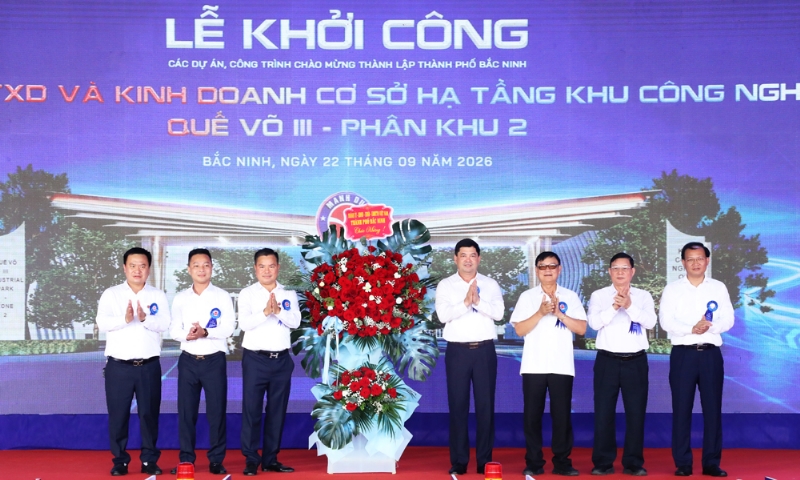
Bac Ninh City’s leaders and delegates at the groundbreaking ceremony for Que Vo III IZ – Subzone 2
Project value must be considered in relation to the resources used. Land-use efficiency will be measured by the value created per hectare, including production, revenue, exports, budget contributions and high-quality jobs. Environmental considerations must be part of the screening process from the outset, linked to energy and resource efficiency, emissions reduction and waste treatment.
More importantly, projects must create spillover effects by attracting supporting industry companies and domestic suppliers, promoting training and technology transfer, and establishing links with universities and research institutions. The new standard for investment attraction is not only the value a project creates, but also its ability to deepen value chains and strengthen Bac Ninh’s industrial capacity.
Along with raising project standards, what model will Bac Ninh adopt to improve production quality and living and working conditions in IZs?
In a modern industrial city, Bac Ninh’s IZs will shift from simple production spaces to production-urban-service-ecological ecosystems, where the environment and quality of life become part of industrial competitiveness. Under the General Urban Plan for Bac Ninh to 2050, the city envisions about 25,000 hectares of IZ land, while transforming existing IZs into EIPs and new-generation industrial-urban-service complexes linked to the development of semiconductors, integrated circuits, AI, R&D, aviation and other high-tech sectors.
IZs and urban areas will be planned in an integrated manner from the outset, connected with green spaces, services and amenities for companies and workers. EIPs will be developed based on industrial symbiosis, renewable energy, water recycling, clean transportation, rooftop solar power and automated monitoring, while integrating R&D and innovation spaces so that IZs not only manufacture products but also create knowledge and technology.
Social housing, worker accommodation, schools, healthcare, retail, cultural facilities, financial and banking services, and other essential services also need to be integrated and conveniently located within easy reach.
As Bac Ninh raises its investment standards, how will you improve management, services and investor support?
After Bac Ninh became a centrally governed city, the approach to investment attraction must also shift from simply selecting projects to selecting investors capable of creating long-term value, linked with technology transfer, R&D, environmental standards, workforce training and the development of domestic suppliers.
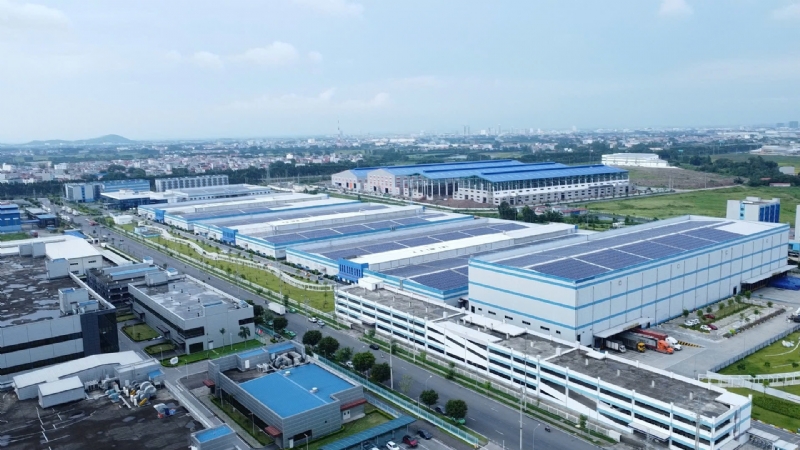
Good infrastructure makes Van Trung IZ a preferred investment destination
This must go hand in hand with new governance methods: shifting from IZ management to industrial ecosystem governance, from management to facilitation, with companies at the center; accelerating digital transformation, administrative reform, speeding up procedures and ensuring transparency. We must not only operate a “one-stop” mechanism but also become a coordinating focal point connecting agencies and companies throughout the investment journey - from “resolving procedures for a project” to “managing the project’s journey.”
The management approach will shift from inspection to risk management and compliance support, using data to identify and select the right subjects, avoid overlapping inspections, and maintain discipline and order. Guided by the principle that “the success of companies is our success,” sector-specific business support teams will be strengthened, with the aim of turning the Bac Ninh IZ Authority into an industrial investment information center: not only providing information and receiving recommendations but also monitoring companies’ investment, operations, reinvestment and expansion, proactively identifying bottlenecks and risks, and proposing solutions to address them.
In the new development space, how will IZs create greater spillover value for the city?
A well-developed IZ cannot be measured only by the number of projects or occupancy rates, but must also be measured by the value created per unit of land and its spillover effects on the economy. This includes the ability to establish R&D and testing facilities, logistics, domestic suppliers, attract high-tech companies, develop human resources and promote science and technology ecosystems.
IZs must be planned in connection with urban areas from the outset, while shaping specialized ecosystems suited to each park, from green and eco-industrial parks to circular ecosystems; connecting them with free trade complexes, logistics, high-tech industries, digital technology and integrated transportation systems. Planning should also link IZs with training and research areas, university cities and knowledge-based urban areas. In this way, IZs will not only be places of production but also contribute to developing human resources, technology, companies and urban quality, improving the quality of life for workers and residents.
Thank you very much!
Ngo Khuyen, Vietnam Business Forum