10:49:41 AM | 9/7/2026

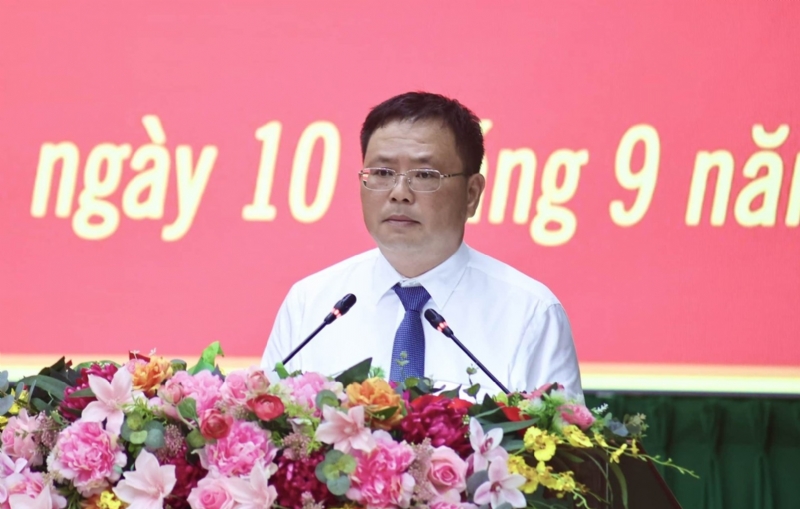
Achieving double-digit economic growth requires Vinh Long to unlock investment resources, use public investment as a catalyst, and improve the quality of investment attraction. On these priorities and solutions, Director of the provincial Department of Finance Truong Dang Vinh Phuc spoke with Vietnam Business Forum.
 |
How will Vinh Long use public investment to drive double-digit growth?
During 2026-2030, public investment will be allocated in a focused and coordinated manner, prioritizing projects that drive growth, improve competitiveness, and attract investment, in line with the Provincial Master Plan for 2021-2030, with a vision to 2050.
The medium-term public investment plan will focus on interregional transport projects connecting expressways, national and provincial roads, economic zones, industrial parks and clusters, and urban development corridors. Priority projects include coastal roads, Co Chien 2 Bridge, Cua Dai Bridge, Dinh Khao Bridge, and other projects, along with transport routes serving Dinh An Economic Zone and upgrades to national highways, ensuring seamless connections with expressway and coastal road networks.
In agriculture and irrigation, investment will focus on interregional projects and completing climate-resilient irrigation systems to prevent and control landslides, saltwater intrusion, and high tides and protect production; developing rural transport, increasing the value of agricultural and aquatic products, and promoting sector restructuring. Priority will also be given to disaster prevention and control, water security, and the green transition.
The province will also prioritize science, technology, innovation, and digital transformation projects under Resolution 57-NQ/TW; education and training projects under Resolution 71-NQ/TW to improve facilities and training quality; and healthcare projects to upgrade medical equipment and healthcare facilities and improve public healthcare quality.
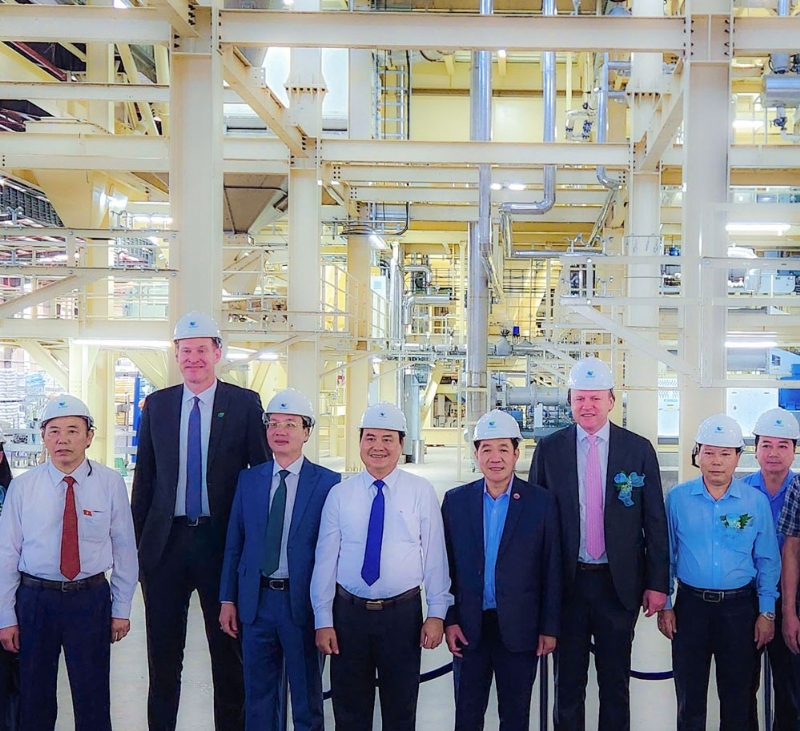
Deputy Minister of Agriculture and Environment Vo Van Hung, Vinh Long People’s Committee Chairman Tran Tri Quang and other delegates visit the De Heus plant
During 2026-2030, which sectors will Vinh Long prioritize for FDI and domestic investment?
The province will selectively attract investment rather than pursue volume, prioritizing green projects, the circular economy, and digital technologies. Industry will focus on coastal renewable energy, including offshore wind power, solar power, and green hydrogen, as well as electronics and digital technologies for smart agriculture and logistics, with the aim of becoming a modern processing hub for the region. Agriculture will shift from increasing output to high-tech, ecological, and sustainable production, developing multi-value models linked to processing and value chains, particularly for fruits, rice, seafood, and coconut. Logistics, trade, and services will serve as growth drivers, with coordinated development of road, inland waterway, and maritime logistics and port services; by 2030, the province aims to establish three logistics centers connecting production areas.
The new master plan organizes the province into three subregions. The eastern growth area (Vinh Long Economic Zone), comprising Duyen Hai, Long Huu, Truong Long Hoa, and Binh Dai, will prioritize high-tech industry, clean energy, seaport logistics, and coastal urban development, with an orientation toward establishing a free economic zone as a strategic growth pole. The area north of the Co Chien River will develop processing industries linked to high-tech agriculture, prioritizing deep processing of agricultural and aquatic products. The area south of the Co Chien River will develop an urban-industrial corridor linked to National Highway 1A and expressways, attracting trade, services, finance and banking, and urban development.
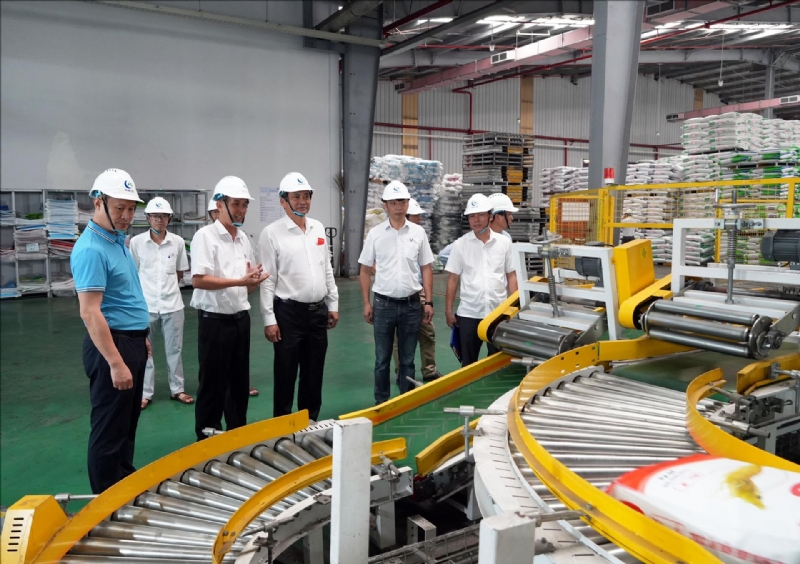
Vinh Long Provincial authorities pay a working visit to an automated packaging and conveyor system at a modern production facility
To realize the master plan, the province expects to mobilize about VND480 trillion (US$18.46 billion) in investment capital during 2026-2030, while developing coordinated transport, seaport, and digital infrastructure, continuing administrative reform, improving the investment environment, and completing mechanisms and policies to effectively attract strategic FDI and domestic investors.
How will you advise on developing criteria for selecting projects and investors to shift from quantity-driven attraction to quality and effectiveness?
We are coordinating with departments and agencies to review and assess conditions and criteria for selecting projects and investors in accordance with laws on land, construction, and relevant sectors. For criteria such as land-use efficiency, budget contributions, technology content, spillover effects, and the ability to participate in value chains, there are currently no specific regulations for quantification and assessment.
Going forward, we will review and advise on preferential and special support mechanisms and policies that are competitive and linked to investors’ performance and commitments in technology, research and development (R&D), technology transfer, human resource training, increasing domestic value added, the green transition, and digital transformation.
With some projects experiencing delays, how are you advising on progress monitoring, investor accountability, and improving project implementation efficiency?
We advised the Provincial People’s Committee to issue Plan 175/KH-UBND dated May 8, 2026, on the inspection, monitoring, and evaluation of investment projects using non-public investment capital in the province. Accordingly, we are coordinating with departments and agencies to monitor 50 projects, while the Economic Zone Management Board is implementing plans to track, inspect, and monitor projects in industrial parks and economic zones.
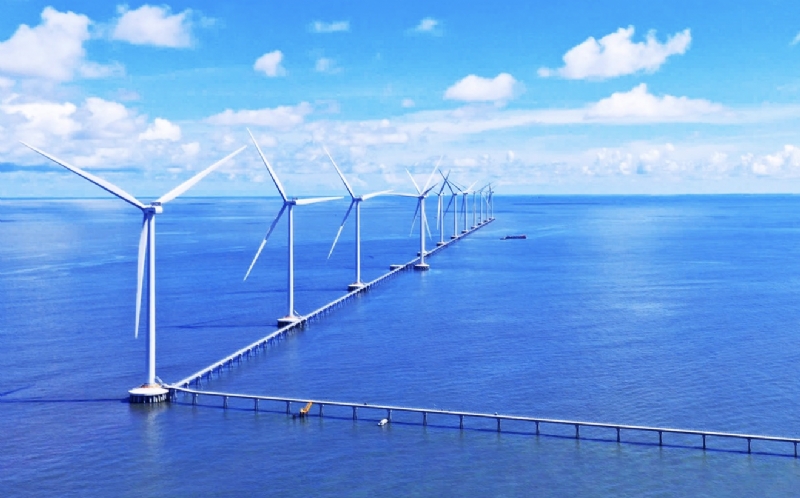
Duyen Hai Wind Farm, a cluster of major nearshore and onshore renewable energy projects in Vinh Long Province
To promptly address difficulties facing investors, the Steering Committee for Projects Using Non-State Budget Capital established three working groups to review issues and advise the Provincial People’s Committee on resolving obstacles. Following a review of 58 projects, the province resolved difficulties for eight projects and held working sessions and provided guidance for 29 projects. Support plans for the remaining projects are still being developed.
For 22 projects facing difficulties and obstacles listed on the Ministry of Finance’s System 751, we coordinated with departments and agencies to advise the Provincial People’s Committee on solutions. To date, difficulties have been resolved for 13 projects, while the remaining nine continue to be reviewed, consolidated, and reported to competent authorities for resolution.
Going forward, we will continue advising on inspection teams and field surveys at production, business, energy, and urban development projects to promptly identify and resolve difficulties; urge investors to meet their committed timelines; and coordinate with departments, agencies, and local authorities to accelerate implementation and bring projects into operation as soon as possible.
In the context of increasing competition for investment, how will Vinh Long improve its investment promotion efforts to attract high-quality capital to priority sectors and strategic investors?
The Department has coordinated with departments and agencies to advise the Provincial People’s Committee on major reforms to investment promotion, shifting from a “passive, broad-based” approach to a “proactive, focused, and targeted” one, with tangible results as the measure of effectiveness.
The province has made public an investment attraction list of 153 projects, including 78 priority projects for 2025-2030. Information on project scale, location, land-use planning, and investor selection methods has been standardized and made transparent, helping investors shorten the time needed for research, surveys, and decision-making.
Alongside this, the province is adopting new investment promotion methods, focusing on strategic corporations and investors with strong financial capacity and advanced technologies from Singapore, Japan, South Korea, China, and other markets; developing promotion materials for specific industry groups linked to development advantages and priorities such as renewable energy, the circular economy, the green economy, and sustainable agriculture.
Alongside investment promotion, the province will continue improving the investment environment, accelerating administrative reform and improving the Provincial Competitiveness Index (PCI), Provincial Governance and Public Administration Performance Index (PAPI), and Satisfaction Index of Public Administrative Services (SIPAS); simplifying procedures, strengthening accountability, and shifting decisively from a “management” mindset to a “service” approach; and proactively removing bottlenecks in site clearance and investment procedures so projects can be implemented quickly and effectively.
Thank you very much!
By Vietnam Business Forum