Deputy Minister of Science and Technology Le Xuan Dinh called for selecting projects based on actual needs, linking research with commercialization, ensuring the effective operation of the V-Bridge platform, and clearly defining responsibilities and implementation timelines. The aim is to turn commitments to cooperate in digital technology, artificial intelligence (AI) and semiconductors into concrete products, projects and investment opportunities.





“We are entering a period of highly ambitious development goals. This requires both the Government and businesses to change more quickly. The Government must create a better environment for those seeking to invest, innovate and conduct business over the long term, while businesses must turn opportunities and policies into competitive advantages. VCCI must effectively connect these two sides.”

Education New Zealand (ENZ) has provided details of 2027 scholarships offered by all eight New Zealand public universities, alongside enhanced support measures that enable Vietnamese students to apply early using their Grade 12 results. Students will also have the opportunity to experience close to 50 New Zealand-style online masterclasses delivered by university academics and lecturers, with participation available for students as early as Grade 10.
Deputy Minister of Science and Technology Le Xuan Dinh called for selecting projects based on actual needs, linking research with commercialization, ensuring the effective operation of the V-Bridge platform, and clearly defining responsibilities and implementation timelines. The aim is to turn commitments to cooperate in digital technology, artificial intelligence (AI) and semiconductors into concrete products, projects and investment opportunities.

Building on its renewed three-year global partnership with MOONTON Games, Visa brings its gaming commitment closer to Vietnamese players and fans through esports sponsorship, one-tap payments, and exclusive cardholder benefits.

On the afternoon of October 20, 2026, at the headquarters of the Ministry of Health, Member of the Party Central Committee, Minister of Health Dao Hong Lan chaired a reception and working session with Mr. Stefan P. Butz, Chief Executive Officer of DKSH.
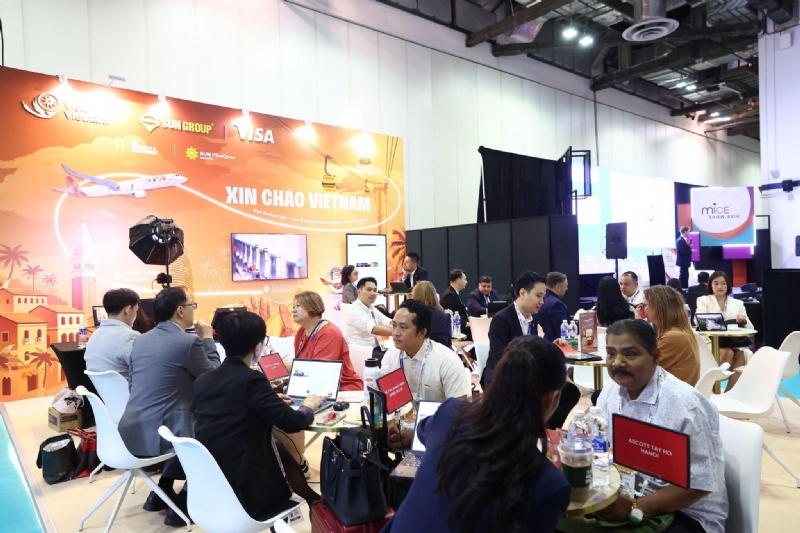
Making its first appearance at ITB Asia 2026 in Singapore, Sun Group drew strong interest from partners across the region as it showcased Vietnam’s tourism ecosystem, Phu Quoc’s new development vision ahead of APEC 2027, and the Visit Vietnam digital travel platform.

The Australian Wine Showcase Southeast Asia 2026 visited Ho Chi Minh City on 7 October, connecting Australian wine producers with trade partners across Southeast Asia, and giving trade professionals, industry experts and media in Vietnam an opportunity to discover the diversity of Australian wine firsthand.

In the first eight months of 2026, Phu Tho’s total state budget revenue reached VND41.6 trillion (US$1.60 billion), up 12.8% year on year. Notably, domestic revenue reached VND37.4 trillion (US$1.44 billion), up 17.5%, with the foreign-invested and non-state industrial and commercial sectors continuing to post strong growth.