In the context of integration and globalisation of the economy today, caring for physical and spiritual life of workers, creating a green and clean environment and protecting natural resources is what the whole society expects businesses and enterprises to do. On the occasion of the "Corporate Social Responsibility Award 2012” (CSR Award 2012), Vietnam Business Forum had an interview with Ms Tran Thi Canh, Deputy General Director of Indochina Resort Limited Company. Tran Trang reports.
Can you share some of your experience when participating in the CSR Award 2012?
First of all, I would like to thank the Vietnam Chamber of Commerce and Industry (VCCI) and relevant ministries for creating the conditions for businesses to participate in the CSR Award 2012. This is a new playground for us enterprises, driving us closer to "the social responsibility of business."
CSR is a rather new concept, but in fact, it is entirely consistent with the trend of sustainable development of the society, from which the existence of business cannot be separated.
I believe that the CSR Award 2012 with its extensive coverage and prestige has and will have certain impact on raising enterprises’ awareness of their responsibility to the community. This award also encourages all businesses to perform their social role.
Participating in the award evaluated on the "Environment" criteria, during the operation of business activities, what has Indochina Resort done?
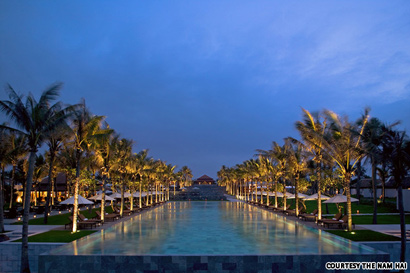
The Nam Hai resort is in the world's leading resort and hotel chain managed by the renowned Hotel Management Group (GHM). Wherever they are built, all the hotels and resorts managed by GHM have shared a number of guiding principles. Preserving cultural identity of the region and environmental friendliness are two criteria always receiving stringent compliance. Besides keeping a fresh green space, we comply with strict regulations on environmental protection. We also aim to improve the green in the sense of community, of each member of The Nam Hai resort and visitors.
The Nam Hai staff are familiar with the slogan “Small things make huge changes.” We always consider that environmental protection should and must start from small things and most importantly, from the change of awareness of all members to eliminate bad habits and create a green and friendly environment. On green Friday every week, all staff actively participate in cleaning up working areas, and picking up in the hotel precint as well as on the beach. Protecting and cleaning up the environment is considered the work of all members of The Nam Hai.
At The Nam Hai, measures to minimise the adverse impact on the surrounding environment are frequently performed. With standard discharge system, The Nam Hai strictly observes the regulations on water, chemicals and waste treatment, and implements input and output water quality testing to ensure standard quality as well as the periodic reports sent to the authorities.
The Nam Hai also reduces waste into the environment by the use of organic materials such as grass and leaves as composted fertilizer for The Nam Hai’s vegetable garden on the campus of the resort with an area of two hectares of green vegetables, grown entirely without chemicals. There are many kinds of vegetables such as coriander, cinnamon, corn, eggplant, squash, cabbage and lettuce, enough to serve guests and employee’s meals. This has created a unique feature of The Nam Hai.
We use the symbol of "Saving Lanterns" to encourage customers to save energy. In addition, we also launch campaigns to save electricity, water, paper and ink, and regularly check and maintain equipment and machinery to reduce emissions and avoid excessive power consumption. Saving raw materials is also a way to protect environmental resources.
We duplicate this sense to not only among The Nam Hai’s staff, but also Dien Duong community, through organizing green activities of writing about the environment with the subject: "Why do we have to keep the environment clean?”; “Cleaning the beach", etc. These activities have attracted the participation of thousands of students and young people in the district.
After more than six years of operation, we are proud that we are on the right track. The Nam Hai has made an impression among international and domestic tourists, leaving the image of a GREEN resort.
In your opinion, how have environment policies contributed to the promotion of your brand, as well as business efficiency of The Nam Hai Indochina Resort?
Environment has always played an important role in tourism services. In particular, for a superior five-star resort like The Nam Hai, environmental factors are even more urgent in the construction, maintenance and development of the brand. Certainly, no visitors choose to rest in a beach resort full of junk and unpleasant air. In addition to sensory elements, more and more visitors are seeking cultural values as well as nature conservation factors when choosing their destination. They want their trip not to result in adverse impacts on the environment. Furthermore, they want to contribute positively to the local environment. They will consider choosing resorts and hotels friendly to the environment and having energy, water policy and green design. Therefore, the Green brand of a resort or a hotel will be a pledge to attract more customers.
In your opinion, what activities are there for enterprises to understand and implement good CSR? Should Vietnam legalise the CSR?
In fact, the concept of CSR is rather vague for many enterprises. Many businesses equate CSR with charity without understanding that the concept of social responsibility is much broader and more inclusive.
If we want people to follow, we need to help people get a complete and accurate view of what social responsibility is and what interests enterprises can obtain when they exercise social responsibility. Only then will they commit to social responsibility. To achieve this, it is important to have spreading channels of media from all relevant agencies.
Should CSR be legalized? I think Vietnamese law stipulates very clearly the responsibilities of businesses, or what businesses are not allowed to do (in terms of labour and environment). Businesses just have to observe those provisions correctly and fully, then they partially implement their social responsibility.