

8:44:26 PM | 4/26/2016

In a new, far-reaching study by BSA | The Software Alliance that assessed cloud computing policies around the globe, Vietnam ranks twenty-fourth out of 24 leading IT economies, unchanged compared to its ranking in 2013. The finding is a sign that the legal and regulatory environment for cloud computing in Vietnam continues to be out of step with cloud innovation.
The 2016 BSA Global Cloud Computing Scorecard ranks the cloud computing readiness of 24 countries that account for 80 percent of the world’s IT markets. Each country is graded on its strengths and weaknesses in seven key policy areas.
Cloud computing allows anyone — a start-up, an individual consumer, a government or a small business — to quickly and efficiently access technology in a cost-effective way. These services in turn open the door to unprecedented connectivity, productivity and competitiveness.
This year’s results reveal that almost all countries have made healthy improvements in their policy environments since the release of BSA’s previous Scorecard in 2013. But the stratification between high-, middle- and lower-achieving country groups has widened, with the middle-ranking countries stagnating even as the high achievers continue to refine their policy environments.
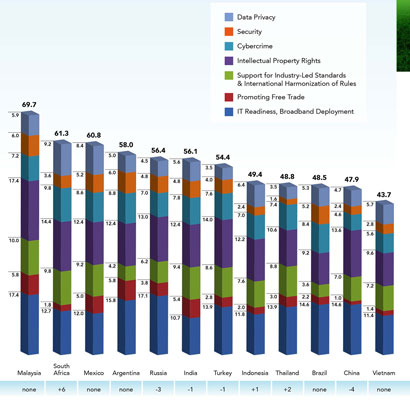
“It is concerning to see Vietnam lagging behind on the development of a legal environment to support cloud computing, and implementing policies that stunt cloud innovation such as severe censorship and restrictions on Internet content,” said Jared Ragland, Senior Director, Policy – APAC with BSA | The Software Alliance. “Countries around the globe must recognize their policies affect the global cloud marketplace. The report is a wake-up call for all governments to work together to ensure the benefits of the cloud around the globe.”
In terms of overall ranking, the biggest improvers are South Africa (moving up six places) and Canada (moving up five places).
The top five countries in the rankings are: Japan, the United States, Germany, Canada and France.
Notably, Thailand, Brazil and Vietnam, despite trailing in the rankings, continue to make significant and consistent gains and are closing their gap with mid-tier countries. The world’s major IT markets remained stable with modest gains.


 Vietnamese





