

2:29:56 PM | 4/8/2020

Up to 68% of Vietnam’s population live in rural areas where shopping demand is very high. Therefore, shifting retailing presence to the countryside is a smart solution, helping retailers keep growing in the current tough time of the economy.
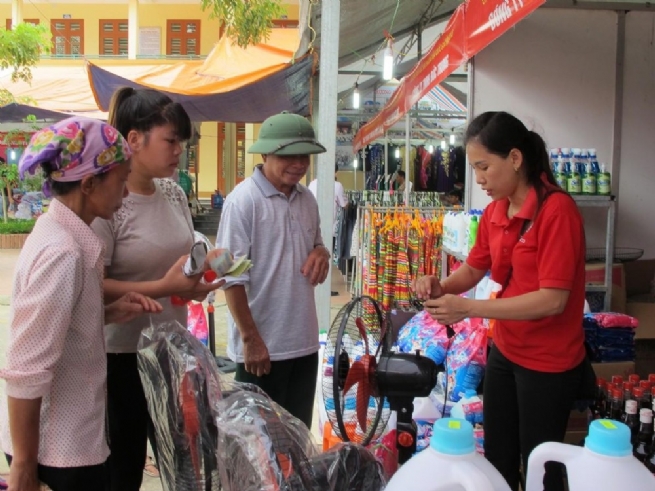
According to the Ministry of Agriculture and Rural Development, after nearly 10 years of implementing the National Target Program on New Countryside Construction, the average income in the countryside has increased from VND12.8 million in 2010 to VND35.66 million at present. Rural areas account for 62.5% of the country’s gross domestic product (GDP) and about US$20 billion a year in spending on consumer goods, foods and essentials. Surveys by many retailers show that retail growth is 1.6% in cities but it grows 2.7% in the countryside, mainly driven by consumption volume. Countryside customers spend three times as much as urban people do. Up to 95% of rural families are willing to buy TVs, 92% can buy electric stoves or gas stoves, 30% want to buy refrigerators and washing machines, and 9% want to buy computers. This shows that the demand for fast-moving consumer goods (FMCG) in the region is rising, faster than cities, and promising many opportunities for goods consumption.
The traditional market is a typical marketplace in the rural region, as people have been familiar with for generations. These markets are usually only open from early morning till 9-10 a.m., and are crowded with buyers and sellers. It is a gathering place in an open space, possibly in an empty ground in front of a public communal house or on the dyke surface with a few rows of bamboo cottages or maybe paved ground. Countryside markets are always crowded, and most products are locally made and grown.
In the time of the international integration process, the economic life in the countryside has improved substantially. The public demand keeps increasing and exerts a strong impact on rural markets. Countryside markets now not only sell local agricultural products but also imported goods and necessities from everywhere. This is a huge potential market because over two million individual retailers and 18,000 retail stores are present in this channel.
According to the plan of the Ministry of Industry and Trade, in 2020, the modern retail channel will account for 40-45% of total expected revenue of US$180 billion but, at the same time, the traditional channel will keep its vitality and culture of development. Retailers tend to go to the countryside, a high potential but untapped market. Especially, when the urban market is gradually becoming saturated, the modern retail market will go to the countryside, a potential ground for businesses to develop their distribution channels.
Besides, domestic companies are facing many difficulties competing with global giants. The competitiveness of domestic retailers is quite weak relative to big retailers present in the Vietnamese market. In this context, shifting the retail market towards the countryside has proven superior because domestic retailers will have advantages in capturing rural markets and customers over foreign retailers. To access the rural market, businesses can choose essential items such as fish sauce, MSG, cooking oil, shampoo, dishwashing liquid and washing powder. They need to pay attention to products that the rural market is yet to have, such as processed foods. Besides guaranteed product quality, one of the important factors to attract rural people is affordable prices.
For rural consumers, it is important that products are diverse, novel and valuable as they expect because they will not be inclined to buy products that are not really needed for them. In particular, transparency and honesty are crucial as most consumers are willing to buy the products consulted by retailers. And, the key to win the countryside market is ensuring media coverage, marketing and especially televised advertisement.
However, in order to target the rural retail market, retailers need to take into consideration such factors as establishment costs, after-sales services like warranty and maintenance, and long-term plans.
|
Mr. Vu Thanh Son, General Director of Hanoi Trade Corporation (Hapro) Hapro advocates developing supermarkets and convenience stores in residential areas and continues to develop the Hapro brand in new residential areas and suburban areas. The corporation focuses on developing rural markets and regards this as a strategic market area in the coming time. Mr. Nguyen Xuan Phu, Chairman of Sunhouse Group Joint Stock Company To steadily keep the market share of household goods, a company must understand consumer tastes. For example, with pan products, Vietnamese people prefer to use pans with many functions in food processing rather than just one function. Therefore, Sunhouse has invested in producing nonstick pans that are suitable for multiple uses. Up to now, Sunhouse nonstick pans occupy 40-50% of the market share in supermarkets and 60-70% in rural areas. Ms. Phan Lan Chi, Deputy General Director of Lan Chi Mart supermarket chain Vietnam's retail market will continue thriving this year. Especially in rural areas, potential and opportunity for developing the modern retail system are still great. Lan Chi Mart supermarket chain will continue to invest in product quality, infrastructure and personnel to improve our service quality. |
By Minh Ngoc, Vietnam Business Forum





 Vietnamese





