

2:12:13 PM | 4/29/2020

In April 2020, Vietnamese pangasius exporters received good news as the anti-dumping duty on pangasius to the United States decreased significantly compared to the previous period. However, this is only a rare case that Vietnamese businesses have an advantage. The risk of trade barriers imposed by other countries on Vietnamese goods is still increasing.
Heightened risks
According to the Trade Remedies Authority of Vietnam (TRAV) under the Ministry of Industry and Trade, 12 out of 26 Vietnamese products may be at risk of being investigated for imposition of trade remedies or other trade restrictions in the coming time.
The above data was released by the Trade Remedies Authority, based on monitored exports subject to trade remedies by export markets or other trade restrictive measures imposed by third countries but not applied to Vietnam. Accordingly, monitored items on the list include plywood made from hardwood, foam cushions, wooden cabinets, artificial stones, copper pipes, mechanical steel couplings, steel wheels, prefabricated steel, gas canisters, drum pins imported to the United States and electric bicycles exported to the European Union (EU).
Increased protectionist measures continue to play a leading role in international trade. The application of protectionist measures is increasingly diverse and varied, from the threat to ‘national security’ that results in increased import tariffs on aluminum and steel, to ‘protection of intellectual property rights’ that gives rise to increased duty on pirated products. Besides, ‘unfair competition’ is a must-be-told reason as it leads to direct retaliatory measures. However, the most frequently used are still trade remedies, including anti-dumping, anti-subsidy and safeguard measures.
According to the Trade Remedies Authority, by the end of 2019, foreign countries initiated 158 cases of trade remedies to Vietnam's exports, including 88 anti-dumping cases, 32 safeguard cases, 18 anti-subsidy cases and 20 tax evasion cases. 15 new cases were started in 2019.
Currently, the United States is still imposing the most trade remedies on Vietnam's exports (31 cases), followed by Turkey (21 cases), India (21 cases) and the EU (14 cases).
Some recent typical cases include the Philippines’ investigation for imposition of safeguard measures on rice, Canada’s anti-dumping and anti-subsidy investigations on anti-corrosion steel products, South Korea’s anti-dumping probe into plywood, Australia’s anti-dumping and anti-subsidy investigation on Vietnam’s steel pipes.
Although new cases in 2019 were fewer than in 2018, they pointed at a noticeable trend: Products subject to anti-dumping duty continued to be sued for subsidy; products subject to anti-dumping measures continued to be investigated for anti-dumping and anti-subsidy; and FTA partners account for a large share of the cases initiated in 2019, according to the Trade Remedies Authority.
Active response
The world is witnessing very complicated and unpredictable developments. Countries are increasing measures to restrict trade and protect domestic production. While important free trade agreements (FTAs) are being enforced, especially commitments to eliminate import duties and quotas, this creates market opportunities on the one hand but also causes strong competition pressures. Countries introduce stricter requirements on exports, especially on rules of origin, already extended to iron, steel, aluminum and other products in addition to apparels. Failing to meet these requirements, Vietnam's goods are easily concluded to be evading taxes and trade remedies.
This requires regulatory agencies, industry trade groups and businesses to improve their capacity of early warning, contextual analysis of overheating export growth that may lead to the risk of investigation and imposition of trade remedies, and to proactively take appropriate measures to protect Vietnam's exports. In addition, relevant ministries and agencies should provide updated and timely information for manufacturers and industries to figure out appropriate investment and business approaches in the ongoing context of complicated safeguard measures.
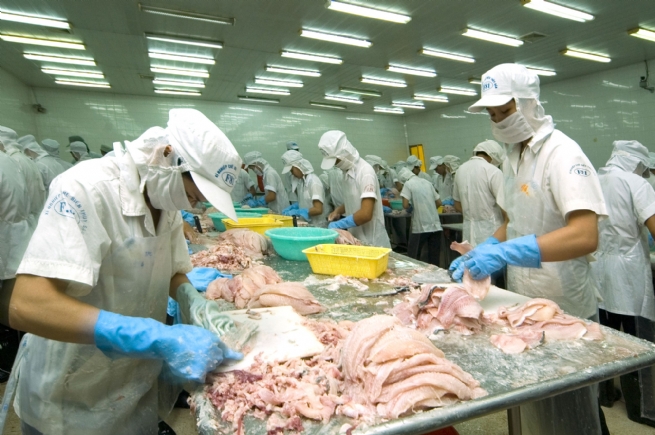
With its above solutions, Vietnam has obtained positive results in some trade remedy-related cases and helped protect legitimate interests of manufacturers and exporters. For example, on April 20, 2020, the United States Department of Commerce (DOC) announced the official results of the 15th period of review (POR15) on anti-dumping duty for the period from August 1, 2017 to July 31, 2018, applied to Vietnamese catfish products exported to the United States. Specifically, the final tax rate for some businesses that answered the questionnaire and cooperated with the DOC is 15 cents per kilo (equivalent to 3.8% of the export price). Most of Vietnam's major pangasius exporters (such as Vinh Hoan Corporation and Bien Dong Seafood Co., Ltd.) will continue to enjoy zero tax. This is positive news for Vietnamese pangasius exporters, when the Covid-19 epidemic is affecting the domestic fish industry.
By Huong Ly, Vietnam Business Forum





 Vietnamese





