

10:57:33 AM | 6/23/2025

After more than a decade of implementing the National Target Program on New Rural Development (since 2011), Hanoi has made fundamental changes to the suburban areas. Hanoi has implemented many synchronous solutions to accelerate the progress and quality of digital transformation, creating a premise to improve the effectiveness of applying modern urban and smart new rural construction; helping to improve people's lives, promoting sustainable socio-economic development.
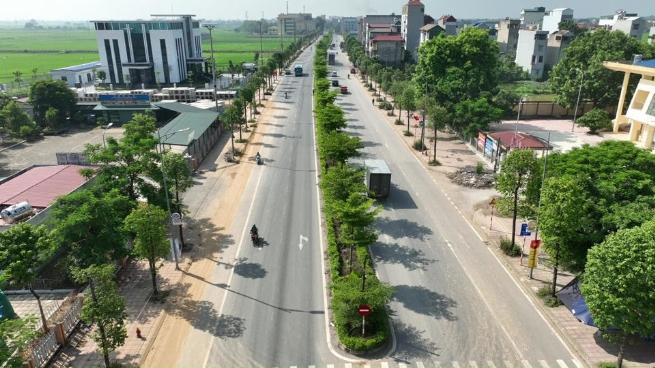
In the context of arranging and reorganizing administrative units, orienting deeper decentralization and delegation of power to the grassroots level - the level of implementation and direct operation is an opportunity for localities to promote dynamism and creativity. Breakthroughs in science, technology, innovation and digital transformation are conditions for bringing progress to villages and hamlets. Building new rural areas with a larger provincial and communal space, requires a different approach. Grassroots cadres do not only rely on rigid criteria, but also need to be creative based on the characteristics of each locality. The development space at the commune level is not only a production space, but also a space integrating culture, society, and community, in which the capacity and knowledge of rural residents will be the decisive factor.
Most importantly, the people's trust, initiative, and willingness to adapt to change have become the most powerful resources. Building a new countryside is no longer a "state program", but has truly become a "program of the people, by the people, and for the people".
According to the speech of Vice Chairman of the National Assembly Le Minh Hoan at the National Online Conference summarizing the National Target Program on New Rural Development, the National Target Program on Sustainable Poverty Reduction and the Movement "The whole country joins hands to build new rural areas", the Movement "For the poor - No one is left behind" for the period 2021-2025: After merging the administrative space at the commune level, it leads to the need to adjust and establish new planning. Commune planning is not only planning agricultural production, what to plant, what to raise, but also planning infrastructure. Planning, more importantly, is shaping the rural economic area. In that space, traditional craft villages are restored, creating new industries for rural areas, agricultural processing zones, and developing tourism. Rural planning should be considered a “marketing” document to introduce and attract external investment, encourage villagers to participate in developing household economy, cooperative economy, promote investment, start-up agriculture with circular agriculture models, smart agriculture, digital agriculture.
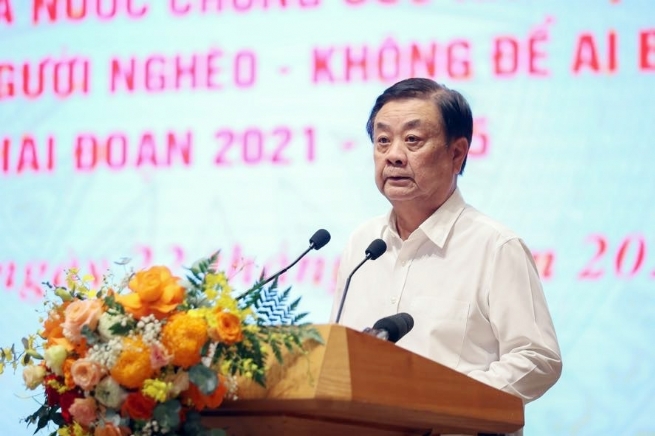
Vice Chairman of the National Assembly Le Minh Hoan
“I hope that the New Rural Program in the coming period will not only stop at reaching “standards”, but also move towards new models. Smart village: has internet connection, has production data, has smart production models. Happy village: a place where there is not only income, but also joy, sharing, community culture is preserved, the elderly are cared for, children are educated, gender equality enters every home and community. Because the ultimate goal of development is not numbers, but improving the quality of life for each person”
Regarding the Hanoi new rural development program, as of June 2025, all 17 districts and Son Tay town with 383 communes of Hanoi have been recognized as meeting new rural standards. Of these, 229 communes have met advanced new rural standards (accounting for 60%) and 109 communes have met model standards. This result exceeds the target set by the Central Government. Notably, the average income in rural areas reached 74.3 million VND/person/year, 6 times higher than in 2010; poor households in rural areas have been completely eliminated. The city has invested synchronously in essential infrastructure in rural areas, from transportation, water supply systems, waste treatment, schools, healthcare to public spaces, meeting the increasing needs of people... Experts say that building new rural areas does not stop at "meeting" the criteria. In the context of rapid urbanization, especially from July 1, when the two-level local government officially comes into operation, Hanoi needs to determine a new direction in building a "smart, happy countryside". In which, "smart countryside" is not simply the application of technology in agricultural production but also a comprehensive transformation from infrastructure, management, public services to education, health, culture... all integrated with digital technology to improve the quality of life. "Happy countryside" is a place where residents can live in a clean, safe environment, connect with the community, preserve cultural identity and ensure social security. In fact, many communes in the suburbs of Hanoi have begun to digitize administrative management, apply science and technology in agricultural production, build craft village tourism models, develop agricultural product brands associated with traceability, e-commerce... However, on the roadmap to building "smart, happy countryside", the city needs to overcome some shortcomings. That is the problem of handling environmental pollution; moving craft villages in residential areas; renovating landscape spaces, preserving cultural identity in rural areas...
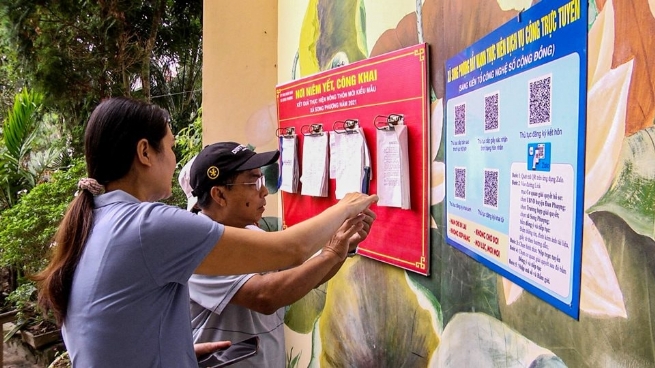
Another bottleneck is the lack of clear criteria to evaluate "smart, happy countryside". Because, without a suitable criteria system, localities find it difficult to implement synchronously, lacking specific orientation in planning, investment and quality monitoring. In addition, rural spatial planning needs to be reviewed according to clear orientations for regions: Urbanization areas, agricultural production areas, ecological landscape conservation areas.
“Smart, happy countryside” is not a distant ideal model, but a development that continues from the foundation of achievements that Hanoi has worked hard to cultivate over the past decade; to affirm the human-centered mindset, people are the creators, beneficiaries and spreaders of values.
Hanoi has a great opportunity to become a pioneer in transforming the new rural model. The issue here is not “can it be done or not”, but “how to do it faster, deeper and more substantial”. With the spirit of daring to think, daring to do and daring to take responsibility, Hanoi can completely realize that aspiration so that the rural areas of the capital are not only worth living, but also proud of.
By Minh Ngoc, Vietnam Business Forum
|
This special section is supported by Hanoi Coordination Office of the New Rural Development Program |
 April 24–25, 2026
 Kinh Bac Cultural Center, Bac Ninh Province


 Vietnamese





