

2:07:41 PM | 9/15/2025

As one of Germany’s leading chemical companies in Vietnam, BASF not only delivers advanced technological solutions for various industries but also actively engages in community development programs. In an interview with our reporter, Mr. Erick Contreras, Managing Director of BASF Vietnam, reaffirmed the company’s long-term commitment to sustainability.
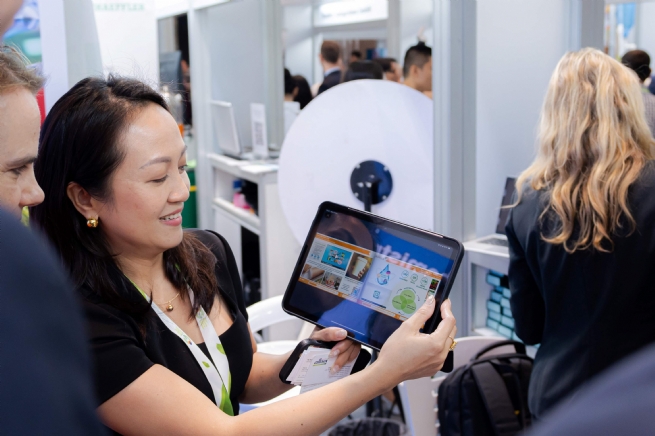
BASF Vietnam shares expertise at anevent
On the occasion of the 50th anniversary of Vietnam-Germany diplomatic relations and the 30th anniversary of GBA, how would BASF Vietnam reflect on these milestones and the company’s contributions to bilateral cooperation?
We would like to congratulate the two countries on these milestones and believe Germany and Vietnam offer much to each other, with the German business community and GBA playing vital roles. Alongside other German companies, we support Vietnam’s growth and connect both economies.
As a leading chemical company, BASF creates chemistry with customers, partners, and distributors from the country’s key sectors to drive sustainable growth together, through innovative solutions and collaboration across the value chain. Since entering Vietnam in 1994, we have grown significantly, contributing to long-term economic and social development and helping our customers achieve their goals. BASF also plays its leadership role in both the GBA and EuroCham to support the German community and growth of European companies in Vietnam.
Looking ahead, we see more and more customers choosing BASF as a preferred partner, highlighting the significant role of our company and the German business community in Vietnam’s sustainability transformation.
Since its establishment in Vietnam in the 1990s, BASF has expanded its activities across agricultural chemicals, construction materials, and advanced technologies. How does BASF evaluate the role of Vietnam in its broader Asia-Pacific business development strategy?
Vietnam has been a “go-to” destination for many foreign direct investors due to its stable government, abundant land and skilled workforce, and strategic trade agreements like EVFTA and RCEP that provide greater access to important markets such as the EU and U.S.
BASF has identified Vietnam as one of the key growth markets in the region and we see plentiful growth prospects in major industries such as footwear and apparel, construction and infrastructure, nutrition and agriculture, mobility and energy, especially as the country transitions to a greener economy.
The government's commitment to sustainable development, evidenced by its pledge at COP26 to achieve Net Zero by 2050, signals an impactful shift. The Revised Environmental Protection Law of 2020 and the National Electricity Development Plan for 2021-2030 are key enablers that highlight Vietnam's dedication to cleaner energy sources and stricter environmental regulations.
Furthermore, Vietnam has actively adapted best practices and expertise from more mature markets. This approach helps promote ‘greener’ and digital technologies, improve the quality of life, and support businesses with greater ease.
In the business community, there is a noticeable shift towards the adoption of innovative and sustainable solutions, particularly among small and medium-sized enterprises (SMEs). Companies have increasingly embedded ESG principles and digital tools into their operations, promoting responsible production and sustainable growth.
Innovative businesses like BASF and other German leading companies play a crucial role in this transition. By actively sharing expertise and fostering collaborative partnerships, we drive collective progress towards Vietnam’s sustainability goals.
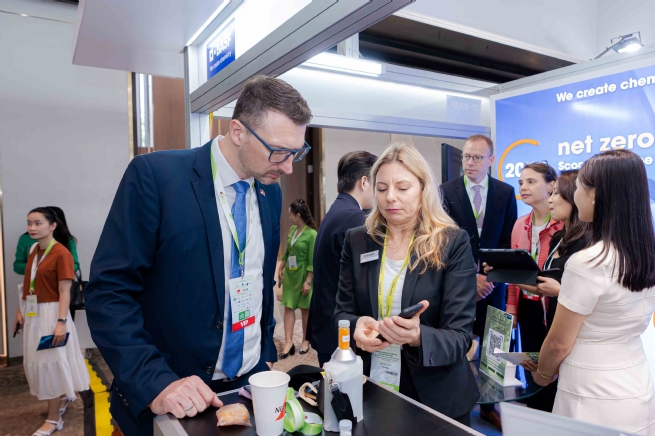
BASF Vietnam drives progress toward sustainability by sharing expertise and fostering partnerships
In response to global challenges regarding the environment and supply chains, what specific initiatives has BASF implemented in Vietnam to reduce emissions, apply green technology, and promote circular economy practices?
BASF is a leading chemical company producing and supplying products as raw materials to almost all industries. For this reason, our products are essential components and our solutions play a key role in the sustainability of the value chain.
For customers, we provide transparency of our Product Carbon Footprint (PCF) information for an extensive portfolio of over 45,000 products with insights into the greenhouse gas emissions associated with the raw materials they source from BASF. This helps them in identifying, tracking, and mitigating carbon emissions. This is especially meaningful for Vietnamese companies exporting into EU markets with stringent standards on sustainability, for example CBAM (Carbon Border Adjustment Mechanism), where declaration of the emissions embedded in the imported goods and the corresponding number of certificates each year are required.
For example, we provide innovative products and digital solutions that enhance plant health, increase productivity, and improve profitability in agricultural practices for major crops like rice, fruits, and vegetables. Our specialty additives help address the challenge of plastic waste management and promote a circular economy, while polyurethane solutions offer comfort, design, and safety of footwear products. BASF also utilizes renewable ingredients, such as Vietnamese rambutan and bio-mass balance (BMB) materials, to create high-quality beauty care products that have a positive impact on both the workforce and the environment.
For suppliers, since 2021, globally we have initiated discussions with more than 1,300 partners, representing around 60% of our raw materials-related greenhouse gas emissions. We collaborated to identify and implement solutions aimed at reducing product-related emissions. Our goal is to establish the PCF as a criterion for our purchasing decisions.
BASF engages with its value chain partners in different dialogues, including the Sustainability Day series to exchange thoughts, expertise and explore new partnership opportunities and collaborative projects that contribute to sustainable development in Vietnam.
Furthermore, our active participation in business associations such as GBA, EuroCham and the Vietnam Business Forum demonstrates our commitment to advocating for sustainable practices and policies in the country.
Besides business, BASF supports STEM education, social programs, and diversity. What is the philosophy behind these efforts, and what long-term impact do you expect?
At BASF, we want to make positive contribution to the society and the environment. We aim to improve the quality of life of the communities where we do our business and contribute to the United Nations 17 Sustainable Development Goals.
In Vietnam, we focus on education development with a range of long-term programs to help nurture the next generation of Vietnamese scientists and future leaders, in collaboration with our employees, customers and NGO partners.
For example, our school renovation began in 2015 and has now evolved into a long-term commitment to support education development, backed by our employees, customers and partners, and other co-sponsors. Over a decade of collaboration, eight schools have been built in Hau Giang (now Can Tho city), Tra Vinh (now Vinh Long province), An Giang (now Kien Giang province) and Dong Nai province, all equipped with modern classrooms, playgrounds, and essential facilities benefiting around 1,000 students.
With the belief that curious children today turn into great scientists of tomorrow, we introduced our global BASF Kids' Lab program to let students learn about chemistry and how it can contribute to our everyday life through fun-filled experiments. In collaboration with the HCMC Department of Education & Training, we have brought this unique program to more than 5,000 students.
Since 2018, we took one more step, offering BASF Virtual Lab, an extension of BASF Kids’ Lab, to let the future researchers explore the world of chemistry and natural sciences with just a click. Children can experience the joy of chemistry anytime, anywhere at https://thinghiemvui.basf.com. The 14 most popular games from the portal have been introduced in Vietnamese.
Thank you very much!
By Ngo Khuyen, Vietnam Business Forum


 Vietnamese





