

2:20:35 PM | 9/16/2025

As Vietnam and Germany celebrate the 50th anniversary of diplomatic relations and the 30th anniversary of the German Business Association (GBA), Bosch — one of the largest German investors in Vietnam — reaffirms its pioneering role in advancing technology, industry, and sustainable development. In an interview with Vietnam Business Forum, Andre De Jong, Vice President and Managing Director of Bosch Vietnam, reflects on nearly three decades of the company’s growth in Vietnam and outlines its vision to foster high-quality talent, accelerate digital transformation, and deliver green solutions that elevate bilateral cooperation to new heights.
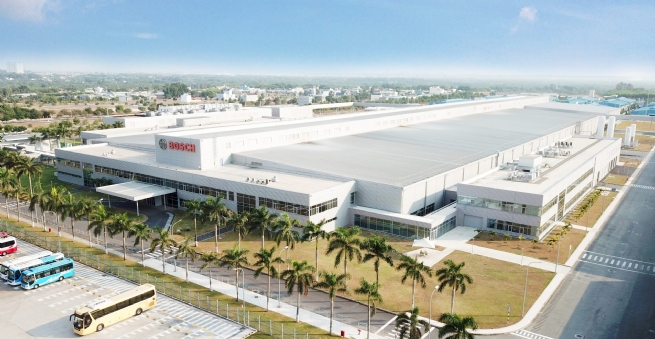
BOSCH-FACTORY in Vietnam
On the occasion of the 50th anniversary of diplomatic relations between Vietnam and Germany and the 30th anniversary of GBA, how does Bosch Vietnam – as a key investor – evaluate the strategic cooperation potential between the two countries in technology, industry, and sustainable development?
The 50th anniversary of diplomatic relations and the 30th anniversary of the GBA truly highlight the significant milestones of the partnership between Vietnam and Germany. As a key German investor with a long-standing presence, Bosch has had a front-row seat to witness this relationship flourish over decades.
When we first established our representative office in 1994, we've experienced firsthand the Vietnamese government's commitment to improving institutions, human resources, and infrastructure, and its attentiveness to the business community's needs. As of 2024, we're running one of our most significant operations in Southeast Asia, with over 6,000 people across manufacturing, R&D, sales, and services. That growth trajectory speaks volumes about both Vietnam's positive development and the solid foundation our two countries have built together. Vietnam offers a dynamic and promising market, demonstrating impressive growth potential. Its economy has maintained a positive trajectory, bolstered by a motivated, young, and well-educated workforce. This demographic not only contributes to a vibrant business environment but also positions Vietnam as an emerging hub for innovation and technology.
Looking forward, I see some untapped potential, particularly in technology collaboration. This focus, coupled with Vietnam's growing stature as an innovation hub and an integral part of global supply chains, closely aligns with Germany's core competencies in high-technology, advanced manufacturing (Industry 4.0), and sustainable solutions. We firmly believe that vast opportunities exist for collaboration in critical areas such as the smart manufacturing, automation, and the cultivation of a highly skilled workforce. Bosch is eager to contribute to this partnership, leveraging our global expertise and local insights to foster mutual growth and advance sustainable development for both nations.

Deutsches Haus building
As one of the largest German investors in Vietnam, could Bosch share its major milestones, achievements, and success stories to date, as well as the fields in which it plans to expand in the coming period?
As of December 31st, 2024, the company employs more than 6,000 associates in Vietnam, with operations spanning manufacturing, research and development (R&D), sales, and services. The company is increasingly active in diversified business areas, such as consumer goods, industrial technologies and mobility solutions. Bosch in Vietnam is also operating two Bosch Global Software Technologies centers in Ho Chi Minh City and Hanoi, an Automotive R&D center in HCMC, and a plant for powertrain solutions in Dong Nai – the world’s largest Continuously Variable Transmission (CVT) pushbelt production facility.
On the people side, we've graduated 204 technicians through our technical apprenticeship program since 2013, and we've signed 12 MoUs to the key Vietnamese universities, such as: HCMC University of Technology, HCMC University of Technology and Education, Hanoi University of Science and Technology,... In addition, our commitment to our associates to create a positive working environment has earned us two prestigious certifications – “Vietnam Best Places to Work 2024” and “Great Place to Work 2024” – marking its tenth consecutive year on these lists of the best workplaces in the engineering, high technology, and software sectors.
In 2024, Bosch Vietnam has been honored as one of the top 100 sustainable enterprises operating in the manufacturing sector in the Corporate Sustainability Index (CSI) Award 2024. This recognition underscores Bosch's unwavering commitment to sustainable practices and its significant contributions to Vietnam's manufacturing sector.
Looking ahead, our strategic focus includes driving factory automation solutions, expanding our product portfolio, and introducing innovative solutions tailored for the Vietnamese market. We are committed to continue to collaborate with the government in high-tech development and will keep investing in Vietnam's promising future.
Bosch Vietnam is known for its green transformation and sustainability initiatives. What specific solutions is Bosch currently implementing in Vietnam to move toward carbon neutrality, renewable energy use, and energy-saving production?
Since 2020, the Bosch Group with its more than 400 locations worldwide has been carbon neutral overall (scopes 1 and 2). To achieve carbon neutrality, we employ four levers: improving energy efficiency, generating our own energy from renewable sources (new clean power), purchasing electricity from renewable sources (green electricity), and – as a last resort – offsetting residual CO₂ emissions with carbon credits. (Scopes 1, 2, and 3 are used in accordance with the Greenhouse Gas Protocol Corporate Accounting and Reporting Standard.)
In Vietnam, we invest significantly in greening our own footprint; for instance, we invested €900,000 in a comprehensive wastewater recycling system at our Bosch Plant Vietnam. Since 2020, treated wastewater accounted for 65 percent of the plant's total water consumption. At the end of 2023, we inaugurated a 1,540 kWp solar power system at the Bosch Plant Vietnam. This system is set to generate approximately 2,300 MWh of clean energy annually, prevent CO2 emissions by 1,630 tons – equivalent to around 30,000 trees planted annually.
Beyond our internal initiatives, we are committed to delivering solutions that actively support our customers in their green transition journey. For example, all Bosch household products carry recognized green labels, signifying their energy efficiency and conservation of natural resources. In the industrial sector, our solutions are designed to boost operational efficiency, minimize resource consumption, and reduce carbon emissions. These efforts are a direct reflection of our enduring motto: "Invented for life".
In addition to business, Bosch plays an active role in German-standard vocational training programs and partnerships with universities. What are Bosch’s plans to further improve local workforce quality and expand this model?
The development of a highly skilled local workforce is a priority for Bosch Vietnam, aligning with our 'local-for-global' strategy. We are profoundly committed to contributing to Vietnam's educational landscape and talent development. Our initiative is the German-standard Technical Industrial Apprenticeship (TGA) program, conducted in partnership with LILAMA2 and AHK Vietnam since 2013. This program provides tuition-free education, financial support, and invaluable on-the-job training, having successfully graduated 204 Bosch technicians to date.
We also cultivate robust partnerships with key Vietnamese universities. These collaborations encompass establishing high-tech labs on campus, offering internships and post-graduate recruitment, guest speakers for student programs, and organizing competitions like Code Race and the Future Mobility Challenge to inspire young talent. Our Embedded Academy, run by Bosch Global Software Technologies Vietnam (BGSW Vietnam), is specifically designed to equip engineering students with vital skills for the automotive software industry.
Our intention is to continue and broaden these initiatives. We will maintain close collaboration with universities, enhance our TGA program, and persistently invest in our associates' professional growth, as demonstrated by our 100,000 learning hours annually. We believe that robust collaboration among the Government, universities, and enterprises is pivotal to building the high-tech workforce Vietnam requires, and we are dedicated to remaining a key partner in this vital undertaking.
Does Bosch have any recommendations or proposals for improving Vietnam’s investment and business environment, especially in the context of digital transformation, energy transition, and the trend toward high-quality investment from Europe?
Vietnam has achieved remarkable progress in cultivating an attractive business environment, defined by a dynamic market and a government responsive to business needs. That said, as global markets evolve rapidly, there are opportunities to further enhance Vietnam's position for attracting foreign investment, particularly in technology and sustainability.
First, accelerating the digital transformation demands a concerted effort. Vietnam possesses the essential components to emerge as an innovation hub: a pool of young workforce, well-educated talent, strong government support, and tangible market demand. We would recommend continued investment in digital infrastructure – robust 5G networks, cloud computing capabilities, and AI solutions. Equally crucial is the development of regulatory frameworks that foster innovation while ensuring robust data security and privacy protection, areas to which European companies are particularly sensitive. Embracing AI and machine learning is also key to remaining competitive, and at Bosch, we are committed to leveraging these technologies and making them available to the market.
Second, regarding the sustainability initiaves, to unlock this potential of this , streamlining approval processes for renewable projects and establishing clear, long-term policy frameworks would be highly beneficial. Based on our own experience, investments in energy efficiency yield both environmental and economic returns; Vietnam has the potential to become a regional benchmark for sustainable manufacturing.
Third, and fundamentally, is the sustained investment in a highly skilled workforce. Strengthening collaboration among the Government, universities, and enterprises is essential to ensure educational programs align with industry needs and to foster long-term investment in people. Bosch, through our various training programs and partnerships, remains steadfast in our support for this crucial area.
By strategically addressing these areas, Vietnam can solidify its standing as an attractive destination for high-quality investment and a significant player in global technology and sustainability efforts.
Thank you very much!
Source: Vietnam Business Forum


 Vietnamese





