

10:41:43 AM | 12/19/2025

Resolution 68 of the Politburo places private enterprises at the center of Vietnam’s transition to a green, circular, and sustainable economy, fully aligned with the country’s development goals and international commitments. On this topic, we are pleased to present the article by Ramla Khalidi, UNDP Resident Representative in Vietnam, and Bui Anh Tuan, Director-General of the Agency for Private Enterprise and Collective Economy Development, Ministry of Finance.
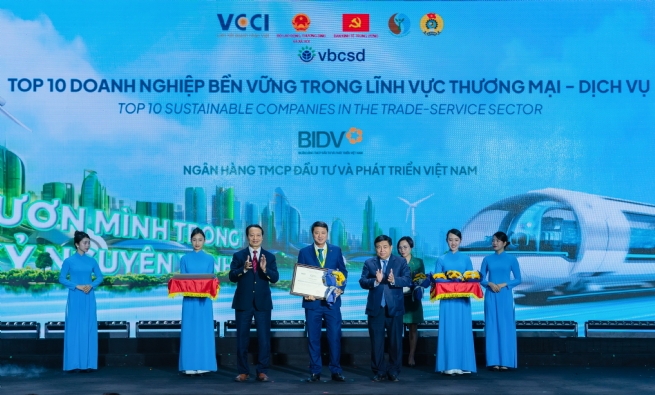
Those honored with the certificate of recognition for sustainable business are pioneers in promoting green, circular economic development
Immediately upon its issuance, Resolution 68 on private sector development received strong attention from the business community, associations, banks, and development partners.
The resolution laid the foundation for a comprehensive shift in Vietnam’s private sector policy, from merely “recognizing” to actively “protecting, encouraging, and promoting” the sector, and from “supporting” to “leading development.” It also sets ambitious targets for sustainable private sector growth and introduces innovative perspectives, tasks, and measures to accelerate the development of Vietnam’s private sector.
Soon after, the National Assembly passed Resolution 198/2025/QH15, introducing special mechanisms and policies to further promote private sector growth, demonstrating political determination to realize the vision of a prosperous nation by mid-century.
UNDP fully supports this strategic direction, particularly the recognition of the private sector’s central role in promoting sustainability, through empowering and enabling private businesses to thrive.
In Vietnam, where small and medium-sized enterprises (SMEs) account for 98% of all companies, a significant gap remains in competitiveness and access to resources, particularly land, finance, skilled labor, and quality support services, to develop sustainably and greenly.
Currently, support policies are often generic, applying the same measures across micro, small, and medium-sized enterprises. For example, under the 2017 SME Support Law, an SME is defined as a business with fewer than 200 employees and annual revenue under VND300 billion, or fewer than 200 employees and total capital not exceeding VND100 billion. This means a rural micro-business with five employees and annual revenue below VND1 billion receives similar support to a company with 200 employees and VND300 billion in annual revenue, despite having vastly different needs.
International experience shows that in low-income countries, micro-enterprises dominate the ecosystem, whereas in high-income countries, medium-sized enterprises gradually take the lead. For Vietnam to become a high-middle-income country, and eventually a high-income country, targeted, group-specific policies are critical to scaling up enterprises and enabling comprehensive economic transformation, especially green, circular, and sustainable development.
One of the major challenges identified by Vietnam’s private businesses is limited access to finance, particularly for SMEs, startups, and green projects. This issue stems not only from lending and investment procedures but also from enterprises’ capacity to absorb capital.
Resolution 68 addresses this challenge directly by strengthening the credit guarantee mechanism and expanding the functions of the SME Development Fund (SMEDF). Notably, lending decisions will no longer rely solely on collateral. They will also consider production models, market-based business plans, data-driven assessments, cash flow, value chain participation, and current and future assets.
In the near future, the fund will expand its operations to include startup loans, seed funding, or co-financing models combining public and international/private resources. It will also pilot a fund-of-funds mechanism, investing in private funds to broaden SME access to capital.
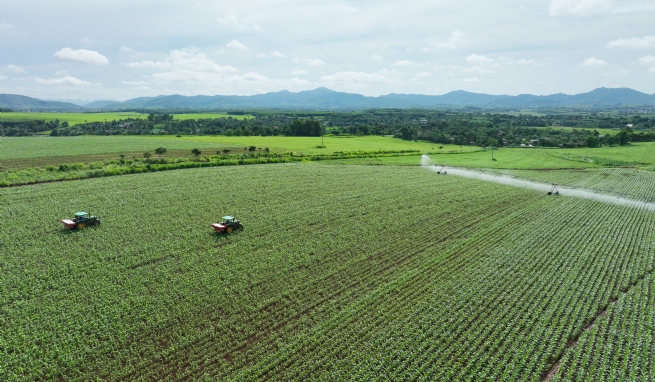
The transition to circular production is no longer theoretical, it is being applied in practice with encouraging results
An effective international practice involves combining public and private resources (including international capital) to reduce investment risks while increasing social and environmental impact. This blended finance approach has successfully mobilized private investment globally. ASEAN examples, such as Singapore’s Financing Asia’s Transition Partnership (FAST-P) and Indonesia’s SDG One Fund, offer models that Vietnam could adopt.
Additionally, Vietnam can expand loan eligibility, foster a local angel investor community, and encourage large corporations to direct their corporate social responsibility (CSR) funds toward supporting SMEs.
Resolution 68 positions private enterprises at the center of Vietnam’s transition toward a green, circular, and sustainable economy, fully aligned with the country’s development goals and international commitments.
UNDP remains committed to partnering with Vietnam to strengthen enterprise capacity, promote innovative business models, and expand access to innovative finance, aiming for a prosperous future that leaves no one behind.
Source: Vietnam Business Forum


 Vietnamese





