

10:59:22 AM | 12/9/2025

The year 2025 marks the 15th anniversary of the Vietnam Business Council for Sustainable Development (VBCSD), a leading organization guiding the business community toward sustainable growth and ESG standards. Through VBCSD, the Vietnam Chamber of Commerce and Industry (VCCI) has carried out key initiatives to build an inclusive and responsible business ecosystem.
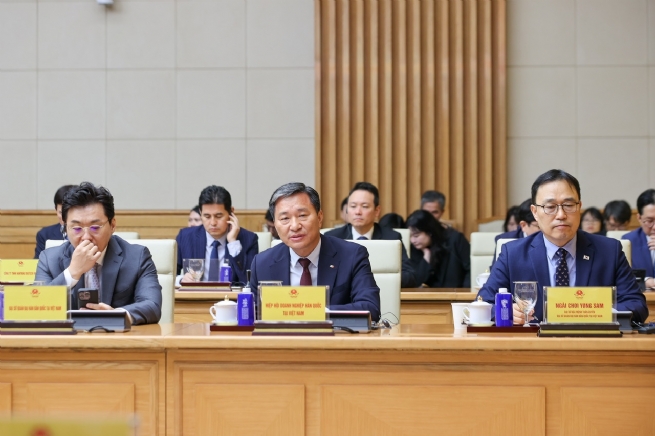
In this context, the foreign direct investment (FDI) community, especially Korean enterprises known for their leadership in ESG practices in Vietnam, has played an important role in promoting green growth.
On this occasion, our reporter interviewed Ko Tae Yeon, Chairman of the Korea Chamber of Business (KOCHAM) in Vietnam, about ESG implementation and the future of Vietnam and Korea cooperation in the new development stage.
How do you evaluate the sustainable development practices of Korean enterprises in Vietnam? How does KOCHAM support its members in this process?
Korean enterprises have long accompanied Vietnam’s development and are now among the country’s most trusted economic partners. Recently, instead of focusing only on production efficiency or cost advantages, many companies have made sustainable development a core value in their growth strategies.
Across the three ESG pillars - Environment, Social, and Governance - businesses are working to build governance systems that meet international standards. ESG is no longer an option but a fundamental condition for companies to survive and grow over the long term.
KOCHAM supports this by helping members implement ESG through policy dialogues with government agencies, workshops, professional knowledge sharing, and initiatives that promote digital innovation and green growth.
Since last year, we have expanded ESG training programs and discussions to strengthen sustainable development practices within the Korean business community in Vietnam. In the coming period, we will continue to listen to real-world experiences and provide practical support so companies can see sustainable development as a new growth driver.
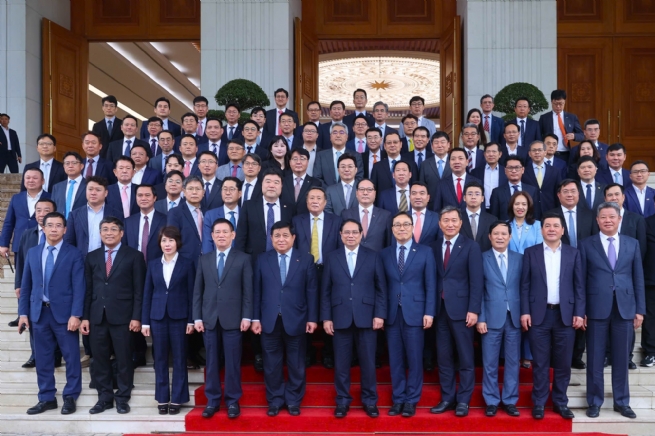
Prime Minister Pham Minh Chinh and government officials meet with Korean business leaders
Could you share notable initiatives or examples from KOCHAM member companies in green growth, digital transformation, or corporate social responsibility?
Korean enterprises are actively supporting Vietnam’s green and digital transformation. Major corporations such as Samsung Electronics, LG Display, and SK Ecoplant have expanded the use of renewable energy, improved waste recycling, and adopted carbon-neutral production processes, contributing to Vietnam’s Net Zero 2050 target.
Companies like Hyosung, POSCO, and Hanwha Aero Engines are investing in smart factories and applying AI in quality management and digital logistics, enhancing both productivity and energy efficiency.
In corporate social responsibility, many members have implemented meaningful community programs. Notably, the CSR Scholarship Program, jointly organized by KOCHAM and the Embassy of the Republic of Korea in Vietnam since 2015, has awarded nearly 900 scholarships and is one of KOCHAM’s most recognized CSR initiatives. Members have also supported leprosy villages in Bac Ninh and disaster recovery efforts. These actions strengthen corporate reputation and build a foundation for sustainable cooperation between the two countries.
What are the main opportunities and challenges for Vietnam-Korea cooperation in promoting sustainable, innovative, and inclusive growth in the coming years?
Vietnam-Korea relations have moved beyond traditional investment cooperation and are now entering a phase of joint sustainable development, with green growth and digital transformation as the main priorities.
The combination of Korea’s advanced green technologies and Vietnam’s strong manufacturing base can position Vietnam as an environmentally friendly production hub in Asia.
Human resource development is also critical. Both countries should expand training programs and strengthen links between universities and businesses to build a workforce capable of driving green and digital economies.
It is important to establish regular dialogue between the government and businesses to bridge the gap between policy and implementation.
Vietnam still faces challenges such as inconsistent administrative procedures, the lack of ESG disclosure standards, and limited access to green finance. KOCHAM acts as a bridge, conveying practical business feedback to policymakers and supporting improvements to the investment environment.
If Vietnam and Korea develop an inclusive cooperation model that includes small and medium-sized enterprises, the resulting benefits will be broader and more sustainable.
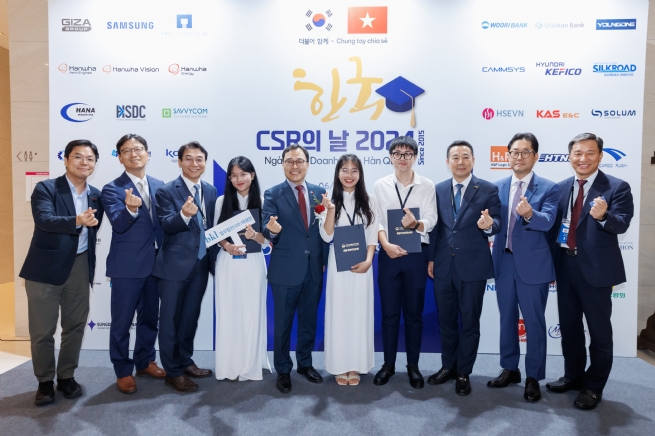
KOCHAM, in collaboration with the Korean Embassy, hosts the CSR Scholarship 2024
What recommendations do you have to further strengthen the role of foreign business associations such as KOCHAM in supporting ESG implementation and sustainable development programs in Vietnam?
Sustainable development and ESG are not only the responsibility of businesses but also a shared journey that requires collaboration among the government, enterprises, and the public.
For the government, it is important to make ESG standards and guidelines more transparent, speed up approval processes for compliant projects, and ensure consistency in policies between central and local authorities to establish a unified national framework.
Enterprises should keep investing in green technologies, developing human resources, and integrating CSR as an essential part of corporate governance. For the public, raising awareness and fostering global citizenship are vital for building a sustainable society.
KOCHAM works closely with VCCI and other international chambers of commerce to convey business perspectives in policy discussions while focusing on supporting small and medium-sized enterprises in the ESG transition.
We hope the government will soon introduce tax and financial incentives for renewable energy, circular economy, and green technology projects to encourage greater business participation.
We will continue sharing these recommendations through forums and policy dialogues with the government, because sustainable development is not an individual effort but a shared responsibility and practice among the government, enterprises, and associations.
Thank you very much!
Source: Vietnam Business Forum





 Vietnamese





