

1:45:55 PM | 12/18/2025

In 2025, Bac Ninh is becoming a dynamic growth hub in northern Vietnam, combining strong industry, high-tech potential, and a skilled workforce. With global integration, digital transformation, and growing sustainability demands, Bac Ninh is at a key turning point to turn its momentum into competitive advantage, overcome challenges, and build a modern, innovative, and well-integrated economy.
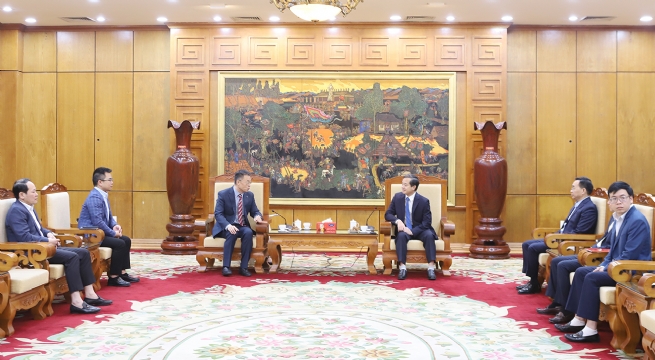
Bac Ninh provincial leaders receive and hold working talks with a delegation from Goertek Group (China) November 20, 2025
Breakthrough driven by early administrative stabilization
The year 2025 marks a major turning point for Bac Ninh as the province undertakes administrative restructuring, completes its 2021-2025 socio-economic development plan, and prepares for the upcoming Provincial Party Congress. While growth has slowed in many other localities, Bac Ninh achieved an estimated GRDP growth rate of 10.27%, ranking fifth nationwide. This strong performance reflects the province’s effective governance and its ability to maintain stable industrial and manufacturing operations.
The provincial merger did not disrupt administration. On the contrary, the government apparatus was quickly consolidated. In the first year, the Provincial People’s Council held eight sessions and issued 76 resolutions, ensuring continuous policy coverage. This proactive governance helped Bac Ninh sustain industrial and manufacturing supply chains, maintain social welfare, and establish a foundation for reallocating resources across the new province.
Macroeconomic indicators remain positive. Nominal GRDP is estimated at VND522 trillion. GRDP per capita is nearly US$5,900. Import and export turnover reaches US$182 billion, accounting for 20% of the national total. Budget revenue is about VND72 trillion, exceeding the target by 27%. More than US$16.5 billion in foreign direct investment has placed Bac Ninh back among the country’s leading destinations for FDI attraction.
A key highlight is public investment disbursement, reaching 65.5% of the provincial plan and 81.1% of the central government’s assigned plan, one of the highest rates nationwide. Strategic projects such as the Gia Binh International Airport, Ring Roads 4 and 5, Kenh Vang Bridge, and Van Ha Bridge have been accelerated, creating positive spillover effects for infrastructure, industry, and urban development.
Growth drivers
The GRDP structure indicates that industry remains Bac Ninh’s primary growth pillar, increasing by 11.51% and contributing over 70% of value added. Foreign-invested companies such as Samsung, Canon, Foxconn, Luxshare, Amkor, and Fukang have sustained production cycles, expanded assembly lines, and boosted demand for components and supporting industries. Bac Ninh continues to serve as Vietnam’s national hub for electronics and high technology, producing key items including electronic components, chips, smart devices, laptops, and telecommunications equipment.
Imports and exports reached US$182 billion, ranking second nationwide. Industrial consumption improved from the second quarter, reducing inventory and promoting reproduction, allowing businesses to enter new order cycles more smoothly. The services sector grew 7.56%, and agriculture grew 4.41%. While modest, these contributions help stabilize the economy and reduce absolute dependence on the FDI sector.
The provincial merger has expanded industrial capacity horizontally, creating an industrial super hub with nearly 50 planned industrial parks by 2030. Regional integration enhances supply capacity, allows sharing of skilled labor, and expands clean land for high tech projects, addressing previous land constraints in Bac Ninh.
Budget revenue reached VND72 trillion, demonstrating comprehensive growth. Local private enterprises are increasingly active not only in traditional sectors such as construction and trade but also in logistics, supporting industries, and urban services. The growing presence of strong domestic enterprises is a positive signal for the dual FDI-private enterprise model pursued by Bac Ninh.
However, the province still faces challenges. Growth fell short of the 11.5% target, some sectors experienced slow disbursement, the two-tier government model requires further refinement, and natural disasters caused significant agricultural losses. These factors could affect short term growth quality if not addressed promptly.
Upgrading the growth model
In 2026, Bac Ninh aims for GRDP growth of 12.5 to 13%, seeking to remain among the nation’s top-performing provinces. Key growth drivers will include public investment, enhanced connectivity infrastructure, and the expansion of the industrial and service ecosystem within the province’s newly defined area.
The 2025-2030 Provincial Party Congress Resolution sets a growth model based on three pillars: high tech, green, and digital industry; high quality services linked to Bac Ninh’s role as a regional logistics hub; and sustainable high-tech agriculture. The goal of achieving a 41% digital economy share in 2026, rising to 45% by 2030, indicates a shift toward deeper growth rather than pure expansion.
Key infrastructure projects, especially Gia Binh International Airport, ring roads, and new generation industrial parks, will create a breakthrough in development space, forming a modern urban-industrial corridor along the Song Cau river and airport axis. This is a critical foundation for Bac Ninh to achieve its goal of becoming a centrally governed city before 2030.
However, the new growth phase requires three prerequisites: improving domestic enterprises’ capacity to absorb capital; attracting strategic investors in semiconductors, AI, and renewable energy; and addressing urbanization pressures and high-quality labor shortages. The two-tier government model must also continue to be optimized to shorten administrative procedures and enhance governance efficiency.
Amid these opportunities and challenges, 2025 growth serves as an important springboard, confirming Bac Ninh’s momentum. With expanded development space, enhanced resources, and a clear high tech-industrial orientation, the province has a strong foundation to enter the 2026-2030 growth cycle as a major national growth center.
By Song Uyen, Vietnam Business Forum
 April 24–25, 2026
 Kinh Bac Cultural Center, Bac Ninh Province


 Vietnamese





