

2:37:35 PM | 11/3/2025

Hanoi currently has 1,350 craft villages and villages with crafts, including 337 craft villages and traditional crafts that have been officially recognized. These craft villages not only play an important role in rural economic development, creating jobs and stable incomes for local people, but are also places where distinctive cultural values of Thang Long – Hanoi are preserved and passed down.
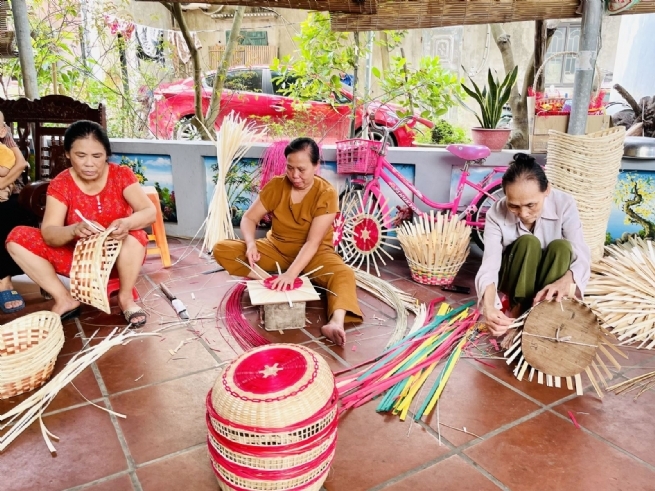
Craft villages in Hanoi not only contribute to economic development but also serve as custodians and inheritors of distinctive cultural values
Behind each handicraft product lies the dexterity, labor, and dedication of many generations of artisans. Craft villages are not merely economic units, but also “living museums” that preserve indigenous knowledge, sophisticated handicraft techniques, and national identity. This is an invaluable cultural treasure that Vietnam is striving to preserve and promote in the flow of integration.
In recent years, the recognition of crafts and traditional craft villages has contributed to the revival of many crafts at risk of disappearing, such as embroidery and lace-making, silk weaving, ceramics, lacquerware, mother-of-pearl inlay, and rattan and bamboo crafts. Alongside this, many new crafts have emerged in line with industrialization trends, such as agricultural processing, ornamental plant cultivation, and souvenir production. As a result, craft villages not only create more jobs and improve incomes for millions of rural workers, but also help preserve landscapes and regional identities, becoming distinctive tourism spaces.
Names such as Bat Trang, Van Phuc, Phu Vinh, and Kim Bong have gone beyond Vietnam’s borders to become cultural and tourism brands favored by international visitors. By the end of 2024, nationwide efforts had restored and preserved 63 traditional crafts and 81 craft villages at risk of disappearance, demonstrating persistent efforts to safeguard the “soul” of Vietnam’s rural culture.
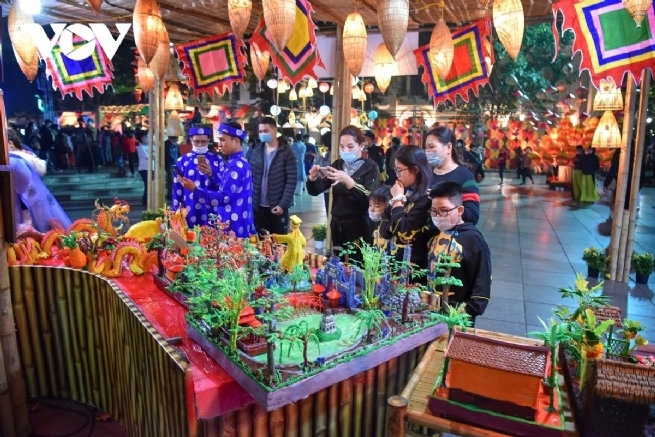
Development solutions
According to Nguyen Dinh Hoa, Deputy Director of the Hanoi Department of Agriculture and Environment, the Master Plan for Craft Village Development in Hanoi for the 2025–2030 period, with a vision to 2050, issued in January 2025, aims to preserve and develop craft villages in association with innovation and international integration. The Plan identifies 11 key solution groups, focusing on improving craft village planning; enhancing infrastructure and the environment; human resource training; digital transformation; product development linked to the OCOP program; trade promotion, international cooperation, and mobilizing socialized resources. In parallel, eight priority tasks are being implemented, including: preserving and restoring traditional craft villages; developing craft villages linked with tourism and the green economy; addressing environmental pollution; applying new technologies; upgrading infrastructure; training and skill transmission; product promotion and brand building.
According to experts, artisans, and businesses, for craft villages to develop sustainably, Hanoi needs to shift from a mindset of “mere preservation” to “leveraging cultural values to create livelihoods.” Nguyen Minh Tien, Director of the Agricultural Trade Promotion Center (Ministry of Agriculture and Environment), emphasized that Hanoi has great potential in handicrafts, experiential tourism, and creative culture. Recent trade promotion events such as A80 and international fairs have shown that products from Hanoi’s craft villages are highly regarded and could fully become a national and regional center for handicraft display and exhibition.
Sharing the same view, Le Ba Ngoc, Vice Chairman of the Vietnam Association of Handicraft Exporters, noted that in the context of integration, the application of science and technology is a vital factor for the development of craft villages. He emphasized: “Handicraft products are not essential goods; to compete, they must rely on cultural value, brand storytelling, and green, clean, zero-emission production.” In addition, investment in modern machinery, creative design, and high-quality human resource training will help production facilities improve productivity and quality, meeting the demands of domestic and international markets.
Hanoi holds a major advantage as the amended Capital Law has just been passed by the National Assembly, creating a legal framework for issuing special policies to support craft village development in areas such as planning, credit, trade promotion, infrastructure, and vocational training. Currently, the City is also finalizing dossiers to submit to the World Crafts Council (WCC) for consideration of recognizing two craft villages—Chuyen My (Chuyen My Commune) and Son Dong (Son Dong Commune)—as part of the World Creative Craft Cities Network. This is an important step in elevating the brand of Hanoi’s craft villages on the international stage, opening up opportunities for promotion, cooperation, and product consumption in major markets.
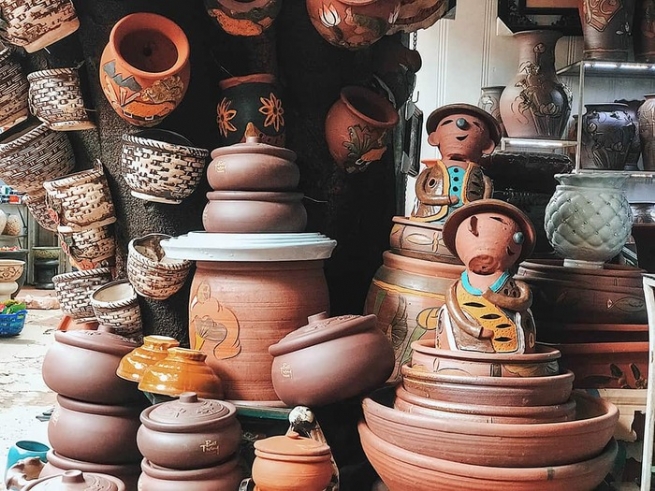
The traditional pottery craft of Bat Trang village has been included in the National List of Intangible Cultural Heritage
A pillar of sustainability
Hoang Thi Hoa, Head of the Rural Development Division (Hanoi Department of Agriculture and Environment), said that many of Hanoi’s traditional craft villages are not only famous domestically but are also known in foreign markets. Since 2019, when the OCOP program was launched, Hanoi has actively implemented it, leveraging traditional craft villages and villages with crafts to develop products imbued with strong local cultural identity, associated with unique product stories reflecting the history and cultural values of the Capital. “It can be affirmed that the value of craft villages is an invaluable resource for developing Hanoi’s OCOP products. In reality, thousands of OCOP products have been created from craft villages,” Hoang Thi Hoa emphasized.
To promote craft village development and build OCOP products, in recent times the Hanoi People’s Committee has introduced many mechanisms and policies that both create a legal framework and encourage stakeholders to invest in production, creating high-quality craft village and OCOP products.
One of the solutions that has been prioritized is connecting and diversifying distribution channels, from direct to modern ones. Accordingly, the Department of Agriculture and Environment has developed more than 115 points for displaying, introducing, and selling OCOP products and safe agricultural food products across wards and communes. These are standardized distribution channels, helping consumers easily access certified OCOP products. The Hanoi Department of Agriculture and Environment also regularly organizes supply–demand connection conferences, bringing OCOP products into major supermarket chains such as AEON and Lotte Mart, large Vietnamese e-commerce platforms, and convenience store systems.
“We identify consumption promotion not merely as selling products, but as building brands, improving quality, and enhancing the competitiveness of Hanoi’s OCOP products and craft village products,” Hoang Thi Hoa shared.
By Minh Ngoc, Vietnam Business Forum
|
This special section is supported by Hanoi Department of Agriculture and Environment |
 April 24–25, 2026
 Kinh Bac Cultural Center, Bac Ninh Province


 Vietnamese





