

11:08:55 AM | 2/2/2026

Amid a global economic environment marked by continued uncertainty, Vietnam is entering a new growth cycle built on macroeconomic stability, institutional reform, and advancing transformation drivers. From the perspectives of international partners, business associations, and enterprises, confidence in Vietnam is based not only on positive economic indicators, but also on expectations of the country’s ability to translate reforms into practice, expand development space, and improve the quality of growth in the period ahead.
 |
Vietnam Enters Phase of Consolidating Position as Ideal Investment Destination
Bruno Jaspaert, EuroCham Chairman
Amid continued global economic volatility driven by trade tensions and macro-level uncertainties, EuroCham’s Business Confidence Index (BCI) for Q4 2025 – reaching 80 points, the highest level in seven years – signals a clear reality: Vietnam is entering a phase of stability and structural transformation, laying a solid foundation for its medium- and long-term investment environment. Notably, this optimism is not based on sentiment alone. It is grounded in the tangible recovery of business performance, improving order volumes, and the resumption of investment decisions after years of external disruptions.
The European business community recognizes Vietnam as one of the few markets that maintained strong momentum throughout 2025, with Q4 GDP growth reaching 8.46% – the fastest quarterly pace since 2007 and exceeding forecasts of major international institutions. It is no coincidence that 88% of EuroCham members are optimistic about the 2026–2030 outlook, and 87% are willing to recommend Vietnam as an attractive investment destination. This high level of confidence reflects a growing recognition that Vietnam is becoming a central link in the long-term growth strategies of European enterprises.
Alongside these positive signals, the investment environment still faces implementation-related challenges, particularly complex administrative procedures and inconsistent regulatory practices. However, Q4 data shows early signs of improvement, especially following Resolution 68, which aims to accelerate administrative reforms, promote digitalization, and shift from pre-inspection to post-inspection mechanisms. What businesses expect most at this stage is the speed and predictability of these reforms – factors essential to turning policy intent into practical results.
For EuroCham, 2026 will be a year of deepening collaboration with the Government to remove persistent bottlenecks and advance “strategic priorities – the must-win battles,” thereby further strengthening Vietnam’s appeal on the global investment map. This is the moment for Vietnam not only to sustain its growth momentum but to accelerate its rise in what could become a “golden era” of transformation and integration.
 |
JICA Accompanies Vietnam in Advancing Four Key Reform Pillars
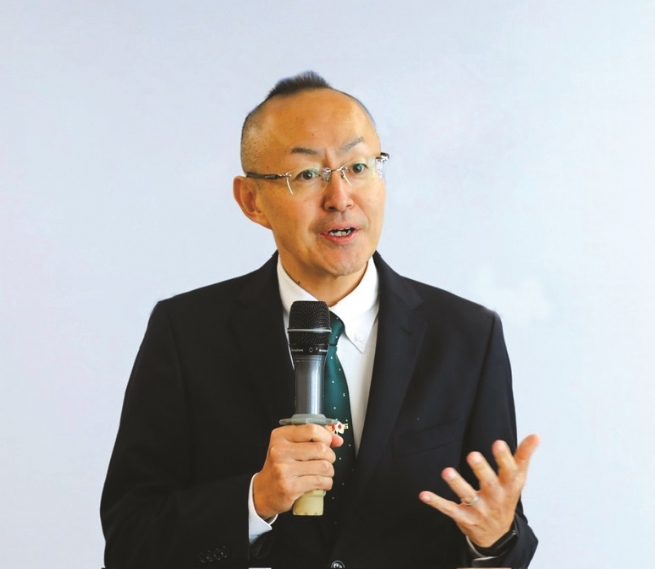
KOBAYASHI Yosuke- Chief Representative, JICA Vietnam Office
From our perspective, Vietnam is advancing four key pillars of reform on its path toward becoming a high-income country by 2045, and these pillars also define JICA’s priorities for cooperation.
The first pillar is the promotion of science and technology, innovation, and digital transformation. In this area, JICA continues its cooperation with Vietnam–Japan University, focusing on human resource development in advanced technologies, particularly semiconductors, and on strengthening Vietnam’s training and research ecosystem through closer cooperation between Japan and Vietnam.
Alongside semiconductors, artificial intelligence is another key priority. Through cooperation with leading Vietnamese institutions, JICA is supporting AI research, startups, and talent development. The application of science, technology, and innovation to climate change response is also an important focus. Building on long-standing partnerships with Vietnamese universities, JICA will continue working with academic institutions, companies, and research organizations to support the development and application of new technologies in Vietnam.
The second pillar is the promotion of international integration. International cooperation plays an important role in advancing integration by sharing Japan’s knowledge and experience, as well as those of other countries. JICA has contributed to Vietnam’s integration at various levels and across many fields, ranging from policy-level support to technical cooperation in specific sectors. In addition, infrastructure is an essential foundation for international integration. JICA has supported the development of airports, seaports, roads, bridges, railways, and customs systems, thereby enhancing multi-layered connectivity between Vietnam and other countries, including Japan.
The third pillar is the building and enforcement of laws. JICA has long cooperated with Vietnamese institutions in this field, and this cooperation continues today through capacity-building and training programs. A recent highlight in Vietnam’s institutional reform is the implementation of the two-tier local government model. Japan has operated this model for many years, and we believe Vietnam can benefit from learning from both Japan’s successes and failures. JICA is working with relevant Vietnamese institutions to provide training opportunities so that current and future leaders can learn from Japan’s experience.
The fourth pillar is the development of the private sector. JICA will continue to provide policy input while focusing on human resource development for small and medium-sized enterprises, improving access to finance, and supporting infrastructure projects that create new opportunities for growth. We place particular emphasis on management training based on Japanese experience, improving financial access for MSMEs, including women-led businesses, and promoting large-scale infrastructure projects such as urban railways, which also help facilitate technology transfer from Japanese companies to Vietnamese enterprises.
These are JICA’s directions for cooperation in support of Vietnam’s four reform pillars. We believe that the long-standing trust built through the “connection of hearts” between the people of Vietnam and Japan is the solid foundation for all JICA’s cooperation projects. Through development cooperation, JICA hopes to continue strengthening these ties and contributing to the shared development of both Vietnam and Japan.
 |
Vietnam Should Lead Transformation Toward High-Tech, Circular Textile Industry Dennis Nobelius, CEO of Syre
Syre has shortlisted Vietnam as a probable location for its first Gigascale recycling plant due to its strategic positioning within the textile supply chain, with a long history in the textile industry and access to know-how. Vietnam’s strong focus on circular economy, its textile manufacturing base, and growing commitment to sustainability positions make it a great location to become a global hub for circular textiles. We see great potential in Vietnam and encourage the country to take a leading role in the transformation of the textile sector to a more innovative, high-tech, and circular industry.
To fully realize this potential and lay the foundation for a global-scale circular textile ecosystem, Vietnam needs to proactively support this transformation process, including through policy innovation. We look forward to collaborating with the relevant policymakers in Vietnam to futureproof existing rules and regulations. Specifically, Vietnam needs to update its import regulation for what today is defined as textile waste – but what tomorrow will be recyclable material and input material to the next large-scale industry in Vietnam. Our MoU reflects a partnership with Binh Dinh (now Gia Lai province), working together to ensure the key criteria and conditions are met for an investment decision on the establishment of Syre’s first Gigascale recycling plant. The key criteria for establishment include access to an industrial park with close proximity to infrastructure, green energy, feedstock (recyclable textile material), and a pilot mechanism that allows the import of recyclable textile material from neighboring countries.
 |
AI and Smart Payments Are Reshaping Vietnam’s E-Commerce
Dung Dang, Visa Country Manager for Vietnam and Laos
Vietnam’s digital economy continues to grow at remarkable speed, with e-commerce at the center of this momentum. As the market evolves, Vietnam is entering a more advanced stage of digital commerce – one defined by smarter consumer experiences and more seamless, secure payment technologies.
Across Asia–Pacific, retailers are seeing a rise in AI-assisted product discovery and personalized recommendations, and Vietnam’s young, mobile-first consumers are adopting these tools quickly. For merchants, AI-enhanced storefronts and automated support create more relevant shopping journeys, higher engagement, and more efficient customer acquisition.
Visa research shows that six in ten consumers in Asia-Pacific encountered issues paying with cards over the past year due to forgotten details or missed OTPs – leading to frustration for shoppers and lost revenue for merchants.
Tokenized credentials are replacing manual entry and helping reduce fraud compared with OTP-based processes. This shift is already clear: manual-entry Visa e-commerce transactions have fallen from nearly half in 2019 to just 16% in 2025, and to low single digits among the largest online sellers. In many markets, guest checkout will soon vanish altogether – driven by the 16 billion Visa tokens enabling faster, safer, and more seamless payments.
Solutions like Visa Click to Pay allow consumers to complete purchases with a single click, backed by Visa Token Service. With added security in the form of tokenized credentials and biometric authentication with Visa Payment Passkey, Click to Pay is set to usher in a new era of eCommerce.
Businesses in Vietnam are placing greater emphasis on keeping digital transactions secure. Data-driven fraud solutions are helping merchants spot unusual activity earlier and protect customers more effectively. For consumers, this leads to greater confidence when shopping online and fewer disruptions at checkout.
 |
Foreign Banks as Financial Bridges in Vietnam’s Next Phase of Growth
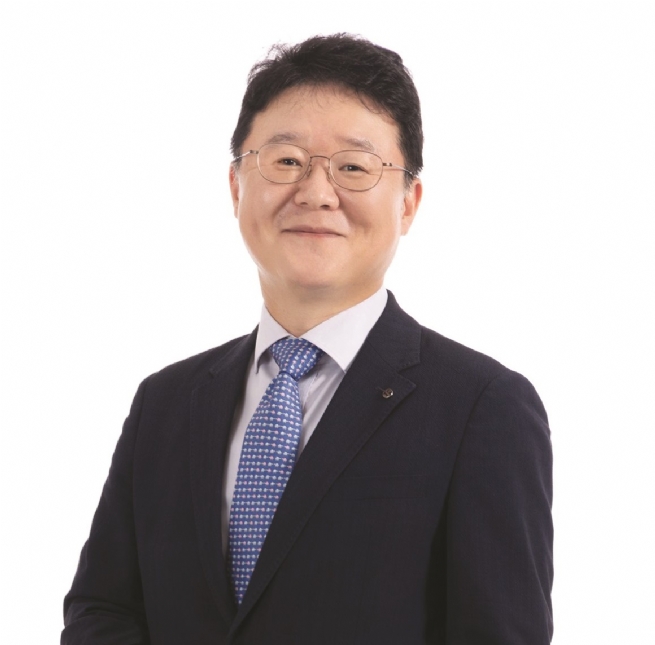
Her Jung Chul, Deputy General Director, Shinhan Bank Vietnam
In 2026, foreign banks in general will play a more strategic role in strengthening the financial system. They offer a suite of services including investment banking, asset management, insurance, and innovative financial products, especially in green finance. The participation of foreign banks in Vietnam can help catalyze the development of a smart, inclusive, and sustainable financial ecosystem.
Over the last 33 years in Vietnam’s market, Shinhan Bank Vietnam has played a role as a financial bridge connecting FDI into Vietnam, especially Korean FDI enterprises. Through a comprehensive and tailored portfolio of financial solutions, we actively support FDI enterprises throughout their business operations and investment activities, thereby contributing to the growth and sustainability of Vietnam’s economy. We are also strengthening retail banking and SME services by enhancing Digital Experience (DX) and AI Experience (AX) across products and processes to better meet customer needs, promote financial inclusion, and support a stable financial system.
In 2026, stronger collaboration in multiple aspects among foreign banks, local banks, regulators, and other stakeholders will be crucial as Vietnam advances toward higher global banking standards.
Foreign banks can share international experience and best practices in digital banking, data governance, cybersecurity, and advanced risk and capital management frameworks. Such cooperation supports financial innovation while ensuring strong risk controls and regulatory compliance.
Vietnam stands at a pivotal moment in its development, entering a new phase of economic momentum driven by public investment, structural reforms, and initiatives such as the establishment of International Financial Centers. These drivers are opening up new opportunities for the banking sector, especially in infrastructure finance, capital market growth, and cross-border financial services.
 |
Fintech Holds Strong Potential for Further Growth
Vu Ngoc, Chief Operating Officer, 9Pay Joint Stock Company
2026 opens clear opportunities as innovation and information technology are placed at the center of development policies and translated into concrete mechanisms, testing spaces, and State support. The establishment of financial and innovation hubs such as the International Financial Center (IFC) reflects not only domestic development needs but also Vietnam’s strategy to engage more actively in the global financial market and adapt to the restructuring of capital flows and global value chains. The IFC is creating a favorable environment for fintech enterprises to test new technologies and business models under real conditions with greater flexibility.
For 9Pay, the IFC offers an opportunity to engage more closely with the finance–technology–service ecosystem and to test blockchain and digital asset solutions within the permitted framework. This allows us to apply payment solutions and digital financial services in more practical ways aligned with market demand, particularly for small and medium enterprises, small merchants, and the service sector.
Along with its recent certification by the Ministry of Science and Technology as a science and technology enterprise, 9Pay has gained a stronger foundation to invest in long-term research and development, expand cooperation, and accelerate the commercialization of innovative products. The certification also helps the company access preferential policies and support resources while strengthening partner and customer confidence in the sustainable value created by technology.
We believe that when innovation is properly positioned and focused on addressing real economic challenges, fintech companies like 9Pay will have greater room to grow and make practical contributions to financial digitalization, transparent cash flows, and improved operational efficiency for enterprises. With converging technology infrastructure, supportive policies, and testing spaces such as the IFC, innovation is expected to become a new growth driver, enabling Vietnamese enterprises to develop and test ideas with confidence and expand into domestic, regional, and international markets.
By Vietnam Business Forum
 April 24–25, 2026
 Kinh Bac Cultural Center, Bac Ninh Province


 Vietnamese





