

4:14:49 PM | 4/13/2026

Vietnam is navigating an increasingly complex global landscape, as geopolitical tensions, supply chain disruptions, and energy volatility continue to reshape international trade and investment flows. In this context, competitiveness is no longer defined solely by the pace of growth, but by the ability to adapt and sustain development over time.
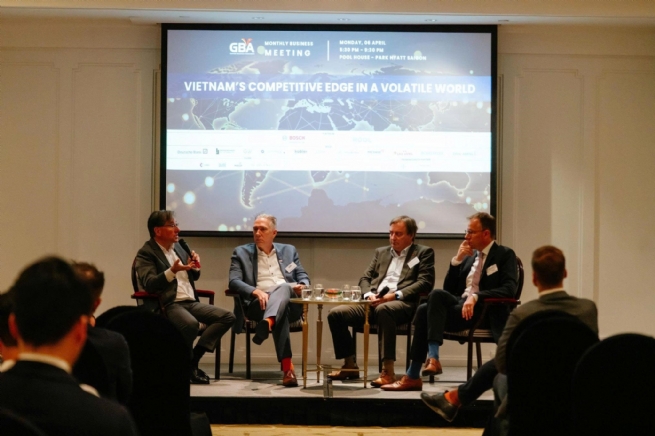
Against this context, the German Business Association (GBA) successfully hosted its Monthly Business Meeting on 6 April 2026 bringing together business leaders and members to discuss Vietnam’s economic outlook. The session focused on strategic approaches for companies to navigate uncertainty and capture long-term growth opportunities in the Vietnamese market.
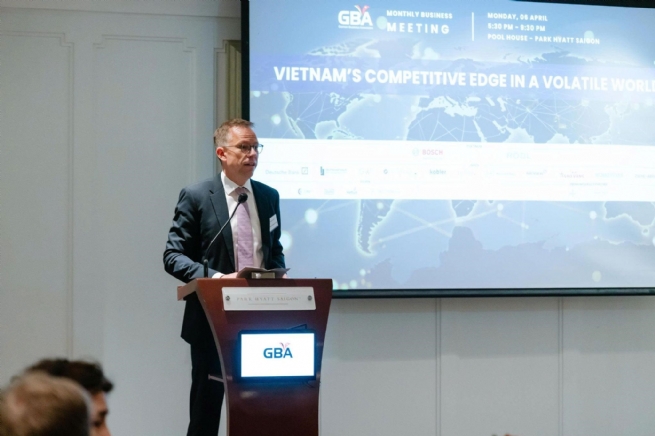
From Global Integration to Resilient Supply Chains
Opening the discussion, Mr. Simon Kreye, Deputy Head of Mission at the German Embassy in Hanoi, highlighted that the global business environment has undergone fundamental shifts. In recent years, companies have faced a series of disruptions, ranging from the COVID-19 pandemic and logistics bottlenecks to trade tensions and rising energy costs.
In this new context, supply chains are no longer designed solely for efficiency, but increasingly for stability and continuity. Vietnam has emerged as one of the key beneficiaries of global supply chain diversification, driven by strong export performance and its deep integration into international trade.
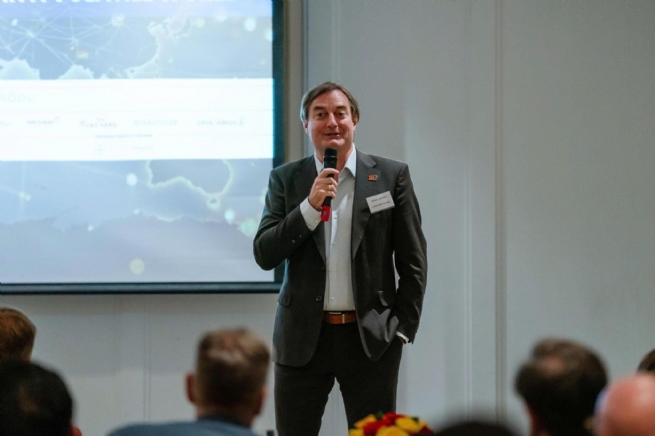
“Vietnam’s future competitiveness will not come automatically, it must be built on resilience: through diversification, innovation, strong institutions, and an open environment where ideas can thrive,” Mr. Simon Kreye emphasized.
At the same time, Vietnam’s manufacturing sector remains heavily reliant on imported raw materials, particularly from China, reinforcing its role as a final assembly hub within regional supply chains. This reality underscores the deep interdependence between the two economies while also exposing Vietnam’s vulnerability to upstream disruptions. It highlights the urgent need to diversify supply sources and strengthen domestic supplier ecosystems, moving toward a more balanced, proactive, and supply chain structure.
Energy Risks and Structural Vulnerabilities
The discussion also highlighted rising external risks, particularly in the areas of energy and geopolitics. Mr. Bruno Jaspaert, Chairman of EuroCham and CEO of DEEP C Industrial Zones, noted that disruptions in global energy supply are not merely temporary, but reflect deeper, long-term structural challenges.
With more than 80% of its fuel supply dependent on the Middle East, Vietnam faces a significant structural vulnerability that cannot be resolved in the short term. As a result, businesses should prepare for sustained increases in transportation and energy costs. “Costs are unlikely to decrease this year,” he emphasized, urging companies to proactively engage with employees, partners, and customers to manage expectations and adjust their planning accordingly.
In addition, labor shortages are emerging as a critical constraint. Over the next five years, workforce limitations could become one of the most significant barriers to Vietnam’s growth, underscoring the need for long-term strategies focused on human capital development and productivity enhancement.
Short-Term Growth, Long-Term Structural Challenges
From a macroeconomic perspective, Mr. Michael Kokalari, Chief Economist of VinaCapital Fund Management noted that Vietnam’s economy continues to maintain positive growth momentum in the short term, supported by resilient domestic consumption and a recovery in the tourism sector.
However, underlying pressures are becoming increasingly evident. Rising input costs, tightening labor conditions, and exposure to external risks present structural challenges that businesses must address proactively. In particular, he highlighted Vietnam’s continued reliance on imported energy, especially from the Middle East, remains a notable structural vulnerability.
Mr. Michael Kokalari emphasized that even if current supply disruptions were resolved immediately, their effects would not fade in the near term. Given the nature of global supply chains and logistics cycles, it may take up to six months for markets to fully stabilize, meaning that Vietnam’s economy is likely to continue feeling the impact in the months ahead.
Vietnam’s Competitive Edge in a Changing World
Experts agreed that while Vietnam’s growth story remains positive, the competitive landscape has fundamentally shifted. Competitive advantage is no longer defined by low costs or headline growth rates alone, but by the ability to sustain growth in an increasingly volatile environment.
Mr. André de Jong, GBA’s EuroCham Delegate and Managing Director of Bosch Vietnam, emphasized that European businesses need to rethink their approach. Cost optimization alone is no longer sufficient; companies must build more resilient supply chains by diversifying sourcing, strengthening local supplier networks, and enhancing operational agility.
Despite mounting challenges, Vietnam continues to benefit from strong fundamentals, including its strategic geographic location, an extensive network of free trade agreements, a high degree of openness, and a dynamic business environment. Notably, the country’s competitive edge is increasingly shaped by its adaptability, rather than by low-cost advantages alone.
Looking ahead, sustaining competitiveness will depend on the ability to move up the value chain, strengthen domestic capabilities, invest in infrastructure and human capital, and accelerate the energy transition. Companies that proactively invest in diversification, innovation, and workforce development will be better positioned to navigate uncertainty and capture future opportunities.
Through event platforms such as its Monthly Business Meeting, the German Business Association in Vietnam continues to serve as a strategic dialogue bridge, supporting the business community in navigating market volatility and contributing to Vietnam’s sustainable economic development.
By Vietnam Business Forum


 Vietnamese





