

8:30:25 AM | 5/7/2026

After four decades of attracting foreign direct investment (FDI), Vietnam is entering a key phase to attract higher-quality capital, especially in technology and innovation. This next generation of FDI plays an important role in improving growth quality and competitiveness amid globalization and ongoing supply chain shifts.
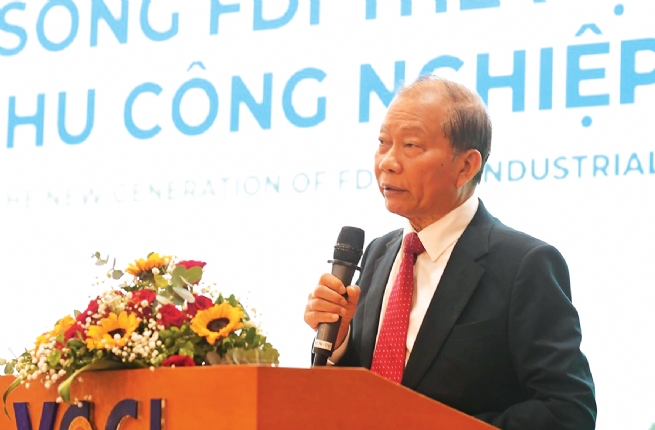
At a forum on policies to attract FDI into industrial parks, VCCI Vice President Hoang Quang Phong said localities now aim to attract FDI enterprises that not only seek profits but also meet higher standards in technology, green development and social responsibility
From cost advantage to quality-driven growth
The FDI sector plays an important role in the economy, contributing a large share of exports, budget revenue, and job creation for millions of workers, both directly and indirectly. It is also a key pillar supporting macroeconomic stability and deeper integration into global value chains.
However, FDI attraction has also revealed a number of shortcomings, such as environmental pollution, violations of tax policies, and an imbalanced investment structure across sectors and regions. In addition, linkages between FDI enterprises and domestic firms remain weak. In many industries, particularly electronics, localization rates are still low, with Vietnamese companies mainly participating in low value-added segments.
Meanwhile, global FDI is entering a new cycle, marked by deeper “greening” and “digitalization.” Unlike earlier waves that focused on low labor costs and tax incentives, next-generation FDI aims to build high value-added production and innovation ecosystems. This trend is evident as global corporations restructure supply chains and diversify production locations to reduce risk. Rather than expanding rapidly, FDI enterprises are becoming more selective, prioritizing countries with complete ecosystems, high-quality human resources, and stable policy environments.
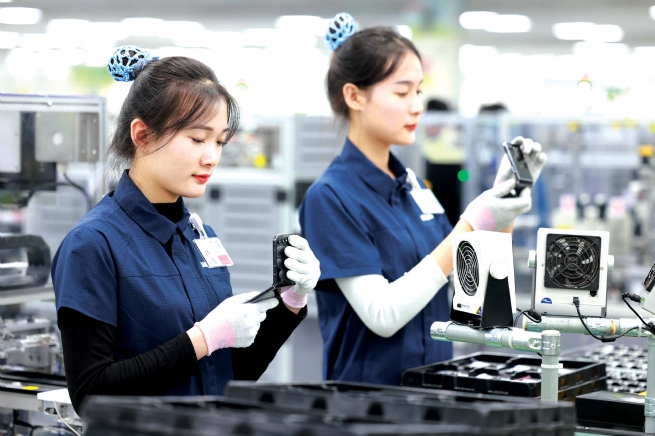
Effective linkages between Vietnamese enterprises and the FDI sector should be strengthened
As a result, next-generation FDI has become a “quality-driven game,” where investors actively choose suitable destinations instead of countries competing at all costs to attract capital. To capture these flows, countries must meet a set of more demanding criteria.
First is a transparent, stable, and predictable institutional framework, which is essential for investors committing to long-term projects. There is also growing demand for engineers, technology specialists, and mid-level management talent. Infrastructure now extends beyond transport and industrial parks to include digital infrastructure, clean energy, and modern logistics. ESG standards are also becoming a required “passport,” pushing localities toward greener and more sustainable development.
Building a stronger investment ecosystem
Vietnam is considered a promising destination for next-generation FDI thanks to its strategic location, stable political environment, and extensive network of free trade agreements.
According to the Foreign Investment Agency under the Ministry of Finance, as of March 31, 2026, total registered FDI in Vietnam, including new registrations, adjustments, and capital contributions or share purchases, reached US$15.20 billion, up 42.9% year-on-year. The structure of FDI is increasingly shifting toward quality, with a growing share in high-tech industries, green industry, renewable energy, and the digital economy.
However, existing advantages do not necessarily translate into lasting ones. As standards on environment, governance, and technology continue to rise, without upgrading its investment ecosystem, Vietnam could miss opportunities in this very wave.
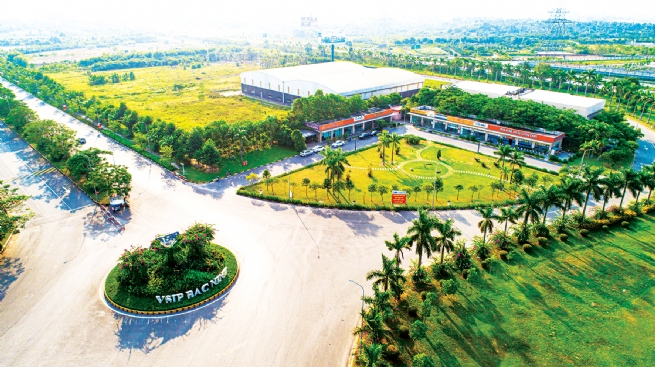
Vietnam is considered a promising destination for next-generation FDI
Resolution 50-NQ/TW in 2019 reflects the attention of the Party and the State to attracting next-generation FDI. This marked the first time the Politburo issued a dedicated resolution on FDI, opening a new phase of high-quality foreign investment cooperation focused on high technology, core technologies, and strong spillover effects. This direction has continued in subsequent guidance from central authorities and the Politburo. Following Resolution 50-NQ/TW, Vietnam has implemented the Foreign Investment Cooperation Strategy for 2021–2030, along with a series of new mechanisms and policies, from special investment incentives and “green lane” mechanisms for priority projects to the establishment of an investment support fund and a human resource development program for the semiconductor industry.
The Ministry of Finance has also consulted on a draft decree on the management of industrial parks and economic zones. The draft adds provisions related to the costs of greenhouse gas emission reduction activities and the development of industrial symbiosis models. This mechanism is expected to create strong financial incentives for businesses to adopt clean technologies, improve energy efficiency, and use environmentally friendly solutions.
Vietnam aims to become a developing country with modern industry and upper-middle income status by 2030. Attracting FDI in the coming period therefore goes beyond expanding capital volume, shifting toward quality, efficiency, and stronger linkages. The focus is on attracting high-tech investment flows with strong environmental and governance standards, particularly in high-tech industries, supporting industries, and higher value-added segments of global production chains.
At the same time, next-generation FDI policies need to be closely linked with requirements for technology transfer, higher localization rates, and stronger linkages. This is a key condition for reducing dependence on the foreign-invested sector while improving the autonomy and competitiveness of the national economy.
To achieve these goals, the policy framework must continue to be refined toward a more coordinated, modern, and adaptable system. This is essential to ensure sustainable growth in the coming period.
Second, investment promotion and attraction need to shift toward a more proactive and selective approach, aligned with long-term development priorities. Priority should be given to sectors that form the backbone of the economy, such as semiconductors, artificial intelligence, green technology, and renewable energy, while building an ecosystem that connects FDI and domestic enterprises to gradually master core technologies.
Third, human resource development must be accelerated, particularly for high-skilled talent, alongside expanded international cooperation to access advanced knowledge, technology, and management practices. This provides an important foundation for developing strategic technologies and strengthening national competitiveness.
Fourth, science, technology, and innovation must be advanced. Investment in innovation centers and technology transfer should be increased. Co-financing mechanisms for R&D among the State, FDI enterprises, and domestic firms also need more flexible design to encourage research collaboration and technology commercialization.
In Bac Ninh, one of the northern region’s FDI hubs, competitive advantages come from an early-developed industrial ecosystem, a large labor force, and a continuously improving investment environment. This is supported by strong transport infrastructure, helping optimize logistics costs. The presence of multinational corporations such as Samsung, Canon, Foxconn, and Amkor has created a large-scale industrial and manufacturing ecosystem, enabling the province to pursue rapid and sustainable development in the coming period.
Amid intensifying global strategic competition, accelerating supply chain shifts, and the growing importance of green standards, Vietnam faces an important opportunity to reposition its FDI attraction strategy. With close coordination among government agencies, the business community, and investors, Vietnam is well positioned to become a regional and global hub for next-generation FDI. This will also serve as a key driver for achieving the country’s 2030 targets and 2045 vision of building an independent, self-reliant, and deeply integrated economy.
Hoang Quang Phong
Vice President, Vietnam Chamber of Commerce and Industry (VCCI)
Source: Vietnam Business Forum





 Vietnamese





