

8:54:35 AM | 5/9/2026

On the evening of May 8, at Imperial Citadel of Thang Long, the People’s Committee of Hanoi held a ceremony to celebrate the official recognition of Chuyen My mother-of-pearl inlay and lacquer craft village, and Son Dong wood carving and lacquerware craft village as members of the World Craft Cities Network. The event also marked the opening of a series of exhibitions, live demonstrations, and creative showcases of traditional handicraft products.
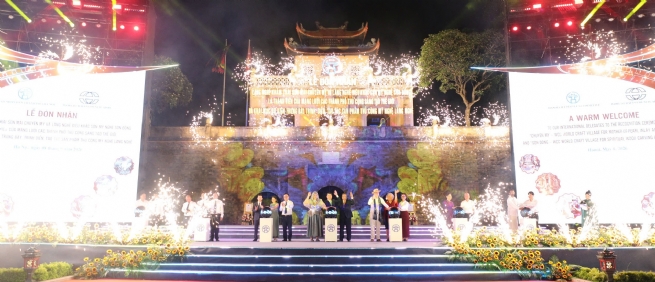
The ceremony honoring Chuyen My mother-of-pearl inlay and lacquer craft village, and Son Dong wood carving and lacquerware craft village, for becoming members of the World Craft Cities Network
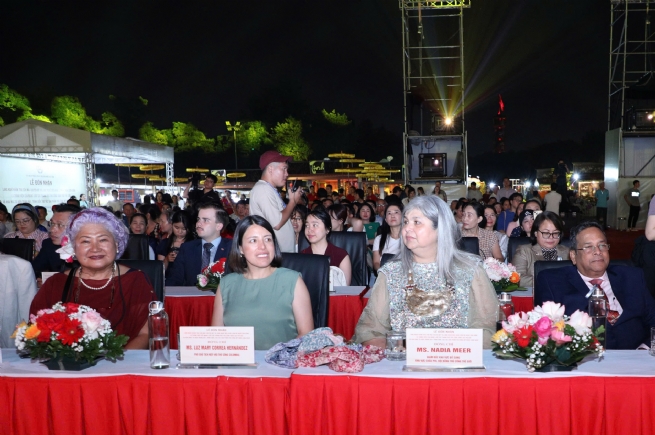
Attending the event were Nguyen Xuan Luu, Member of the Standing Committee of the Hanoi Party Committee and Vice Chairman of the Hanoi People’s Committee; Darlie Oommen Koshy; leaders of ministries and central agencies; international guests; delegates; artisans; skilled craftsmen; businesses; and representatives of craft village communities.
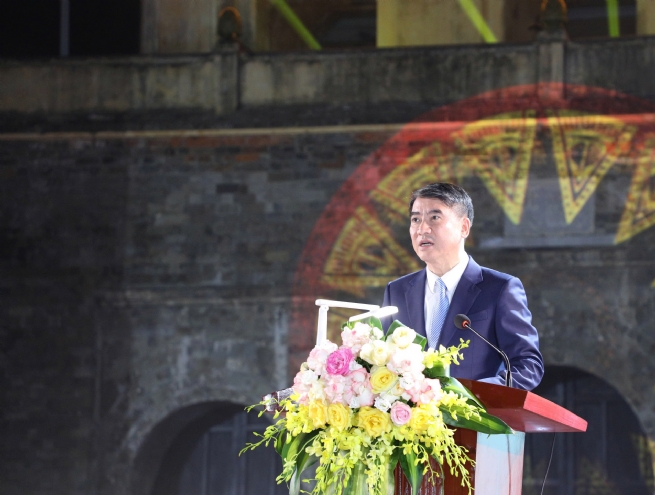
Speaking at the ceremony, Nguyen Xuan Luu emphasized: “Today’s event carries special significance, marking a new milestone in Hanoi’s journey to preserve and promote the finest values of traditional craftsmanship, while affirming the reputation, creativity, and international standing of the capital’s craft villages.”
According to him, traditional craft villages are “living heritage,” embodying the wisdom, cultural identity, and creative spirit of generations of Thang Long–Hanoi residents. Hanoi currently has approximately 1,350 villages engaged in traditional crafts, with hundreds officially recognized, creating a valuable cultural resource for economic development, tourism, and cultural industries.
Each craft village not only produces sophisticated handmade products bearing the distinctive identity of Vietnamese culture, but also preserves historical memories, folk knowledge, traditional craftsmanship, and the industrious, creative spirit of the Vietnamese people. These villages have contributed significantly to the cultural depth and unique vitality of the capital.
Recognizing the important role of traditional crafts in cultural, economic, and tourism development, Hanoi issued Resolution No. 09-NQ/TU dated February 22, 2022, on the development of cultural industries. The city is also implementing a master plan for craft village development for the 2025–2030 period, with a vision toward 2050, alongside policies aimed at preservation, innovation, digital transformation, cultural tourism development, and international integration.
At present, Hanoi has around 1,350 craft villages and villages with traditional occupations, including 337 officially recognized craft villages and traditional occupations. These represent valuable cultural assets that shape Hanoi’s unique identity through renowned products such as ceramics, silk, mother-of-pearl inlay, wood carving, lacquerware, bamboo and rattan products, and embroidery.
Nguyen Xuan Luu stated: “This is a great honor and source of pride not only for Hanoi but for Vietnam as a whole. It also opens up important opportunities to further promote the image of Vietnam, its people, and its culture to international friends.”
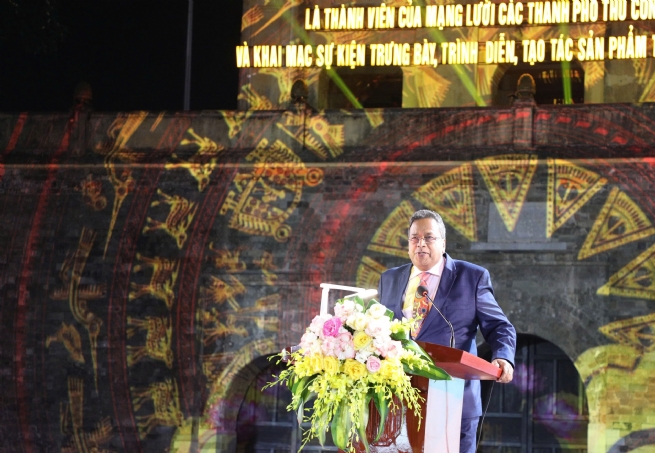
Representing the World Crafts Council, Darlie Oommen Koshy noted: “The recognition of Bat Trang and Van Phuc previously, and now Chuyen My and Son Dong, reflects Vietnam’s consistent and dedicated efforts to elevate its traditional craft villages on the global stage.”
He also congratulated the artisans and local communities, adding: “The reputation of these craft villages not only enriches Vietnam’s cultural identity but also contributes to the cultural heritage of the world.”


According to Nguyen Dinh Hoa, this recognition is a source of pride for both the capital and the nation, helping affirm the value of Vietnam’s traditional culture internationally. In 2025, revenue from Hanoi’s craft village sector exceeded VND 25 trillion, making a significant contribution to local economic growth.
In the coming years, Hanoi will continue directing local authorities to strengthen the preservation and development of craft villages. Currently, the city has around 1,350 craft villages and villages with traditional occupations, including 357 officially recognized villages, representing enormous potential for socio-economic development while preserving national cultural identity.
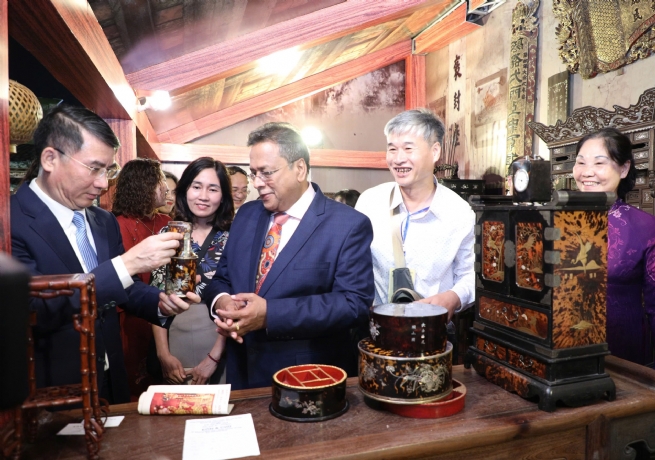
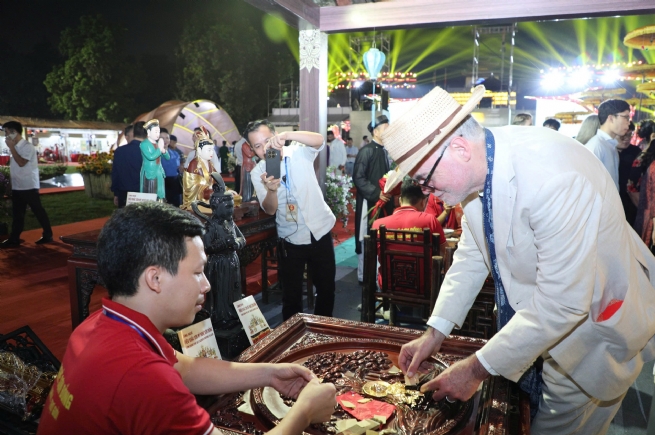

Delegates visit exhibition booths at the event
For the 2026–2030 period, Hanoi is developing and implementing a craft village preservation and development plan focused on key priorities: integrating craft village development into the capital’s master planning; allocating land resources for sustainable production; strengthening environmental protection measures; enhancing vocational training and intergenerational knowledge transfer; promoting international cooperation and value chain connectivity; and accelerating digital transformation in production, business, and product promotion.
The city expects that with these comprehensive solutions, Hanoi’s craft villages will continue to preserve their traditional values, enhance competitiveness, and achieve sustainable development in the new era.
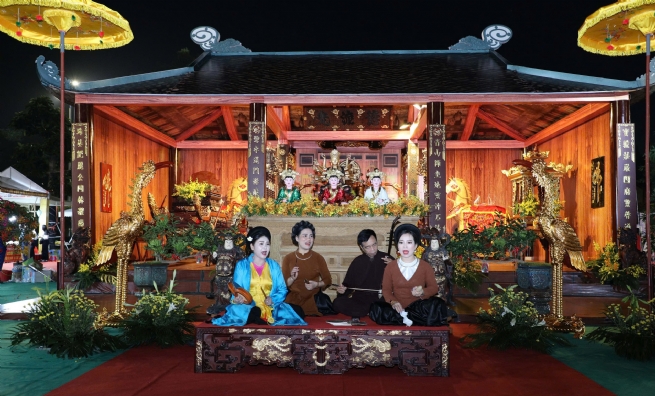
Cultural performances at the event
From May 8 to 10, a wide range of exhibitions, live craft demonstrations, and showcases of outstanding handicraft products from Hanoi and other provinces nationwide are being held at the Imperial Citadel of Thang Long.






 Vietnamese





