3:46:44 PM | 5/11/2026

As part of its economic development strategy linked to the effective use of agro-forestry advantages, Gia Lai Province has been gradually developing a system of industrial clusters focused on specialization, sustainability, and higher value creation. Within this context, the An Mo Industrial Cluster, developed by Truong Thinh General Trading Investment Joint Stock Company, has emerged as a notable destination, combining strengths in location, technical infrastructure, and a development direction aligned with market trends. In turn, it has supported the growth of the processing industry and the formation of a closed-loop value chain for the local agro-forestry sector.
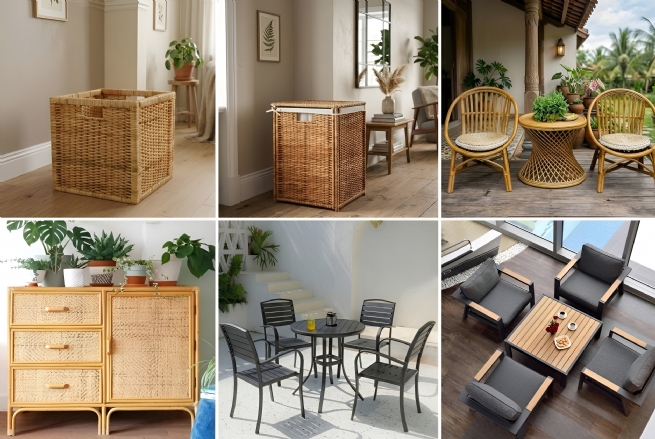
The factory produces rattan, bamboo, and reed items using natural and metal frames, as well as high-end aluminum-frame indoor and outdoor furniture
Connectivity advantages, integrated infrastructure
One of the main factors behind the appeal of the An Mo Industrial Cluster is its favorable location. Situated along National Highway 19, an important transport corridor linking the Central Highlands with the South Central Coast, the cluster benefits from convenient trade access, efficient goods transportation, and broader market reach.
Notably, the cluster is located near the National Highway 19 interchange, a key junction connecting the Hoai Nhon-Quy Nhon and Quy Nhon-Chi Thanh expressways. This significantly shortens transportation time to seaports, logistics centers, and coastal economic zones. This advantage helps businesses reduce logistics costs, improve operational efficiency, and strengthen competitiveness as global integration deepens.
Beyond transport connectivity, the cluster is also located near abundant agro-forestry raw material areas in Gia Lai and nearby regions. This creates a solid foundation for developing processing industries, particularly deep processing, and supports the shift from raw exports to higher value-added products.
Along with its location advantages, the cluster’s technical infrastructure has been developed in a modern and well-coordinated manner. The internal road system is clearly planned, ensuring smooth connections among functional zones. A stable power supply supports continuous factory operations, especially in agro-forestry processing.
Water supply and drainage systems have been fully developed to serve both production and daily needs. In addition, the investor has given priority to building a suitable wastewater treatment system to ensure compliance with environmental regulations. This has become an increasingly important factor for investors, especially as industry shifts toward greener and more sustainable development.
Infrastructure investment not only meets current demand but is also planned for future upgrades and improvements in line with actual development needs, reflecting the investor’s long-term commitment to supporting businesses.
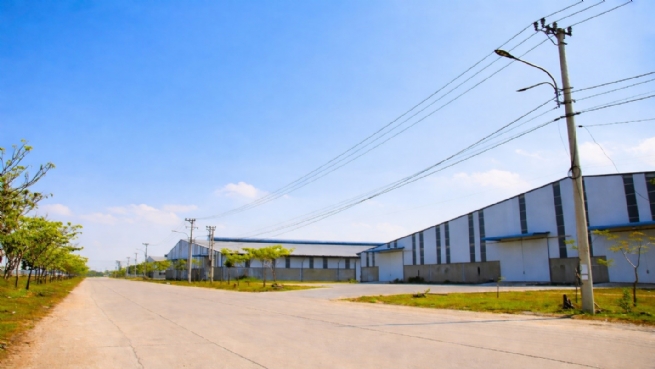
An Mo Industrial Cluster is attracting a growing number of enterprises, particularly in agro-forestry processing and consumer goods manufacturing
Building a production ecosystem, enhancing value
A defining feature of the An Mo Industrial Cluster is its development orientation linked to building a production ecosystem. In addition to attracting secondary investors, the developer has directly implemented a factory project producing indoor and outdoor furniture and handicrafts from natural materials such as rattan, bamboo, and reeds, covering nearly 3 ha, with total investment of approximately VND100 billion.
The factory is equipped with integrated workshops and logistics facilities, along with modern production lines such as automatic electrostatic coating systems, laser cutting machines, CNC bending machines, and welding robots. These investments improve productivity while ensuring product quality and competitiveness in the market. The factory is operated by a leadership team with strong practical experience, including work at multinational corporations. The use of artificial intelligence (AI) in design and operations management helps optimize production processes, reduce costs, and improve resource efficiency. This initiative is not only a pioneering step but also serves as a “core nucleus” in shaping the cluster’s production ecosystem.
The development of processing facilities within the locality has allowed more effective use of available raw materials while contributing to the formation of a closed-loop value chain from raw material production to processing and distribution. This approach increases product value and creates positive spillover effects in rural areas, helping stabilize output markets and improve local incomes.
Ample room for growth, rising investment appeal
At present, the An Mo Industrial Cluster still has available land for development, creating favorable conditions to attract additional investors, particularly in agro-forestry processing and consumer goods manufacturing.
With competitive investment costs, reliable infrastructure, and strong support from local authorities, the cluster has become an attractive destination for small and medium-sized enterprises. Its steadily rising occupancy rate provides clear evidence of the appeal of its investment environment.
In the coming period, the cluster will continue to upgrade its technical infrastructure, improve business support services, and promote more selective investment attraction. Priority will be given to projects that apply advanced technologies, use resources efficiently, reduce emissions, and align with Gia Lai Province’s green growth strategy.
With a solid foundation and a clear development direction, the An Mo Industrial Cluster is expected to strengthen its role as a driver of processing industry growth, contributing to higher value for agro-forestry products and supporting the province’s sustainable socio-economic development in the years ahead.
|
Truong Thinh General Trading Investment Joint Stock Company operates across a range of sectors, with core strengths in manufacturing and trade. The company produces a wide range of indoor and outdoor furniture, including beds, wardrobes, tables, and chairs, while also developing product lines from wood and natural materials such as bamboo, reeds, straw, and eco-friendly woven items. In addition, Truong Thinh takes part in agro-forestry raw material supply chains and is involved in rubber cultivation development. Beyond manufacturing, the company has expanded into construction, delivering civil works, transport infrastructure, and public utility projects, contributing to local economic development. Its retail distribution system, offering household goods, furniture, and electrical equipment, is another strength. The company also provides freight transport, warehousing, logistics services, and real estate activities, gradually building a closed-loop business ecosystem and strengthening its competitiveness in the market. |
By Nguyen Bach, Vietnam Business Forum





 Vietnamese