3:11:19 PM | 5/19/2026

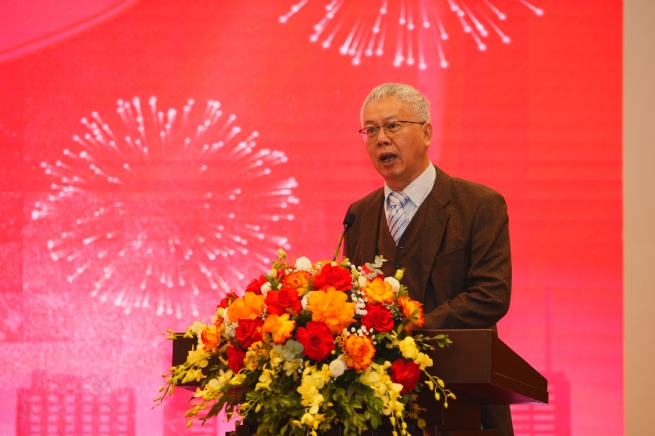
As of April 27, 2026, Vietnam’s registered foreign direct investment (FDI) reached approximately US$18.24 billion, up 32% year over year from 2025. Disbursed FDI was estimated at US$7.40 billion, up 9.8% year over year, marking the highest four-month result in the past five years. However, experts view this record figure not only as an achievement, but also as a test of Vietnam’s absorption capacity and reform speed. Our reporter spoke with economist Dr. Nguyen Duc Kien to better understand the factors behind this strong wave of investment.
Registered capital rose 32% year over year despite ongoing global uncertainty. How do you assess Vietnam’s position as tax incentives become less effective under the Global Minimum Tax?
The US$18.24 billion figure shows that Vietnam has moved beyond the exploratory phase to become an important part of the global supply chain. However, we need to be candid: investors entering Vietnam today no longer see tax incentives as their top priority.
Over the past five years, Vietnam’s strategy has shifted toward building a stronger and more practical ecosystem. Investors are placing their confidence in green infrastructure tied to Net Zero goals and in the country’s ability to provide talent for billion-dollar industries such as semiconductors and AI. Strong FDI growth in the first four months of the year shows that next-generation trade agreements and macroeconomic stability are creating a competitive advantage of their own, rather than one based only on financial incentives.
Although capital inflows are strong, spillover effects to domestic businesses remain limited. How can Vietnamese companies move beyond simple processing work?
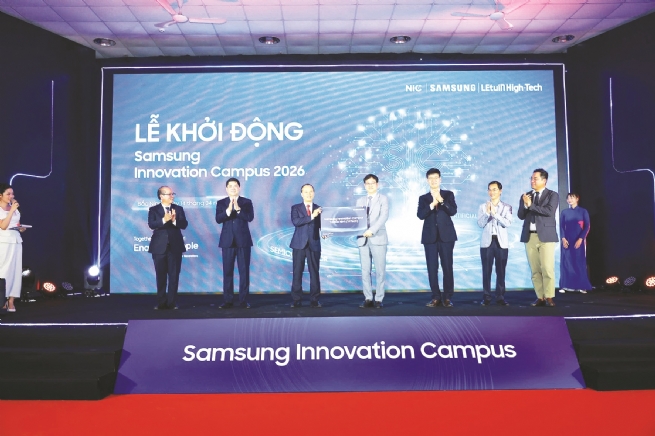
The biggest bottleneck remains the gap in technology and capital scale. After nearly 40 years of attracting FDI, Vietnam is still trying to move beyond the “assembly and processing” label. Lessons from Samsung and today’s high-tech corporations show that their standards are extremely demanding, while most domestic businesses are still small or micro-sized enterprises.
What sets this phase apart is the mindset of leapfrogging development. Vietnam has rapidly expanded its 5G infrastructure and is now among the regional leaders in the number of transmission stations. Since the beginning of this year, large domestic corporations have increasingly moved into more advanced sectors such as renewable energy infrastructure and specialized electronic components. The role of these leading domestic firms is especially important in helping supporting businesses join the value chain ecosystem.
As the U.S. and the EU step up reshoring policies to bring manufacturing back home, can Vietnam maintain the strong momentum seen in the first four months of the year?
The outlook remains very positive, but competition is intense. Vietnam is facing huge incentive packages from developed economies that are trying to bring investment back to their own markets. Vietnam cannot compete through fiscal spending, so it must compete through faster policy execution.
The administrative system remains a bottleneck that needs stronger reform. For high-tech projects, product cycles are very short, and investors cannot wait months for permits. Economic security today is not only about protecting markets, but also about ensuring data sovereignty and clean energy security. Without addressing issues related to speed and green infrastructure, even large amounts of registered capital will struggle to be disbursed quickly.
What is the most important message Vietnam should send to investors right now?
It is a commitment to a high-performance investment environment. Vietnam must not only be a place with abundant labor, but also a place capable of turning US$18.24 billion in registered capital into smart and green factories in the shortest possible time. We need to shift from a mindset of “attracting capital” to one of “serving capital flows” so that the figures in statistical reports can be turned into real internal economic capacity.
Thank you very much!
By Thu Huyen, Vietnam Business Forum