9:55:07 AM | 5/11/2026

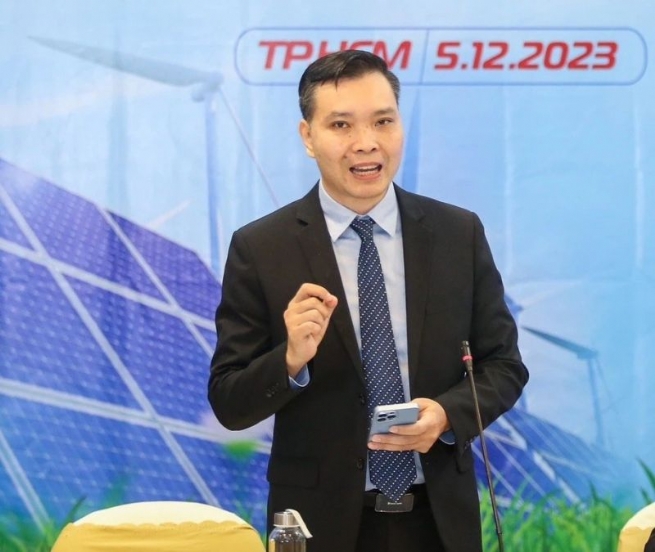
In the context of significant global economic fluctuations, Vietnam’s industrial parks and export processing zones are under strong pressure to transform. Our reporter interviewed Do Van Su, Director General of the Foreign Investment Agency (Ministry of Finance), about trends in foreign direct investment (FDI) attraction and upcoming policy directions.
 |
How do you assess FDI attraction in Vietnam’s industrial parks and export processing zones today?
In recent years, FDI inflows into industrial parks and export processing zones have continued to show positive momentum and play an important role in the country’s industrial growth, exports, and economic restructuring.
In terms of scale, Vietnam remains an attractive destination in the region. In 2025, total registered FDI reached about US$38.4 billion. Cumulatively, there are more than 45,000 active projects with total registered capital of US$529 billion. The industrial park system continues to expand, with an occupancy rate of around 77%, reflecting stable investment appeal.
Notably, FDI attraction is shifting toward higher quality. Alongside new projects, capital increases from existing projects are rising strongly, reflecting long-term investor confidence. The sector structure is also improving, with a stronger focus on processing and manufacturing, high technology, and smart production.
However, several limitations remain. Project quality is uneven; value added and spillover effects are still limited; linkages between FDI enterprises and domestic firms remain weak; the spatial distribution of industrial parks is not fully balanced; and infrastructure and high-quality human resources continue to be bottlenecks.
It can be summarized that while FDI attraction into industrial parks has achieved positive results in scale, improving quality, spillover efficiency, and sustainability is the decisive requirement for the coming period.
How is the restructuring of global supply chains affecting FDI into Vietnam?
Global supply chain restructuring is creating both opportunities and new pressures for FDI attraction.
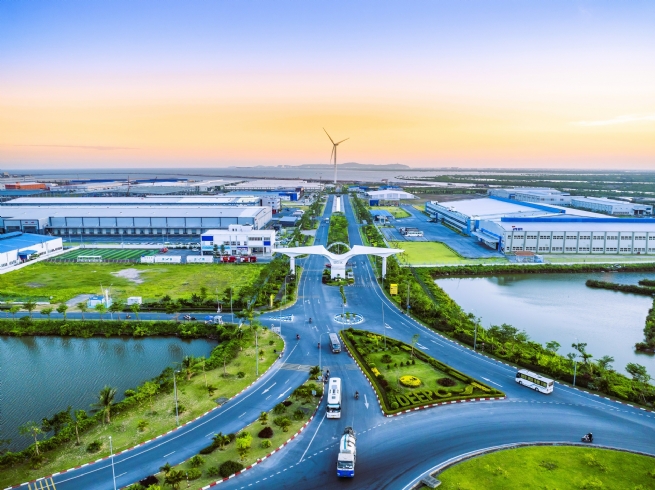
The DEEP C Dinh Vu Industrial Zone cluster in Hai Phong is one of Vietnam’s leading models for green industrial parks and renewable energy development
First, investment flows are shifting toward higher quality. Investors are increasingly prioritizing projects with higher technological content, innovation, and value added, while also placing greater demands on the investment environment, absorption capacity, and workforce quality.
Second, investment standards have changed significantly. Environmental, social, and governance (ESG) factors, energy efficiency, green transition, and digitalization are becoming key investment criteria, gradually replacing traditional low-cost advantages.
Third, competition for FDI is intensifying, not only among countries but also among localities within the same country, focusing on institutional quality, infrastructure, connectivity, and policy stability and transparency.
In this context, Vietnam still holds key advantages such as macroeconomic stability, deep international integration, and a favorable geoeconomic location. However, the ability to capture opportunities depends decisively on the pace of institutional reform, infrastructure quality, and internal economic capacity.
In other words, FDI competition is no longer about cost, but about reliability, the quality of the investment environment, and the ability to integrate deeply into global value chains.
How should Vietnam’s industrial parks change to attract next-generation FDI?
In the coming period, industrial parks need to be repositioned not only as production spaces, but as integrated platforms for value creation and supply chain linkages.
First, development must shift from breadth to depth, with project quality as the core focus. Investor selection should be aligned with sector orientation, priority industries, and national industrial strategy.
Second, industrial parks should move toward green, ecological, and smart models. This is not only an environmental requirement but has become a condition for participating in next-generation global supply chains.
Third, industrial parks need to be developed in an integrated model, synchronizing production infrastructure, logistics, energy, digital infrastructure, and social facilities for workers. Such synchronization is increasingly decisive in investment location decisions.
Fourth, linkages between industrial parks, domestic enterprises, and innovation ecosystems must be strengthened. Developing supporting industries, promoting technology transfer, and improving domestic enterprise capacity are key conditions to enhance FDI spillover effects.
It can be affirmed that positioning industrial parks along these directions is essential for Vietnam not only to attract next-generation FDI but also to improve its position in global value chains.
What are the Ministry of Finance’s key orientations and solutions in the coming period?
The consistent view of the Party and the State is to move from attracting FDI based on quantity to selective, efficient, and sustainable attraction, linked with strengthening internal economic capacity. Based on this, the Ministry of Finance will focus on several key directions:
First, continue improving institutions and financial investment policies toward greater transparency, stability, and predictability in line with international practices, thereby strengthening investor confidence and attracting long-term, high-quality capital.
Second, innovate incentive tools toward targeted and results-based mechanisms. Investment incentives will focus on high technology, innovation, green transition, and spillover effects, while being designed in line with the global minimum tax framework.
Third, improve efficiency in managing and using resources, especially land, and develop financial markets to mobilize diversified capital sources for industrial park infrastructure.
Fourth, strengthen monitoring and evaluation of FDI project performance throughout their lifecycle, not only at the licensing stage but also during implementation, ensuring efficient resource use and timely policy adjustments.
Fifth, promote linkages between the FDI sector and domestic enterprises, encourage technology transfer, and improve domestic firm capacity, thereby increasing local value added.
It can be emphasized that Vietnam’s FDI attraction strategy in the coming period is not only about supplementing capital, but more importantly about enhancing competitiveness, autonomy, and the country’s position in global value chains.
Thank you very much!
Le Hien (Vietnam Business Forum)





 Vietnamese