

11:41:42 AM | 4/29/2026

As global value chains undergo profound restructuring, Vietnam stands at a pivotal moment in its economic development. For more than three decades, the country has proven its ability to attract foreign direct investment and integrate deeply into global production networks. Manufacturing, processing and export-led growth have transformed the economy and created millions of jobs. Today, however, the question facing Vietnam is no longer whether it can attract investment. It is whether Vietnamese enterprises can move decisively from participating in global value chains to leading within them. This shift will determine not only the competitiveness of individual firms, but also the sustainability and resilience of Vietnam’s growth model in an increasingly uncertain global environment.
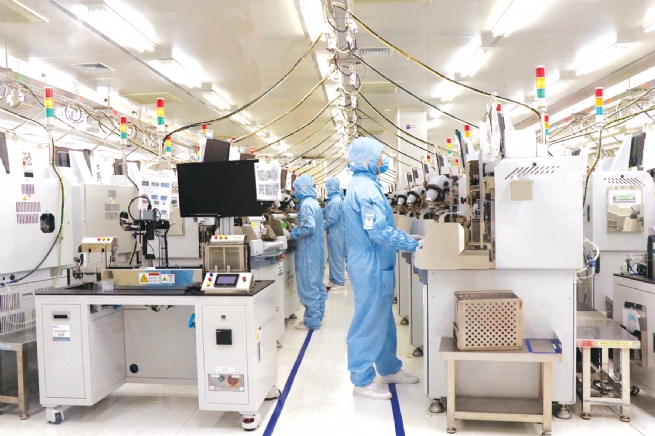
Vietnamese enterprises must strive to become Tier 1 suppliers in the FDI value chain
Vietnam’s rising strategic role in a fragmenting global economy
According to PwC’s 29th Global CEO Survey – Asia Pacific, Vietnam has emerged as one of the top three investment destinations for regional CEOs, alongside the United States and ahead of several traditional manufacturing hubs. Investor interest in Vietnam has nearly doubled in just one year, reflecting its growing role in “China+1” and supply-chain diversification strategies.
Capital today is flowing toward locations and partners that offer not only cost efficiency, but also operational resilience, regulatory transparency, digital readiness and strategic alignment. For supplier economies like Vietnam, this means that the bar for participation in global value chains is rising steadily. Simply being available and competitive on cost is no longer enough. Increasingly, enterprises are expected to demonstrate system-level reliability and the ability to perform under stress.
What it truly means to be a Tier-1 supplier today
Becoming a Tier-1 supplier today is fundamentally different from what it meant even a decade ago. Tier-1 suppliers are no longer viewed merely as vendors that deliver to specification. They are expected to co-design products, manage complex quality and compliance requirements, ensure continuity of supply, and continuously improve performance under changing market conditions. The relationship is strategic rather than transactional, built on trust, data transparency and mutual investment over time.
For many Vietnamese enterprises, this represents a structural shift rather than an incremental upgrade. Historically, success in manufacturing and processing was driven by speed of execution, flexibility and the ability to meet defined customer requirements at competitive cost. While these capabilities remain essential, they now serve only as entry points. Today’s Tier-1 suppliers must demonstrate maturity across governance, technology, people and sustainability, areas that require long-term commitment and organizational discipline.
One of the most important lessons from successful supplier-development experiences in Vietnam is that upgrading is rarely achieved through isolated investments in machinery or capacity. Companies that succeed typically undergo transformation across management systems, data discipline, workforce capability and organizational mindset. Rather than reacting to individual customer demands, they approach upgrading as a multi-year journey with a clear strategic destination.
From fragmented operations to system-level thinking
Companies that successfully move up the value chain tend to take a different approach. In manufacturing, enterprises that have moved into higher tiers of supply chains are those that invested early in standardized production systems, quality management frameworks and continuous improvement cultures. These firms focus not only on output, but on process stability, defect prevention and predictability at scale.
In agri-food and processing industries, companies that captured higher value did so by integrating production, traceability, logistics and compliance into a single operating model. Rather than treating these as separate functions, they built end-to-end visibility across the value chain, enabling better risk management, faster response times and stronger customer trust. In each case, the shift involved moving from fragmented operations toward system-level thinking.
This capability is becoming increasingly important as multinational corporations redesign supply chains to enhance resilience. As networks become more regionalized and less tolerant of disruption, suppliers are expected to take greater responsibility for continuity, quality and compliance. Enterprises that cannot meet these expectations are replaced more quickly than before. Conversely, those that do meet them often find relationships deepening and stabilizing, even during periods of market volatility.
Technology as an enabler when combined with people and data
Technology plays a central role in this transition. Digitalization is no longer optional for Tier-1 suppliers. Real-time production monitoring, data sharing with customers, predictive maintenance and integrated planning systems are becoming baseline expectations rather than differentiators.
Yet experience across Vietnamese enterprises shows that technology alone does not deliver results. Many firms invest in automation or software, but struggle to translate these investments into improved performance. The real differentiator lies in data maturity and people capability. Companies that treat digital tools as isolated IT projects often see limited returns. Those that embed data into decision-making, redesign processes around insights and invest in skills are far more likely to succeed.
This gap between adoption and impact is one of the most significant challenges facing Vietnamese enterprises today. Closing it requires leadership attention, cultural change and patience. The benefits of digital and operational transformation rarely appear overnight, but they compound over time for organizations that commit early and consistently.
Policy as a catalyst for enterprise upgrading
Policy plays a critical enabling role in this transformation. Vietnam has made significant progress in improving the investment environment, simplifying procedures and expanding trade agreements. These efforts have been instrumental in attracting FDI and integrating the economy into global markets. The next phase, however, requires a sharper focus on domestic capability building.
Supplier-development programs that link policy institutions, foreign investors and local enterprises have proven effective, particularly when they combine technical assistance with clear performance expectations and measurable outcomes. Scaling such models across industries and regions can accelerate enterprise upgrading, especially for small and medium-sized firms that face constraints in capital, skills and market access.
At the same time, policy coherence is essential. Industrial strategy, skills development, infrastructure investment and sustainability regulation must move in tandem. Bottlenecks in logistics, energy and digital infrastructure disproportionately affect domestic suppliers and can undermine otherwise strong upgrading efforts. Addressing these constraints is as important as financial incentives.
There is also a growing case for assessing investment quality alongside investment volume. While headline FDI figures remain important, long-term value is increasingly determined by the depth of linkages between foreign investors and domestic enterprises. Investment that contributes to technology transfer, supplier development and ecosystem building delivers far greater benefits than capacity expansion alone. Encouraging this shift requires sustained dialogue and consistent execution at the local level.
Implications for business leaders
For business leaders, the implications are clear and increasingly urgent. Vietnamese enterprises that aspire to Tier-1 status must take a longer-term view. This often means investing ahead of confirmed demand, professionalizing governance and financial management, and accepting short-term pressure in exchange for long-term positioning. It also means choosing partners carefully. Not every customer relationship supports upgrading. Firms should prioritize partnerships that offer transparency, learning opportunities and a clear pathway to deeper integration.
Talent is another decisive factor. Across sectors, shortages of skilled engineers, technicians and middle managers are emerging as binding constraints on growth. Enterprises that invest systematically in training, leadership development and organizational culture are better positioned to absorb new technologies and meet rising customer expectations. In this sense, talent strategy is inseparable from supply-chain strategy.
Finally, sustainability is reshaping how value is defined. Environmental, social and governance (ESG) considerations increasingly influence supplier selection, access to finance and reputation. Enterprises that treat sustainability as a compliance exercise risk falling behind. Enterprises that integrate it into strategy and operations can build trust and differentiate themselves in global markets.
Turning aspiration into execution
Taken together, these trends point to a clear conclusion. Vietnam’s next stage of development will be determined less by how much FDI the country attracts, and more by how deeply domestic enterprises are embedded in global value chains. The move from participation to leadership depends on disciplined execution at the firm level, effective coordination at the ecosystem level and thoughtful alignment at the policy level.
This is a demanding agenda, but it is also an achievable one. Vietnam has repeatedly demonstrated its ability to adapt under changing global conditions. The challenge now is to convert capability into competitiveness and aspiration into execution. Enterprises that act decisively, invest thoughtfully and collaborate strategically can secure a durable role in global value chains, strengthening not only their own prospects, but also the long-term resilience of Vietnam’s economy.
Dinh Thi Quynh Van
Chairwoman, PwC Vietnam
Source: Vietnam Business Forum


 Vietnamese





