3:15:10 PM | 5/19/2026

As demand for imports in major markets recovers unevenly and orders in key export industries fluctuate sharply, Vietnam’s trade sector is facing a test of sustainability. Diversifying markets and increasing domestic value added are key strategies for businesses to manage trade deficit pressures and geopolitical instability in the Middle East.
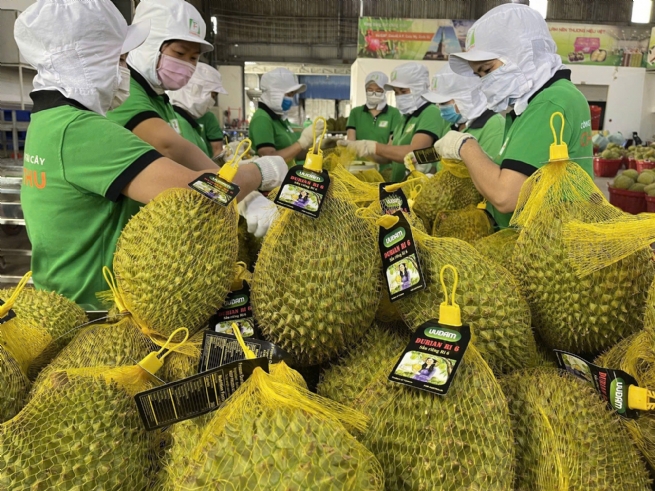
Vietnam's agro-forestry-fishery exports reached US$23.04 billion in Jan-Apr 2026
Declining orders and technical barriers
In the first four months of 2026, the trade balance shifted to a deficit of US$7.11 billion. In April 2026 alone, the deficit widened to US$3.28 billion. Notably, exports from the domestic economic sector reached only US$24.47 billion, down 16.6%, reflecting a stronger direct impact on local firms from the uneven recovery of traditional markets such as the U.S. and the EU compared with foreign-invested enterprises.
This pressure is reflected in order volatility. The decline in the April 2026 PMI to 50.5 points, the lowest in seven months, shows a clear slowdown in manufacturing activity. Geopolitical tensions in the Middle East have not only disrupted supply chains but also pushed fuel and transport costs to their highest level in 15 years.
Alongside weaker order volumes, the seafood sector is facing stricter procedural requirements in key markets. According to the Vietnam Association of Seafood Exporters and Producers (VASEP), in the U.S. market, implementation of the Marine Mammal Protection Act (MMPA) with strict requirements for certificates of authorization (COA) is causing shipment delays. In the EU, changes to certificates of origin (C/O) and additional requirements for processing statements (P/S) are also creating significant difficulties. VASEP warns that inconsistent implementation of these rules between local authorities and businesses is generating large container storage costs at international ports.
In the U.S. market, trade defense pressure is posing direct risks to the steel industry. Do Ngoc Hung, Trade Counselor of Vietnam in the U.S., warned that Vietnamese steel products are often considered high-risk due to U.S. tariff measures targeting China and India. In particular, stainless steel, with annual output of nearly 1 million tons, faces the risk of high tariffs if it uses inputs from sanctioned countries.
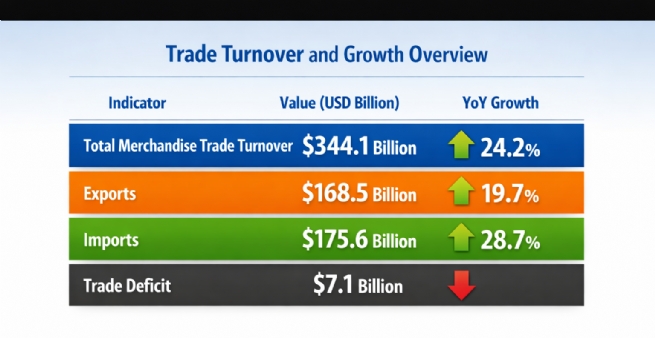
Vietnam Import–Export Overview (Jan–Apr 2026)
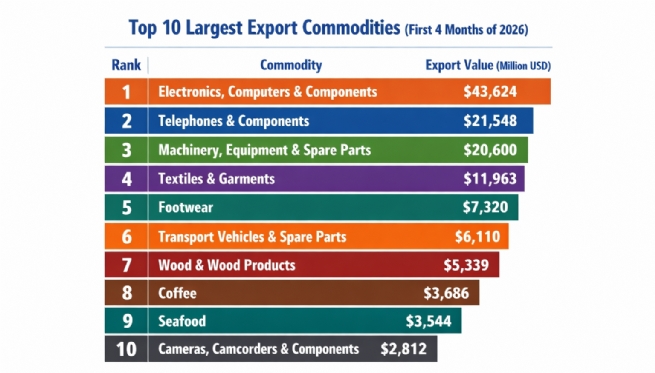
Raising export value amid cost pressures
For the textile and garment industry, a key export sector with US$10.5 billion in Q1 (up 2.9%), the current dual challenge is compensating for lost orders while protecting profit margins. With seaborne logistics costs rising due to geopolitical instability, annual imports of US$17 billion worth of fabric have continued to reduce profitability. Local content has improved to 51% to 52%, but to adapt to the strict seasonality of global fashion, firms are shifting from CMT (cut, make, trim) to FOB (free on board) and further toward ODM (original design manufacturing).
Similarly, the agricultural sector, despite maintaining growth with US$12.16 billion in the first four months, is working to restructure export products. With a full-year 2026 target of US$73 to US$74 billion, the biggest bottleneck remains low processing value. Dinh Cao Khue, Vice Chairman of the Vietnam Fruit and Vegetable Association, said that fresh exports account for about 80%, leaving firms vulnerable to border policy changes. Stronger linkages in raw material regions and deeper processing supported by science and technology are needed to extend shelf life, improve resilience, and help Vietnamese products move into higher-end segments, ending the recurring cycle of supply shortages during peak seasons.
To manage external headwinds, market diversification and green transformation have become key solutions. Vietnamese companies are expanding into Asian markets and FTA partners to offset declines in traditional destinations. Clear examples include the wood industry, which recorded over 23% export growth to China, and the seafood sector, which expects an additional US$1 billion in exports from emerging markets.
VASEP proposed that the Ministry of Agriculture and Environment urgently revise Circulars 81/2025 and 74/2025 to unify C/O forms and streamline COA procedures for the U.S. market. VASEP also proposed training programs in Q2/2026 to update regulations across markets. With a stable exchange rate (up just 0.15% since the beginning of the year) and FDI disbursement reaching US$7.4 billion, businesses need to use this period to standardize documentation and shift toward ESG-based green transformation in order to overcome increasingly complex global trade barriers.
By Huong Ly, Vietnam Business Forum