9:35:30 AM | 8/13/2026

Vietnam collected VND309.994 trillion (US$12.4 billion) in state budget revenue from import-export activities in the first seven months of 2026, up 18.7% year over year and reaching 68.7% of the full-year target.

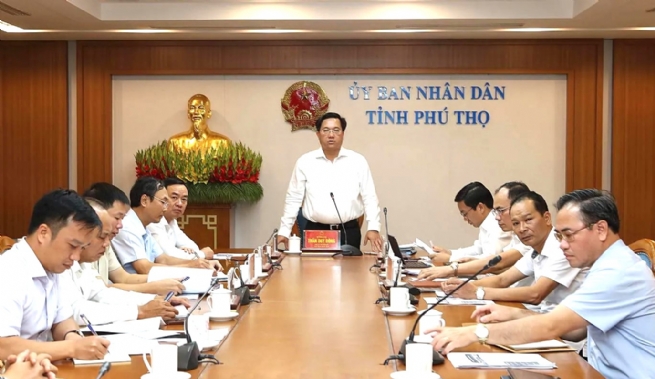
The customs conference chaired by Director General Nguyen Van Tho reviews July results and outlines the August 2026 work program
The increase reflects not only stronger trade turnover but also institutional reform, customs modernization, and digital transformation. Simpler procedures, faster customs clearance, and a more transparent business environment have helped businesses expand operations, creating a stable source of state budget revenue.
Reform supports revenue growth
According to the Customs Department, state budget revenue from import-export activities reached VND309.994 trillion (US$12.4 billion) from January 1 to July 30, 2026, equal to 68.7% of the full-year target and up 18.7% from the same period in 2025. Revenue in July alone totaled VND42.525 trillion (US$1.7 billion).
Despite continued global economic uncertainty, the result reflects sustained growth in Vietnam's import-export activities and the effectiveness of the customs sector's ongoing reform efforts.
Rather than focusing solely on revenue collection, the customs sector is adopting a modern management model that better serves businesses. The approach facilitates trade while strengthening government oversight and reducing revenue losses.
Trade continued to expand alongside budget revenue growth. In July 2026, total import-export turnover reached US$109.75 billion, up 5.3% from the previous month and 33% from a year earlier. Total turnover for the first seven months reached US$659.58 billion, up 28.1%.
Exports rose 21.7% to US$319.53 billion, while imports climbed 34.8% to US$340.05 billion. The sharp increase in imports led to a trade deficit of more than US$20.5 billion, but it also indicates that businesses are buying more raw materials, machinery, and equipment for production and investment.
From a fiscal perspective, the expansion of import activity is a key driver of higher revenue from import duties, value-added tax on imported goods, and other collections. This indicates that revenue growth is primarily supported by the recovery of production, business, and trade activities rather than administrative revenue-raising measures.
Customs modernization facilitates business
To sustain growth and strengthen revenue over the long term, the Customs Department is advancing institutional reform, management modernization, and digital transformation.
In July, the department advised the Ministry of Finance on submitting Decree 273/2026/ND-CP on duty-free goods trading to the Government. It also organized training on newly issued legal documents to ensure consistent implementation across the customs system.
Meanwhile, the National Assembly is reviewing a draft law amending and supplementing several articles of the 2014 Customs Law, with approval expected soon. The amendments are intended to support a modern customs management model aligned with digital transformation and international integration while providing a legal framework for applying technology to customs management and cargo clearance.
Administrative reform has also accelerated in line with Resolutions 66-NQ/TW and 68-NQ/TW. In July alone, the Customs Department introduced four new administrative procedures, revised 11, and abolished one outdated procedure. It also continued reviewing and reducing business conditions to lower compliance costs while maintaining effective government oversight.
The customs sector is also advancing digital customs. The Vietnam Automated Cargo Clearance System/Vietnam Customs Intelligence Information System (VNACCS/VCIS) and its satellite systems continue to operate reliably 24/7, ensuring uninterrupted customs clearance. The sector is preparing infrastructure to pilot VNeID authentication for customs declarants handling low-value goods and developing a new coding system aligned with the reorganized administrative structure.
Online public services have also produced positive results. From the beginning of the year through July 19, the customs sector processed nearly 75.9 million applications, with more than 99.9% submitted online. This reflects the effectiveness of digital transformation in reducing processing time, lowering costs, and improving transparency.
Meanwhile, the National Single Window and ASEAN Single Window continue to expand. The Customs Department is developing a new action plan to strengthen connectivity among ministries and agencies, improve logistics services, and facilitate trade, helping enhance the competitiveness of Vietnamese businesses.
After two months of piloting the centralized customs clearance model at Regional Customs Sub-Department III, initial results show significantly shorter processing times and lower resource requirements for both customs authorities and businesses. Based on these results, the Customs Department is preparing a roadmap to expand the model to other units.
Alongside procedural reform, the customs sector is continuing to modernize and improve its management framework, strengthen the management of goods origin, protect intellectual property rights, and develop a project for unified management of specialized inspections for import-export goods.
According to Nguyen Van Tho, Director General of the Customs Department, budget revenue of nearly VND310 trillion (US$12.4 billion) in the first seven months of the year reflects not only the recovery of trade but also the effectiveness of comprehensive customs reform. As institutions continue to improve, digital transformation advances, and modern management models are expanded, the customs clearance environment will become more efficient, helping businesses reduce costs, improve competitiveness, and expand production and operations. This will also support the customs sector in achieving its 2026 budget revenue target while contributing to economic growth and a better investment and business environment.
By Huong Hau, Vietnam Business Forum