9:59:11 AM | 10/8/2026

After three decades of operation, Sao Ta Foods Joint Stock Company has processed and sold more than 300,000 tons of finished shrimp, generating nearly US$3.3 billion in export revenue and nearly VND3,300 billion (US$126.92 million) in pre-tax profit. Building on its processing and export foundation, the company is entering a new phase focused on expanding farming areas, researching broodstock, and broadening its value chain.
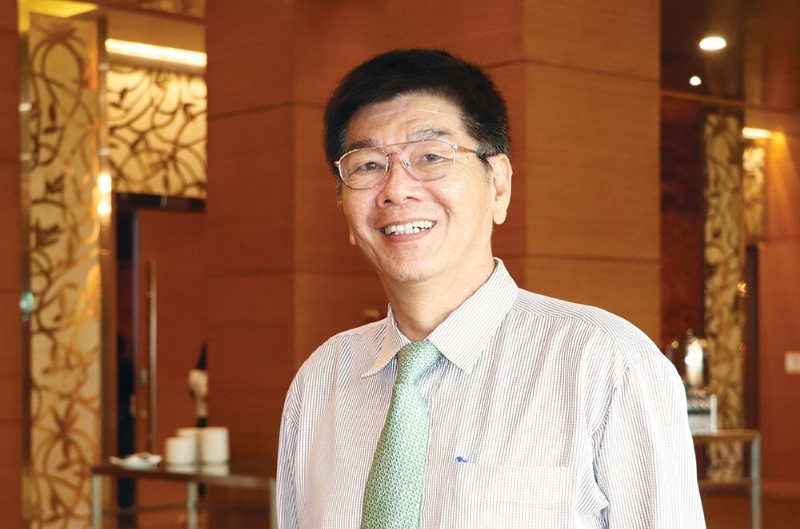 |
| Mr Ho Quoc Luc, Chairman of the Board of Directors of Sao Ta Foods Joint Stock Company |
Three Decades of Strong Growth
On February 3, 1996, Sao Ta Foods Joint Stock Company officially began operations as an enterprise 100% owned by the Finance and Administration Board of the Party Committee of Soc Trang Province (now Can Tho City). Three decades later, Sao Ta has established a strong position in seafood production, processing, trading, and exports, with the United States and Japan as its two major markets.
The profit-to-revenue ratio increased from approximately 1.5% in the early years to around 6% today. Company documents show that this improvement resulted from lower costs, improved quality, and stronger branding, enabling better selling prices and greater competitiveness. Beyond expanding its scale, Sao Ta recorded net profits in all 30 years of operation. Average monthly worker income now exceeds VND11.6 million per person.
Avoiding Over-Reliance on Single Markets
A major challenge for seafood exporters is market concentration and unpredictable changes in trade policy. For Sao Ta, this challenge intensified in 2025 as shrimp exports to the U.S. faced hurdles, including countervailing duties and anti-dumping and anti-subsidy lawsuits.
Rather than waiting for market conditions to change, company leaders proactively set aside provisions for anti-dumping and anti-subsidy tax expenses based on U.S. sales revenue. Since 2020, Sao Ta has implemented measures to mitigate market risks. One approach has been investing in deep processing to differentiate its products and reduce direct competitive pressure from lower-priced shrimp from India and Ecuador.
Ho Quoc Luc, Chairman of the Board of Directors of Sao Ta Foods Joint Stock Company, said the company's recent export distribution was as follows: the U.S. market accounted for approximately 33%; Japan, 28%; the UK, 17%; and Europe, 4%. The figures show that the US remains the largest market, while Japan is playing an increasingly important role in the company's strategy. Sao Ta is the largest Vietnamese shrimp exporter to Japan, which the company considers an advantageous market for high-end, deeply processed products.
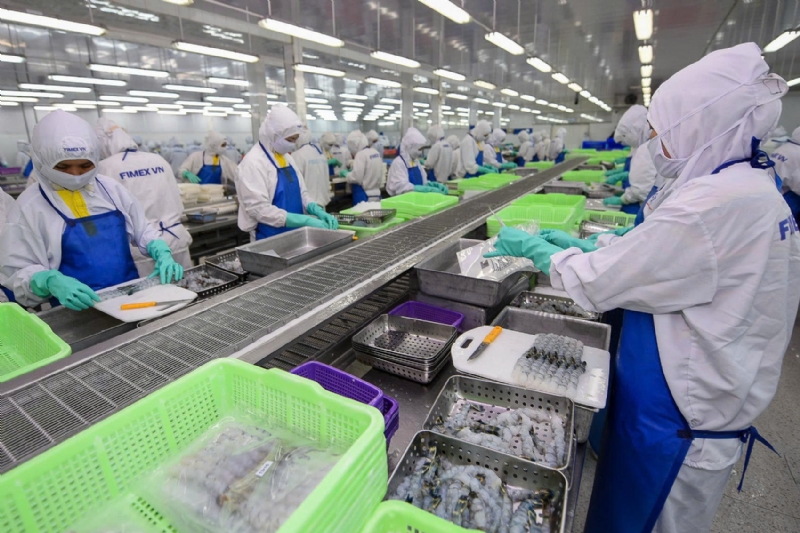
Sao Ta Foods JSC focuses on maintaining and expanding its export markets through a range of key strategies
Japan, which Ho Quoc Luc describes as a "home ground," offers geographic proximity and competitive advantages, allowing Sao Ta to avoid direct competition with lower-priced shrimp from India and Ecuador. If exports to the U.S. face difficulties, the company plans to step up efforts in alternative markets such as Canada, Australia, South Korea, and particularly Japan. China is another potential market under favorable conditions.
From Quality to Sustainability
Sao Ta's development has followed distinct five-year phases rather than a single fixed strategy. From 2010 to 2015, the focus was on improving product quality. From 2015 to 2020, efforts centered on increasing processing and sales volumes. From 2020 to 2025, the strategy shifted toward sustainable development, strengthening corporate culture, business ethics, and social responsibility. Company records show that each period laid the foundation for the next, moving from product standards and processing capacity to brand reputation and meeting the growing demands of international buyers.
For 2025-2030, Sao Ta is shifting its focus toward farming operations and broodstock research while building on its established processing foundation. The company aims to rank among Vietnam's two largest shrimp enterprises.
Six Consecutive Years Among the Top 100 Sustainable Enterprises in Vietnam
While market strategies help mitigate risks, sustainable development is becoming an increasingly important part of the company's competitive edge. Documents indicate that Sao Ta proactively implemented the Corporate Sustainability Index (CSI), initiated and developed by the Vietnam Chamber of Commerce and Industry (VCCI), covering more than 100 criteria. From 2020 to 2025, the company consistently ranked among the Top 100 Sustainable Enterprises in Vietnam.
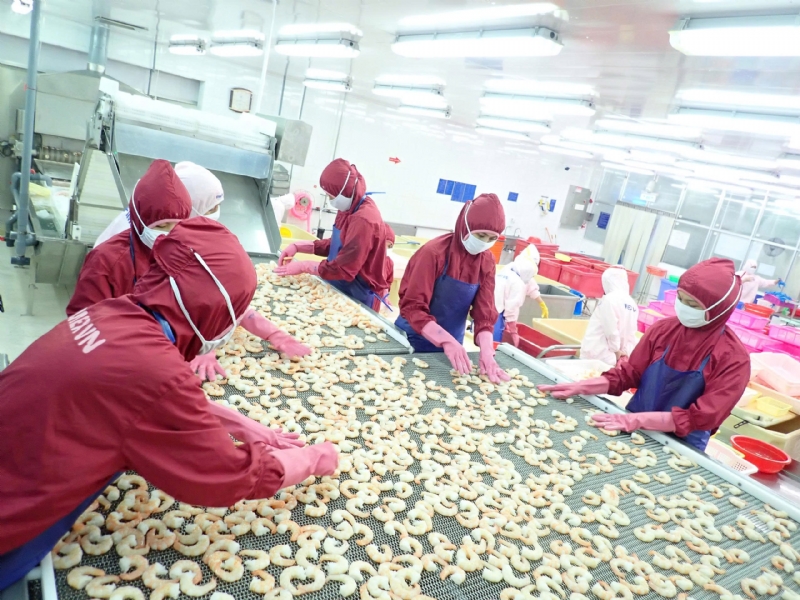
Sao Ta Foods JSC delivers high-quality products meeting international standards
In 2023, Sao Ta ranked fourth among sustainable Vietnamese manufacturing companies. In 2024, the company was among the Top 5 in a thematic category recognizing pioneering corporate efforts to build and implement diversity, equity, and inclusion values. Sao Ta was the only seafood enterprise named to the list and maintained this recognition for six consecutive years from 2020 to 2025.
This achievement goes beyond recognition. For seafood exporters, meeting the increasingly stringent requirements of international distribution systems is an important condition for maintaining market share. Sustainable practices enable Sao Ta to meet strict requirements across global seafood distribution channels while helping it secure Fair Trade certification required by U.S. retail networks.
Applying "Soft Power" to Enterprise Growth
Within the seafood industry, competitiveness depends on more than factory capacity or export volumes. Sao Ta identifies corporate culture and adaptability as core elements, guided by three primary values: Service, Sustainability, and Sharing.
These values are complemented by the ability to respond quickly to market volatility, from changes in trade policies to price competition.
Together, these factors form a consistent approach. Rather than pursuing short-term growth, management focuses on building long-term capacity through product quality, deep processing, market presence, corporate culture, and alignment with the sustainable development path of the PAN Group, of which Sao Ta is a member.
In recent years, Sao Ta has demonstrated a leadership role as an active, pioneering member of both the PAN Group and the seafood sector. This foundation supports steady long-term growth in line with broader industry trends. For the wider industry, Sao Ta provides an example for peers seeking to adapt to these trends.
Van Luong (Vietnam Business Forum)