10:01:20 AM | 10/9/2026

“Domestic companies today have strong aspirations and are gradually overcoming the harsh challenges posed by nature and the market through digital management thinking and breakthrough biotechnology,” Labor Hero Thai Huong shared when discussing the capabilities of Vietnamese companies in the new development phase.
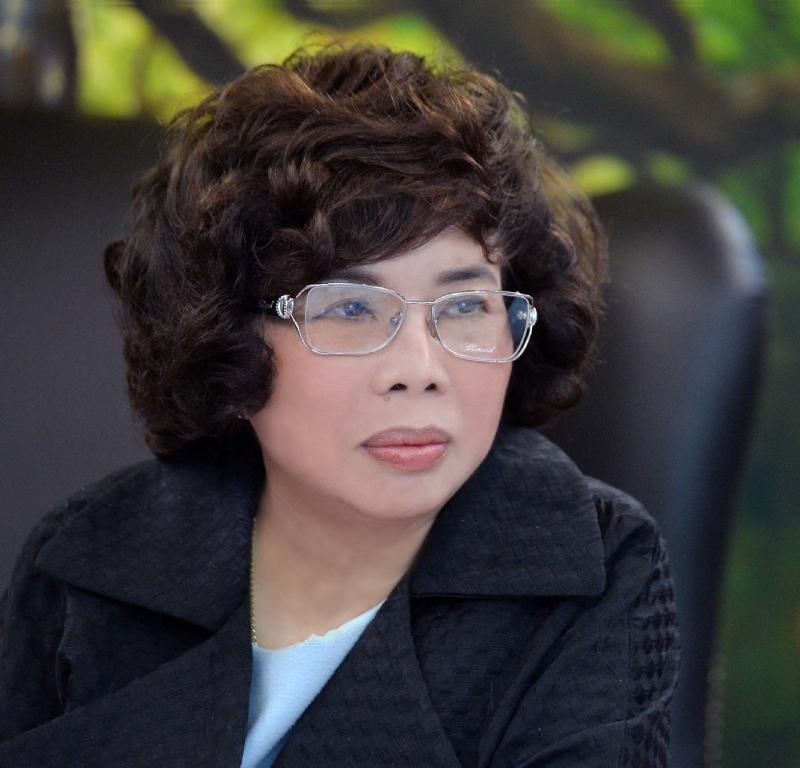 Labor Hero Thai Huong, Founder and Chairwoman of the Strategy Council of TH Group |
According to the businesswoman, who currently serves as Chairwoman of the Strategy Council of TH Group and a member of the seventh Executive Committee of the Vietnam Chamber of Commerce and Industry (VCCI), a new development mindset is emerging within Vietnam’s private business community: standing on the shoulders of global scientific giants to create their own value.
This means leveraging humanity’s major advances in science and technology, management, artificial intelligence (AI), blockchain, the Internet of Things, digital transformation and more to capitalize on Vietnam’s existing advantages; increase labor productivity, maintain reasonable costs and achieve internationally standardized product quality; and gradually build national brands capable of competing in global markets.
More importantly, this mindset is linked to social responsibility, enabling companies to bring farmers into the value chain, help them sustainably escape poverty, move toward prosperity and improve their lives in their homeland.
From Natural Challenges to Vietnamese Dairy Brand
The story of TH true MILK building its brand in Nghe An is a typical example of this mindset.
Dairy farming and the production of high-quality fresh milk had never been considered a natural advantage for Vietnam. Nghe An, meanwhile, has harsh climatic conditions. Faced with what appeared to be a disadvantage, TH Group adopted an approach based on the formula: Vietnamese intelligence + Vietnamese natural resources + world-leading end-to-end technology to “turn the impossible into possible,” successfully building dairy farming and milk processing chains in Nghe An and many other provinces and cities across Vietnam.
The company gradually mastered the technology, built large-scale concentrated dairy farming clusters and established international quality standards on a sustainable development foundation.
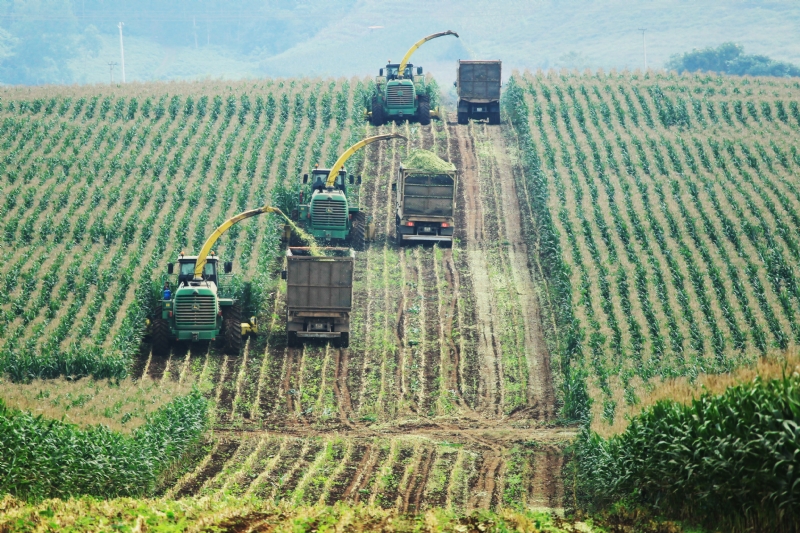
TH Group’s carbon neutrality roadmap begins with measuring greenhouse gas emissions across its production chain and implementing substantive reduction solutions
Technology has been integrated into every stage of farming and production. On TH’s high-tech fields, smart systems operate based on data on soil conditions, weather and the growth characteristics of each crop.
In livestock farming, the principles of precision agriculture are applied to each individual animal. Each cow is managed by a chip, with its health, feed intake, milk quality and estrous cycle monitored.
TH’s closed-loop production process for clean fresh milk, “from green pasture to clean glass of milk,” is a typical example of the circular economy in practice, where by-products from one stage become input resources for another. For example, livestock waste (cow manure) is processed into organic fertilizer for pastures or bioenergy, helping optimize resources and reduce greenhouse gas emissions.
Beyond its quantitative achievements, this model demonstrates a sustainable development philosophy: Business based on respect for Mother Nature must ultimately aim to bring True Happiness to people.
After more than 15 years of development, TH has become a leading example of the consistent approach advocated by Labor Hero Thai Huong, which she also expressed at the 33rd Diplomatic Conference recently held in Hanoi: “There are no limits to the aspirations of Vietnamese people if we know how to put people at the center, stand on the shoulders of global scientific giants and apply the world’s advanced management science.”
If modern technology is one pillar of support, then in Thai Huong’s thinking, indigenous knowledge is another internal resource that needs to be awakened.
According to her, embracing the world’s advanced science does not mean overlooking values accumulated over thousands of years. On the contrary, modern science should be combined with indigenous knowledge to create products and values with a distinctly Vietnamese identity.
| Speaking at the conference “Vietnamese Private Companies and Entrepreneurs with Innovation in the National Development Model and the Party Member Policy on Private Economic Development” in Hanoi in May 2026, Thai Huong affirmed: “Party General Secretary and President To Lam has clearly stated: ‘The private economy is one of the country’s leading important growth drivers.’ We have all the conditions of favorable timing, geography and human harmony to make strong breakthroughs. This is the time to awaken internal strength, the spirit of innovation and the aspirations of Vietnamese companies to contribute.” |
Speaking about the role of private companies, Thai Huong has repeatedly called for policies to attract companies with sufficient Heart - Intellect - Strength to fields where Vietnam has advantages, including agriculture, while promoting deep processing, building closed value chains and creating products based on “indigenous knowledge and modern technology.”
Medicinal herbs are one of the fields to which she and TH have devoted considerable effort over many years. This is also where technology and indigenous knowledge come together most clearly. By combining indigenous knowledge of medicinal herbs with advanced technologies from around the world, the medicinal herb value chain and biotechnology can create green foods, pharmaceuticals for health and natural cosmetics, enabling Vietnamese products to generate unique added value that no other country can replicate.
“We have had indigenous knowledge for thousands of years, but now we must apply technology,” she said.
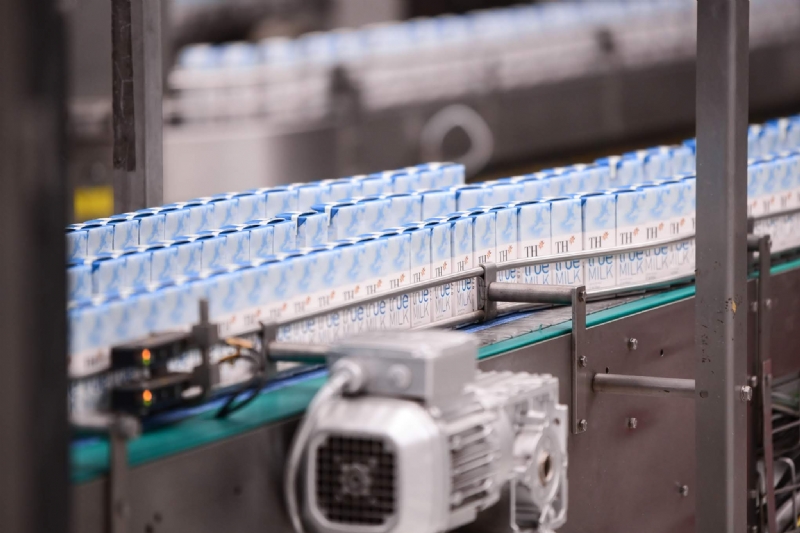
TH true MILK clean fresh milk products are produced through a closed-loop process “from green pasture to clean glass of milk,” using high-tech agriculture and modern processing technologies to preserve the freshness and nutritional value of every drop of milk
VCCI’s Proactive and Timely Support for Businesses
Against this backdrop, Labor Hero Thai Huong shared her views on the role and activities of the Vietnam Chamber of Commerce and Industry (VCCI):
“In assessing VCCI’s activities in recent years, the business community recognizes its spirit of proactive and timely support. VCCI has done a good job of translating the Party’s strategic resolutions, particularly Politburo Resolution 41-NQ/TW on building the contingent of entrepreneurs in the new era, into practical action. The resolute and coordinated leadership of the General Secretary and the Prime Minister has created strong momentum for the country’s development: GDP growth has maintained an impressive pace, FDI attraction has repeatedly reached record highs, and Vietnam’s geopolitical position has been elevated. We are no longer on the defensive; we are proactively breaking through.”
According to Labor Hero Thai Huong, looking at the world, emerging trends are no longer vague concepts but have taken clear shape around three major forces: accelerating AI, increasingly stringent ESG standards and the circular economy model. These are not barriers but a race for global market share. Therefore, the business community expects VCCI not to stop at the role of ‘procedural support’ but to raise its role to that of a ‘policy shaper.’
She offered two recommendations regarding VCCI’s role. First, on proposing special policy mechanisms for businesses to anticipate emerging trends, VCCI should proactively advise the Government on establishing advanced legal frameworks, such as a national AI pilot model, carbon pricing mechanisms and tax incentives for the circular economy. Policies should concentrate resources on promoting, identifying and supporting businesses that know how to leverage global trends to upgrade their value chains, rather than spreading resources too thinly.
Second, on drawing on internal strengths from sectors with national competitive advantages, she noted that the world has technology, while Vietnam has deep indigenous knowledge, tourism resources rooted in a country with 4,000 years of history, and distinctive agriculture.
Source: Vietnam Business Forum