

1:59:56 PM | 5/8/2020

After more than 1.5 years of implementation, the OCOP Program for 2018-2020 has produced particularly important initial results, creating new impetus for new rural area construction and for rural economic development, and drawing active engagement from the whole political system of all levels and society.
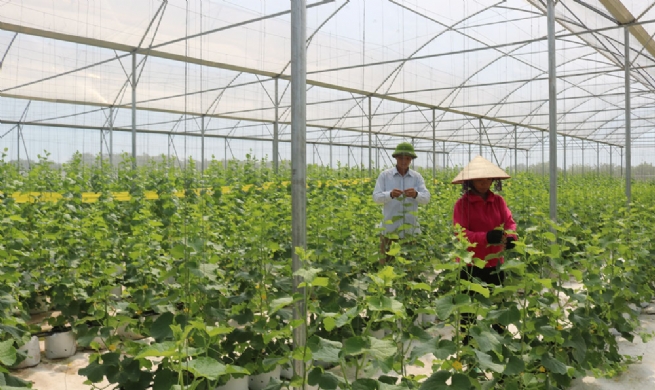
According to a report released by the Ministry of Agriculture and Rural Development, 61 out of 63 provinces and cities have approved their OCOP Programs. 24 provinces and cities have assessed and classified 1,129 products submitted by 753 economic entities. Among them, 16 products are certified as 5-star class, 336 products as 4-star class and 777 products as 3-star class, according to the national OCOP criteria. Many quality products are favored in the domestic market and exported to foreign countries. Preliminary surveys show that most localities selected more than 10 key competitive products for investment and development, with some provinces having more than 30 such products like Soc Trang, Vinh Long, Hau Giang, Tra Vinh and Dong Thap.
Mr. Nguyen Minh Tien, Director General of the Central Coordinating Office for New Countryside, said it is admitted that the awareness and deployment of the OCOP Program is not aggressive enough; the execution apparatus is insufficient, weak and incomplete; and the deployment of OCOP cycles is not in order. Some provinces have carried out the program very well, including Quang Ninh, Bac Kan, Quang Nam and Ben Tre; while others have not, some have not even launched it yet. Many places, when formulating the program, imposed product selection for the 2018-2020 period, not strictly adhering to the Program principles or OCOP steps. The mobilization of resources for the OCOP Program is limited, primarily supported by the budget for the National Target Program on New Countryside Development, not integrated with local rural economic development programs and projects.
However, some existing difficulties and challenges need more attention and direction from all levels and sectors to be addressed. In general, organizations responsible for carrying out the OCOP Program are inadequate, weak, asynchronous and lack leading coordinators and advisors. Many officials are unclear about the nature and principles of the OCOP Program. Some localities approved schemes and plans but did not launch specific activities, not following OCOP cycles specified in Decision 490/QD-TTg. Therefore, the progress and quality of the program in many localities has not met requirements.
Many localities have mainly selected available products and developed product brands of some entities but they lack popularity to be put into the OCOP Program and classified rather than developed potential products that carry local advantages to improve their quality. The role and participation of commune-level authorities is still limited. Although trade promotion has been a concern for many localities and launched inside and outside provinces, it has still lacked focus. Events have not yet highlighted the image and quality of OCOP products. The unclear definition of OCOP products and other substandard products causes consumer confusion about OCOP products.
In order to improve the effectiveness and quality of the OCOP Program, achieve desired goals and results, and prepare well for the development of the OCOP Program in 2021 - 2025, the Ministry of Agriculture and Rural Development requested the Chair of the Steering Committee for National Target Programs and Chairpersons of Provincial/Municipal People's Committees to care about and direct some tasks: Drastically directing the local implementation of the OCOP Program, strictly following OCOP cycles, strengthening review, encouragement and direction of people and economic entities to participate in the program, and ensuring the popularity and quality of OCOP products. The two provinces that have not yet approved the OCOP Program should carefully prepare contents in the guiding spirit of the central government, soon complete and launch the program in the first quarter of 2020 at the latest. They will necessarily concentrate on training, retraining and guiding commune and district officers to understand the nature of the program.
In 2020, the Ministry of Agriculture and Rural Development proposed that localities should mobilize more community power to implement this program. Provinces and cities need to study production areas and help OCOP products develop more sustainably. At central level, in 2020, the ministry will also soon complete and standardize the program implementation guideline for all 63 provinces and cities.
| A total of 3,843 products are expected to meet OCOP standards by the end of 2020, nearly 1.6 times higher than the target of 2,400 products. In particular, the food sector has 2,218 products, the drink sector has 397 products, and the herbal medicine sector has 264 products. After being assessed and ranked, many products have been sold in large quantities by major distributors, retailers and e-commerce firms (BigC, Vinmart and VNPost). The sales of ranked products have increased significantly. |
Duc Binh (Vietnam Business Forum)






 Vietnamese





