

12:34:57 PM | 5/18/2021

Frequent trading order congestion has frustrated investors and weakened the prestige of Vietnam's stock market. It is time for the stock trading system that has existed for approximately 20 years to be upgraded and methodically invested by adopting digital transformation solutions and applying new technologies.
Fixing network congestions
High liquidity since late 2020 has led to frequent order congestion on the Hochiminh Stock Exchange (HOSE). According to the State Securities Commission, the root of the order congestion comes from the existing technology system that is capable of processing at most 900,000 orders per session and cannot work well on 20-30 million trading orders a day.
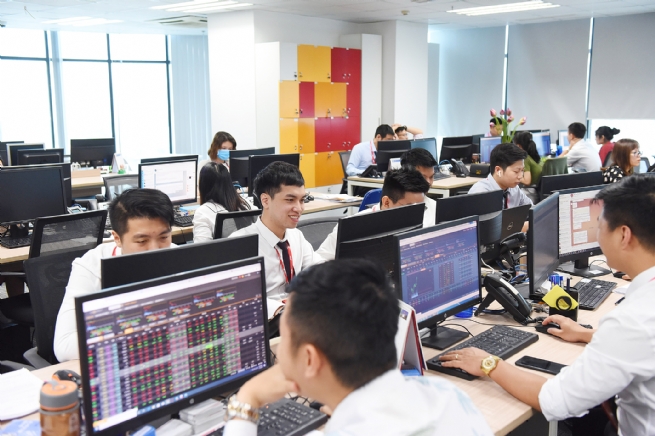
Together with the strong rally of the VN-Index, the liquidity on HOSE is as high as an average of VND16,000-17,000 billion (US$693-US$737 million) per day. However, since April 12, the value has already reached over VND20 trillion (US$867 million) as HOSE has improved its operational technology to better serve input trading orders, ease system overloads and support liquidity increases.
The reason for the sudden increase in trading is partly because the Ho Chi Minh City Stock Exchange (HOSE) has made improvements in operating techniques, helping to improve the system's overload handling efficiency. The system was reduced, supporting the market to increase liquidity.
Previously, situational solutions to ease trading order congestion actively applied by regulators, HOSE and related bodies produced initial effects. Specifically, one of the solutions is increasing the board lot from 10 share units to 100 share units; supporting listings to temporarily transfer their shares to the Hanoi Stock Exchange (HNX); and listing HOSE-approved stocks on HNX for the time being. Listed companies on HOSE, when issuing shares to increase the share capital and pay dividends, will be allowed to conduct procedures for listing on HOSE.
Besides, the solution on system construction cooperation with FPT Group is still being deployed in chorus and on schedule, and is expected to completely end order congestion when it is officially operational.
In fact, the project of designing solutions for the provision, installation and transfer of information technology systems was signed by HOSE and the Korea Stock Exchange (KRX) in December 2012. The HOSE's report stated that this project can be implemented in 2021 to improve order processing speed and increase market liquidity.
Race for digital transformation
Changes following social distancing as a result of the COVID-19 pandemic in 2020 are a testament that the race for digital transformation in the securities sector has entered a new stage.
In recent years, many securities companies such as SSI, HSC, VCSC, VNDS and TCBS have focused on improving, upgrading and investing much in technology and digital trading platforms. For example, SSI Securities Corporation completed its pilot online operation. All SSI employees work from home, all transactions and operations are performed completely in the online environment. All transaction results are smooth and unaffected to investors’ interests. SSI launched new online platforms such as iBoard, SBond online, iChat and direct payment connection with six banks.
Another advantage of process digitization is the limited use of physical resources, helping reduce costs and optimize work performance. Previously, stock investors got used to online practices, from conducting demo trading, opening real accounts and depositing/withdrawing money to performing trading. Currently, products which seem to be physically transacted like bonds are also available on digital platforms, or instant money transfer systems are interlinked by multiple banks. By reducing operating costs, businesses can get more resources together to upgrade their systems to deliver better customer experiences.
VNDIRECT Securities Corporation has also applied digital technology, and recommended customers to use active and swift online trading methods through its channels like Lightning, Protrade and Mobile App.
A representative from APEC Securities Company (APS) said that APS is transforming from a traditional securities company to a digital securities company, aiming to create a non-advisor trading system and use artificial intelligence (AI) to deliver market warnings to investors. Currently, the mobile application for ABS online bond trading helps investors access information about corporate bonds, conduct transactions, and monitor and update their current investment performances.
According to experts, digital transformation will form technological utilities-based securities companies and broker-based securities companies will regress. The removal of lower-limit fees by the Ministry of Finance for securities services and technological application are important factors to open competition in securities trading fees among brokerage houses and eventually form zero-fee securities companies.
By Huong Ly, Vietnam Business Forum
 April 24–25, 2026
 Kinh Bac Cultural Center, Bac Ninh Province


 Vietnamese





