

10:58:44 AM | 5/10/2021

The 2020 Provincial Governance and Public Administration Performance Index (PAPI) Report, recently released by the United Nations Development Program in Vietnam (UNDP), shows an incremental improvement in national governance and public administration performance during the 2016-2021 government term, with control of corruption in the public sector showing the strongest improvement.
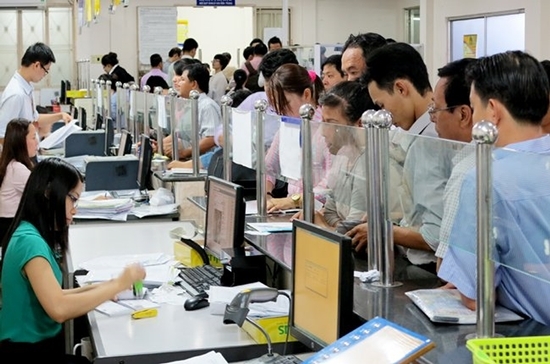
UNDP Resident Representative in Vietnam Caitlin Wiesen said new features of the 2020 PAPI Report include insightful findings on the performance of local governments across two terms (2011-2016 and 2016-2021); experience of internal migrants with accessing services in receiving provinces; and voter perception of women in leadership roles. As the Government embarks on a new term, PAPI measures and benchmarks citizens’ experiences and perception on the performance and quality of policy implementation and services delivery of all 63 provincial governments in Vietnam to advocate for effective and responsive governance across eight key dimensions. Analysis in the 2020 PAPI Report shows that citizen engagement and anti-corruption efforts have a positive correlation with Vietnam’s ability to respond to the Covid-19 pandemic.
The 2020 PAPI Report presents detailed findings on how provinces performed across the eight PAPI dimensions: Participation at local levels, transparency in local decision-making, vertical accountability, control of corruption in the public sector, public administrative procedures, public service delivery, environmental governance, and e-government, as well as in the aggregate PAPI scores. In 2020, none of 63 provinces and cities were in the top performing group across all eight dimensions.
Over 14,700 citizens were interviewed for the 2020 PAPI Report. This is the largest number of citizens to participate since the survey was first conducted nationwide in 2011. For the first time, the survey also gathered responses from citizens with temporary residence registration status. Nearly 300 migrants were surveyed in six centrally governed municipalities and provinces, namely: Hanoi, Ho Chi Minh City, Bac Ninh, Da Nang, Dong Nai and Binh Duong.
According to the PAPI 2020 Report, Quang Ninh province has climbed two places to the top of PAPI rankings, scoring 48.811 points. The northern province leads the country in three criteria: Transparency in local decision-making (6.499 points), control of corruption in the public sector (8.286 points) and public service delivery (7.713 points). Quang Ninh is also among the top in the country for participation of local levels (5.805 points), public administrative procedures (7.611 points), environmental governance (4.964 points) and e-government (3.14 points). It ranks high in other indicators - Vertical accountability (4.793 points).
The runner-up is Dong Thap with a score of 46.961 points. The province leads the country in environmental governance with 5.202 points.
The third-placed is Thai Nguyen with 46.471 points. The locality ranked first in the country for participation of local levels (6.216 points).
Notably, from the people's perspective, the anti-corruption has affected local authorities. There is a decline in percentage of respondents saying that “bribery is necessary to get a job in a government agency, to get health examined and treated in a district public hospital, to have land-use rights certified, to have children better treated by teachers in public primary schools and to have construction permits granted.” This downtrend also started in 2016.
However, the survey on people's actual experiences with harassment when using public services” show a pessimistic picture. There is a rise in people having to pay informal charges to have their land-use right certificates completed in 2020.
Australian Ambassador to Vietnam, Madam Robyn Mudie noted: “This improvement may have contributed to Vietnam’s successful response to the Covid-19 pandemic. The findings from the 2020 PAPI Report show that there is a correlation between good governance and effective pandemic responses. In other words, good governance matters. Looking ahead, improving governance will prove extremely useful in managing other unexpected emergency situations in Vietnam.”
Looking ahead to the 2021 National Assembly and People’s Council elections, the 2020 PAPI Report includes a section analyzing voter’s preferences of candidates at the national and provincial levels, she added. The findings indicate that voters prefer men over women candidates, particularly for village head positions. In addition, while voters prefer men candidates with families, women candidates are less likely to win support if they have families.
Responses by non-permanent residents provided a better understanding of the effect of internal migration on provincial performance in governance and public administration. The analysis shows that migrants tend to be poorer and have fewer household assets and less income than permanent residents and they tend to be women. Correspondingly, there is a significant gap in migrants’ experience with governance compared to permanent residents in the same village. This data is critical for the design of inclusive governance solutions in which the migrant population is not left behind.
“In order to narrow these gaps, provinces receiving internal migrants need to focus on addressing the information needs and expectations of both permanent and non-permanent residents. The current efforts to create national database systems on population and issue digitized citizen identification cards are steps in the right direction. Having a universal identification number will enable citizens to access governance and public services equally regardless of their place of residence within the country,” Ms. Caitlin Wiesen said.
By Quynh ANh, Vietnam Business Forum
 April 24–25, 2026
 Kinh Bac Cultural Center, Bac Ninh Province


 Vietnamese





