

1:41:57 PM | 6/15/2023

General Director Nguyen Van Can of the General Department of Vietnam Customs (GDC) recently signed Decision 1105/QD-TCHQ to promulgate the GDC Digital Transformation Plan in 2023. The plan aims to accelerate customs digital transformation by building digital relationships under Decision 2212/QD-BTC dated November 4, 2022 of the Minister of Finance.
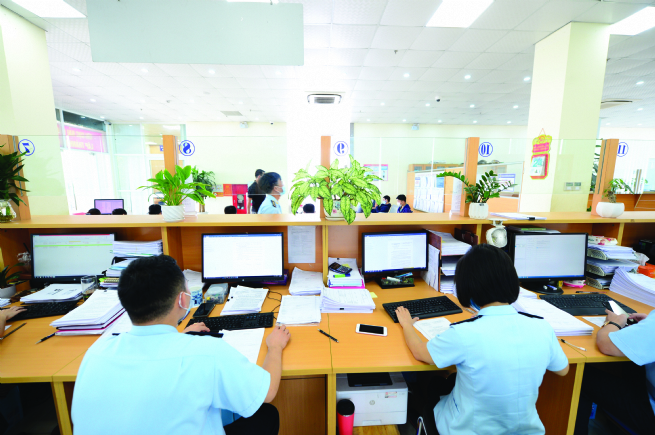
In 2023, the customs sector aims to build an information technology system to deploy digital customs that meet professional customs clearance requirements and propose the second project of the IT system for digital customs
The plan comprises 10 groups of key tasks for digital transformation, including deploying digital transformation in customs operations, supporting and promoting digital transformation at businesses and stakeholders to ensure the synchronized digital transformation of the customs sector, supporting and promoting digital transformation at central agencies in sync with the digital transformation of customs operations and accelerating digital transformation at the National Single Window (NSW) and ASEAN Single Window (ASW), strongly deploying digital transformation within the customs sector management, completing and improving the quality of digital infrastructure, developing platforms, developing database, ensuring information security, completing legal environment, processes and procedures to meet digital transformation requirements of the customs sector, developing human resources and building a cultural environment to meet digital transformation requirements of the customs sector.
In 2023, the customs sector aims to build an information technology system to deploy digital customs that meet professional customs clearance requirements and propose the second project of the IT system for digital customs. To achieve the plan’s goals and tasks, the customs sector has introduced various key solutions. The first solution is speeding up communications to people and businesses. Notably, the GDC encourages enhanced interaction among customs officers, citizens and businesses by means of digital technology such as mobile devices, social networks, and other non-traditional information channels. The second solution is boosting research and acquisition of key technologies of the Fourth Industrial Revolution and gradually applying them to customs administration like the internet of things (IoT), big data, business intelligence (BI), mobility, blockchain, virtualization (cloud) and artificial intelligence (AI).
The next solution is ensuring resources for implementing digital transformation in information technology and information security by strengthening cohesion and coordination among specialized agencies. This includes fostering training and improving the quality of customs IT personnel, particularly IT managers and IT specialists, with in-depth professional qualifications. The customs sector also aims to promote cooperation, share experiences and reinforce international cooperation with customs agencies in advanced countries in order to speed up technological application solutions in building and deploying customs IT systems.
The smart customs model will be built to make Vietnam Customs a modern customs agency that meets international standards and applies the technological achievements of the Fourth Industrial Revolution. Vietnam Customs aims to reach the class of developed countries such as the EU, the United States, Japan and China by 2025. The smart customs model must be highly automated and applied with new modern scientific and technological achievements on a digital, paperless basis to ensure transparency, fairness, effectiveness, efficiency, predictability and adaptability to fluctuations of international trade and customs management requirements in accordance with international standards.
By Le Hien, Vietnam Business Forum
 April 24–25, 2026
 Kinh Bac Cultural Center, Bac Ninh Province


 Vietnamese





