

2:28:03 PM | 2/16/2025

The joining of Bat Trang and Van Phuc craft villages in the global network opens up opportunities for Hanoi to develop its cultural industry, combining craft village production with tourism. This not only contributes to economic development but also helps promote the capital’s culture internationally.
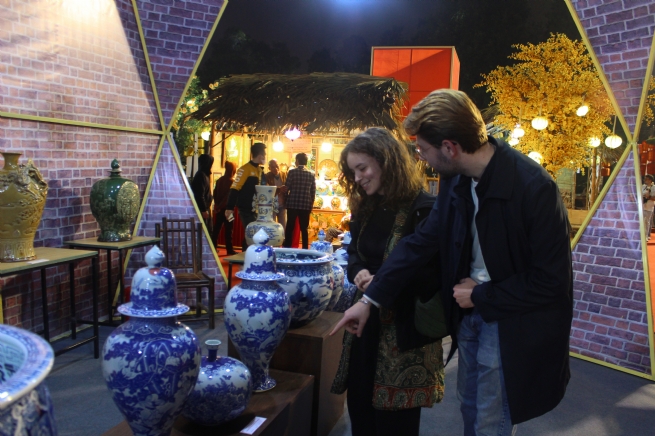
Many foreign tourists are interested in Bat Trang ceramic products
Born and raised in a family with a long tradition of pottery making in Bat Trang, excellent artisan Tran Duc Tan (founder of Tan Thinh Pottery Production and Trading Cooperative) has a special passion for pottery. Based on the ancient capital of their ancestors, artisans have spent a lot of time researching and creating new and unique ceramic products with different patterns and colors, which are highly appreciated by domestic and foreign experts.
Like artisan Tran Duc Tan, more than a hundred other artisans in the ancient pottery village of Bat Trang, with their strong passion, creative minds, talented hands, combined with the secret of using precious glazes, meticulous and precise kiln firing techniques, have created sophisticated, beautiful, unique and valuable ceramic products. The ceramic products here are not only sophisticated in form but also diverse in design, style, size and type such as: worship items (incense sticks, candlesticks, wine jars, jars), household items (pots, cups, bowls, plates, jars, vases, basins) and decorative and construction ceramics. Directly visiting the pottery village, Mr. Aziz Murtazaev, Chairman of the World Craft Council in the Asia-Pacific region, was extremely surprised and amazed by the beauty and value of Bat Trang craft village. Appreciating the unique cultural and historical values of Bat Trang craft village, he said that he would introduce Bat Trang products and talented artisans to countries around the world, in order to spread the traditional cultural values of Vietnam further and wider. Thereby affirming the position of Vietnamese craft villages in the global handicraft picture. In particular, with a persistent journey, going through many historical ups and downs, Bat Trang ceramic cultural heritage has always been preserved and developed by generations of artisans and people. People here are very conscious of protecting the rights of their profession. The secrets of making pottery are "passed down from father to son" through many generations. Up to 90% of young people in the village know how to make pottery. The teachers who teach the young generation how to make pottery are grandparents, parents, aunts, uncles, etc. in the family.
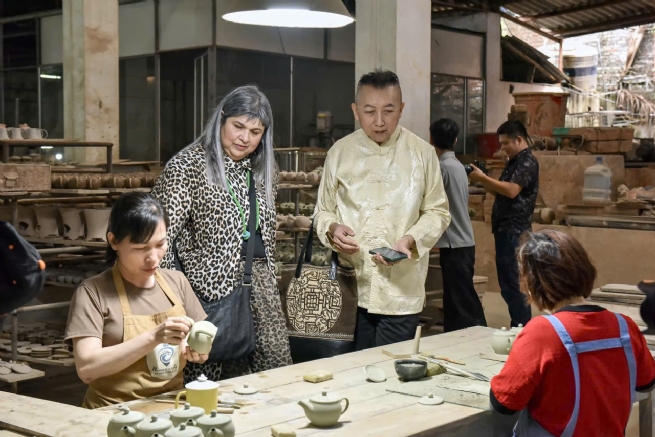
World Craft Council visits Bat Trang ceramic factory
And this has created a strong impression, highly appreciated by the International Jury, the World Craft Council when surveying and considering recognizing Bat Trang craft village as a member of the World Craft Cities Network.
Mr. Saad al-Qaddumi, Chairman of the World Craft Council commented: “Bat Trang is a symbol of revival and strong development. The story of preserving the traditional craft of the pottery village is a clear demonstration of the community's perseverance, showing that despite facing many difficulties, they can still rise up and once again become the center of handicrafts and cultural pride”.
According to Ms. Ha Thi Vinh, Chairman of the Hanoi Handicraft Village Association: the whole Bat Trang commune currently has more than 100 artisans, nearly 200 enterprises and about 1,000 households producing and trading ceramics. The establishments have been creating jobs for tens of thousands of workers, contributing to promoting local socio-economic development. The main income of the commune comes from ceramic production and trading. The value of ceramic production and trade in the commune is estimated at more than 2,000 billion VND/year, helping to raise the average income of the whole commune to more than 90 million VND/person/year.
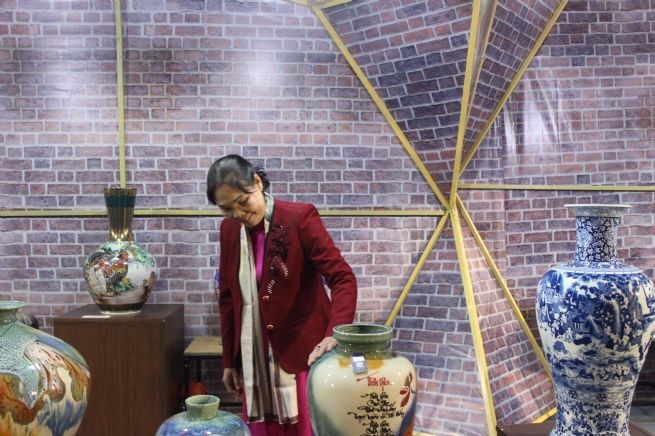
Ms. Ha Thi Vinh, Chairman of the Hanoi Handicraft Village Association, Bat Trang ceramic artisan
Chairman of Bat Trang Commune People's Committee Pham Huy Khoi said: It is estimated that each year, Bat Trang pottery village welcomes about 200,000 visitors, of which 15% are international visitors. To harmonize the goals of preserving cultural heritage, developing the economy and protecting the environment, currently, nearly 1,000 households in the village (accounting for more than 90%) have switched from manual kilns to using liquefied gas kilns. This is considered a "revolution" that has transformed Bat Trang from a dusty craft village to a green, sustainable craft village.
Hanoi is the first and only locality in the country to issue a resolution on the development of the capital's cultural industry in the 2021-2025 period, with a vision to 2030 and a vision to 2045. Accordingly, handicrafts are considered one of the important elements of culture, the foundation for innovation and development of creative design industries and cultural tourism. Hanoi identifies that developing traditional craft villages not only promotes socio-economic development but also contributes to building the brand of "Creative City".
To realize the policy of sustainable development of traditional craft villages, creating a highlight in the decade of cultural industry, one of the important solutions is that Hanoi has signed a cooperation agreement with the World Craft Council. This is an international non-profit organization, with the mission of promoting the preservation, promotion and development of global crafts and traditional crafts. According to the leader of the Hanoi Department of Agriculture and Rural Development: With the coordination of the Vietnam Handicraft Export Association, the participation of localities and the enthusiastic response of artisans, Bat Trang ceramic village has fully met the strict criteria of the World Craft Council based on 4 pillars: economy, culture, society and environment. Together with Van Phuc silk village, Bat Trang ceramic village has officially become a member of the Network of Creative Craft Cities around the world. This is an inspiration and a model for Hanoi to continue to propose to the World Craft Council to consider and recognize other potential craft villages to join the international craft village network.
Vice Chairman of Hanoi People's Committee Nguyen Manh Quyen said: The first two craft villages of the capital as well as of Vietnam joining the Global Creative Craft Cities Network have opened a new page for craft villages to integrate with the world, from the issue of demand, design to expanding the consumer market. And on the basis of the foundations as well as the documents that the city has completed and proposed to the World Craft Council, in the coming time, Hanoi will continue to consolidate and develop many craft villages for the World Craft Council to recognize. Thereby contributing to promoting the stature, value and advantages of craft villages, making handicrafts worthy of being one of the pillars and spearhead economic sectors, creating a driving force to promote the development of other cultural industries.

Tourists experience product production
According to Mr. Nguyen Dinh Hoa, Deputy Director of the Hanoi Department of Agriculture and Rural Development: The joining of the two craft villages of Bat Trang and Van Phuc in the global network opens up opportunities for Hanoi to develop cultural industries, combining craft village production with tourism. This not only contributes to economic development but also helps promote the culture of the capital internationally.
Craft village products are not simply consumer goods but also contain historical, cultural and traditional stories of the nation. We encourage innovation and improve product quality to meet the tastes of domestic and international customers. At the same time, vocational training is also focused on teaching the younger generation, ensuring quality human resources for craft villages.
In the period of 2025 - 2030, we will continue to coordinate with the World Craft Council to survey more typical craft villages in Hanoi. It is expected that by 2025, Hanoi will have 2-3 more craft villages recognized as official members of this network.
Source: Vietnam Business Forum






 Vietnamese





